Jan 26, 2011 | Community, Education
 If you have ever wondered what might happen if you mix together bright young minds, committed teachers and parents, and energetic community volunteers, then look no further than Molokai. Over the last few years, a transformation has been taking place on the island as teams of students have been winning awards and turning heads with their robotics, science and math accomplishments. One of the catalysts for forging partnerships, bringing funders and volunteers together, and facilitating success is robotics “team mom,” Kimberly Mikami Svetin.
 Svetin is a 13-year product of Molokai’s public schools and currently serves as school community council chair for Molokai Middle School. After leaving the island in 1987 to earn her bachelor’s degree from Pomona College, she returned in 2005 to manage her family’s business, Molokai Drugs, and raise her two young sons. She committed herself to sparking community-wide interest in developing the expertise of Molokai students in science, technology, engineering, and math (STEM) subjects, and she has a reputation for bringing people and projects together. Others active in the community, such as Barbara Haliniak, President of the Molokai Chamber of Commerce Foundation, pay tribute to Kimberly’s efforts. “I think we are witnessing a shift of momentum, and now there’s a mindset on the island that our students can go far, and compete not just against the best in the State and on a national level, but globally,” says Haliniak.
Our second-year robotics teams spent ten months preparing for their Maui competition and have distinguished themselves,” said Svetin. Three Molokai robotics teams–the Gleeks, the Kaunakakai Pharmers, and the Forget-Me-Nots–outperformed other Maui County teams to represent the district in the 6th Annual Hawaii First Lego League Championship on December 11th in Honolulu. Enthusiasm for robotics has spread to Molokai High School, which now has a VEX robotics team. Svetin’s latest endeavor is to bring graduate students and instructors from the University of Hawaii-Manoa to mentor 300 students for Molokai Math Day on February 26th.
Jan 19, 2011 | Innovation
 Maui’s technology sector, which employs about 2,000 people, provides the economy with healthy diversity and represents a sustainable strategy for further development, aligning with values voiced by the community through the Focus Maui Nui process. One of the leaders in this area of “clean” growth is the company founded in 1997 by Vaughn Vasconcellos—Akimeka, LLC. This award-winning global enterprise fills Information Technology (IT) needs for the Department of Defense and state agencies. Akimeka, based in Kihei, is now one of Hawaii’s largest information management and technology companies.
Vasconcellos was raised on Molokai and attended Kamehameha schools before graduating with an engineering degree from the United States Military Academy at West Point and an executive master of business administration in strategy from Northeastern University. In 2000, the Small Business Administration for the State of Hawai’i selected Mr. Vasconcellos as Entrepreneur of the Year, and since then, prestigious awards have continued thanks to a dedicated staff and through hard work.
Akimeka was named one Hawaii’s “Best Places to Work” in 2008. Vasconcellos was named Hawaii’s Small-Business-Person of-the-Year (SBPOY) for 2009. Akimeka has become a “family of organizations” with more than 220 employees in operations spanning Hawaii and Texas, Florida, Maryland, Virginia and Washington, D.C. In August 2010, Akimeka was acquired by VSE Corporation and continues to operate as a wholly-owned subsidiary.
Vasconcellos’ aim of creating jobs goes beyond building business to supporting STEM (science, technology, engineering, and mathematics) education. The Alaka’ina Foundation, a not-for-profit Native Hawaiian Organization (NHO) founded by Vasconcellos focuses on building leadership programs for native Hawaiian youth in rural areas and Hawaiian Homestead communities.

Jan 13, 2011 | Community, Sustainability
 For many of Maui’s residents, it’s hard now to remember what life was like before the current public bus system got off the ground in 2004. That was shortly after the initial Focus Maui Nui civic engagement process had identified addressing infrastructure challenges as a top priority in our community. Latest ridership figures show that in 2010, an average of more than 6,000 trips are taken each day by bus. Clearly, the system is addressing the needs of a significant number of residents.
The bus system is operated by the County of Maui in part through Federal support. “The uncertainty regarding Federal “earmark” funding represents a major challenge in the coming months to maintaining our successful public bus system,” says Jo Anne Johnson, the incoming Director of the County’s Department of Transportation. Service is provided by Roberts Hawaii and is available in and between communities in Central, South, West and Upcountry Maui. 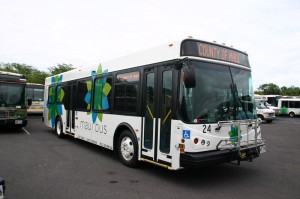 The bus system operates seven days a week, including holidays, and costs $1 per boarding, with daily and monthly passes also available. The system also features a commuter service (costing $2) designed for early morning and evening travelers to/from Wailea and Kapalua. All route and fare information as well as schedules are posted on the County website at www.mauicounty.gov/bus
One further windfall from the increase in public transit use is the reduction in greenhouse gas emissions and savings in imported fossil fuel as a result of passengers switching from using cars. “The higher gas prices have risen, the more passengers are choosing to ride the bus,” says Jo Anne Johnson. The system represents a promising step towards greater island sustainability.
Do you use the Public Bus system? How often?
Jan 6, 2011 | Small Business
 The New Year is a time of renewed optimism, and for all of us, including business, to look ahead. Small businesses are key players in economic sustainability, as the Focus Maui Nui process has verified. Bill and Maureen Marrs believe being in business means respecting and taking care of people—starting with the people closest to them, their children.
Those personal values are the key reasons their Marmac Ace Hardware Store will be celebrating its 40th anniversary in 2011 after being named the 2010 SBA Family-Owned Business of the Year for Maui County. The 4th generation of the Marrs-McCurdy family is working at the store, alongside several dozen other employees who might as well be family.
Running a successful small business takes a personal commitment to customers, but also to employees. It also takes flexibility to adapt to changing economic conditions while understanding what the customer needs – even if the customer doesn’t know. The key is having staff that knows.
“Among my employees, we have 150 diplomas in trades. Everybody is certified in my plumbing and electrical sections. All the employees in the departments not only have know how to sell it, they have to know how to replace it,” Marrs says. It means providing training for the staff, providing compensation and benefits that keep them onboard and respecting their opinions, he says.
“I think we have it right with the campaigns to buy locally and to support home-grown businesses. You want to keep the money here on Maui, where the dollars are spent again right here on the island,” says Marrs. “I believe in leadership. I believe if somebody else has a better idea, we’ll go with that idea. I believe you respect and reward your employees.”
Dec 29, 2010 | Community
 The Chinese astrological symbol of the coming new year is appropriate for Maui County, Hawaii and the nation: 2011 will be the Year of the Rabbit, to be celebrated on the new moon on February 3rd. Chinese tradition holds the rabbit as a symbol of hope, an amiable, sensitive, modest and merciful pet of the moon goddess Chang’e.
For hope in our community, we need look no further than our children, who inspire us by their achievements, their adaptability, and their willingness to learn. In school, on the sports field, and in the community, we see them leading by example and setting the bar higher than ever. On environmental issues in particular, our youth are leading the way for sustainable solutions.
All of us can learn from the optimism of our children, and their tireless quest to understand the world around them. In the moments of their discoveries, we can celebrate with them, and experience the time-honored adage that “hope springs eternal”.
 If you have ever wondered what might happen if you mix together bright young minds, committed teachers and parents, and energetic community volunteers, then look no further than Molokai. Over the last few years, a transformation has been taking place on the island as teams of students have been winning awards and turning heads with their robotics, science and math accomplishments. One of the catalysts for forging partnerships, bringing funders and volunteers together, and facilitating success is robotics “team mom,” Kimberly Mikami Svetin.