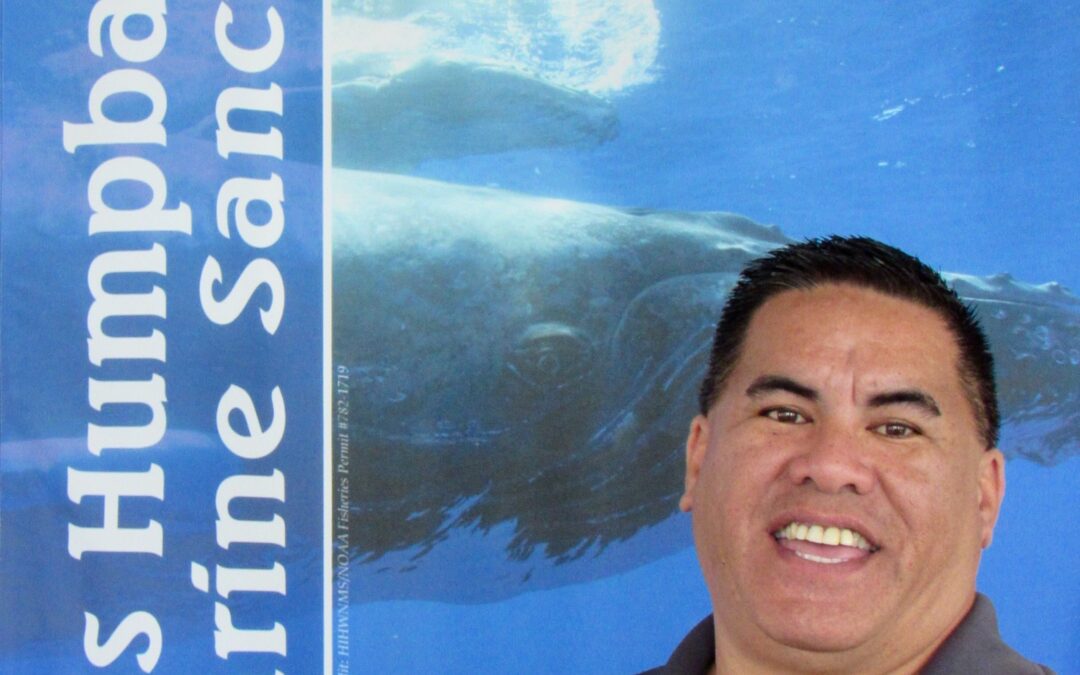
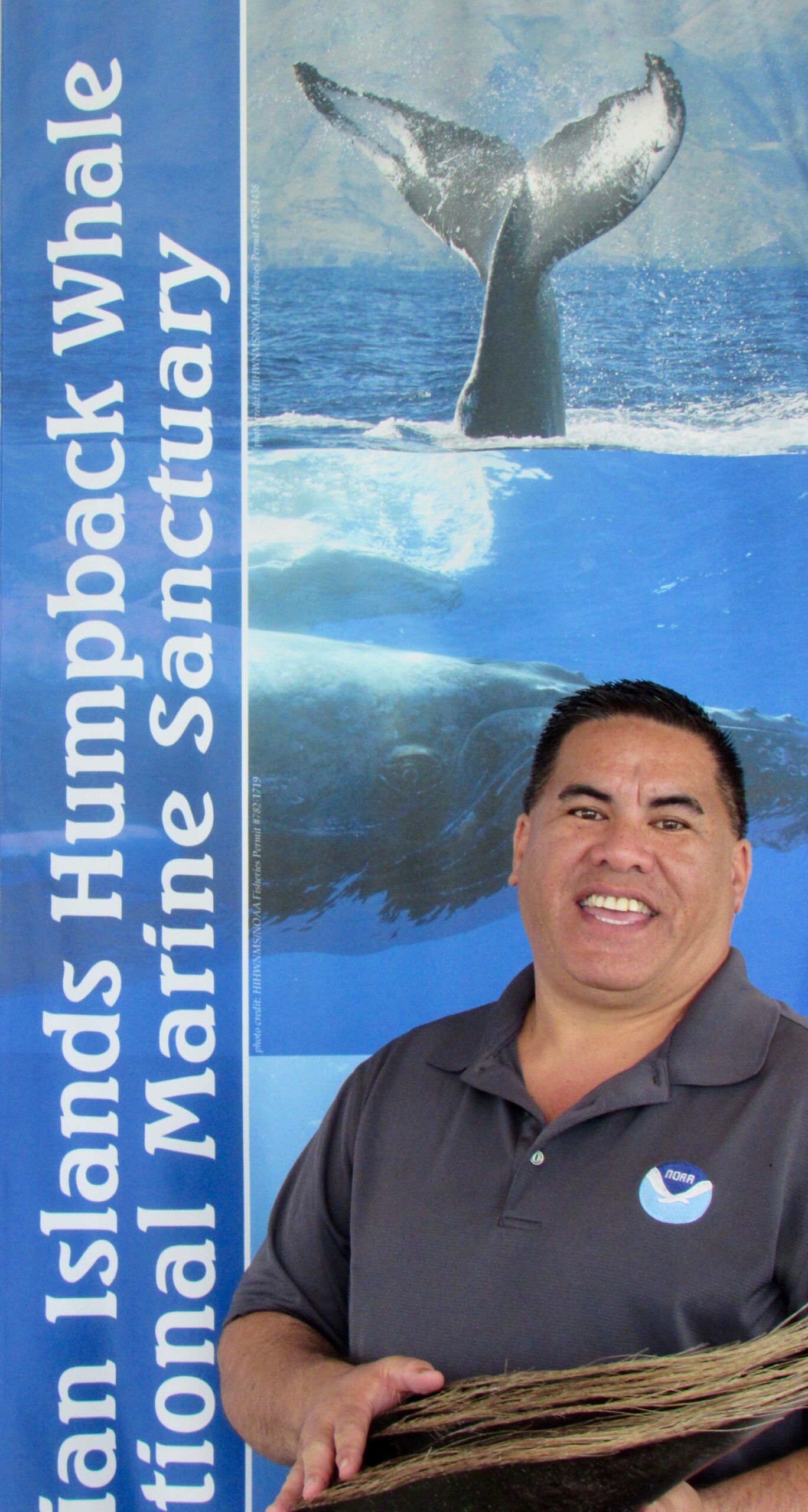
November marked Ho‘i Koholā, ‘welcome back whales month’, and the traditional start of the 2022-2023 whale season in Hawaii. Humpback whales are generally seen in Maui waters from November into May each year, with the peak season running from January through March. This November was also the 30th anniversary for the Hawaiian Islands Humpback Whale National Marine Sanctuary (HIHWNMS). Designated in November of 1992, HIHWNMS is one of the world’s most important whale habitats, and the only place in the United States where humpback whales mate, calve, and nurse their young.
“HIHWNMS works to protect humpback whales and their habitat through research, education, conservation, stewardship, and entanglement response,” said Kim Hum, HIHWNMS sanctuary superintendent. “We are excited to join the community in welcoming nā koholā, the whales, back to the islands. A few early sightings of humpbacks have been reported in recent weeks, with more whales anticipated to return soon.”
HIHWNMS hosted a virtual pre-whale-season webinar about their current research and how to care for our magnificent visitors. Presenters Dr. March Lammers, research ecologist, Eden Zang, research specialist, and Ed Lyman, natural resource specialist, each gave a briefing on the sanctuary’s activities. “Acoustic monitoring is very important because sound transmits well underwater,” Dr. Lammers explained. “Many male humpback whales sing during the breeding season, and the volume of song chorusing measured on moored recorders is correlated with whale abundance. Additionally, many whale behaviors are not observable from the surface or at night, leaving much still to be learned. A promising approach is to use instrumented tags to study behavior.” Zang added, “We also focus on entanglements and whale-vessel contacts. Based on community monitoring efforts, the sanctuary uses historical known outcomes from threats like entanglement and collision to quantify the impact of present cases and serious injury determinations.”
Lyman concluded, “This season had the largest use of drones to help staff respond to and record entanglement reports. Our goals include releasing large whales from life-threatening entanglements, increasing awareness, and gathering information to better understand the threat. Plus, HIHWNMS continues to develop many partnerships with the on-water community to protect the humpback whales and their habitat.”
Our motto, ‘Go Slow—Whales Below’ is for boating vessel speeds necessary to keep the whales safe. For more information, visit https://dlnr.hawaii.gov/dobor/boating-with-whales.
Dr. March Lammers, Research Ecologist, Hawaiian Islands Humpback Whale National Marine Sanctuary
A new year can bring renewed optimism and hope – a time for a clean slate and to put the cares of the past year aside. It can be a time to set resolutions, intentions or goals for the year ahead. Did you know that people who write down their goals are 42 percent more likely to achieve them? This was demonstrated in a study on goal-setting by Dr. Gail Matthews of Dominican University in California.
You may have heard of SMART goals – goals that are Specific, Measurable, Attainable, Relevant and Time-bound – that help to give better results. Often the important (and sometimes most challenging) step is getting clear on what you want. Writing this down inspires clarity and helps you to get specific. This is about what you want, and not what others want for you, or what you think you should want.
When you set a goal that you truly want you trigger an important ingredient – DESIRE – that helps you align with your goal and what you have to do to achieve that goal. Desire can be the difference between achievement and a failed resolution. Belief in your goal and your ability is another factor that can make or break your success. Whether a goal is attainable or realistic all depends on your belief. Lofty goals are possible when you set your mind to it.
You can resolve now to create more of what you want in 2023 by writing down goals in any area of your life that is important to you – career, health, family, giving-back, recreation, hobbies and more. Less is more when it comes to setting goals, with no more than three major goals recommended. Once you have written them down, create a picture in your mind of how your life may look now that you have achieved your goal — what will the end of 2023 be like for you as you look back on the year that was?
The Maui Economic Development Board `ohana would like to be among the first to wish you “Hau`oli Makahiki Hou.” Happy New Year!
The Maui Economic Development Board ‘ohana would like to be among the first to wish you “Hau`oli Makahiki Hou.” Happy New Year!
MEDB Team
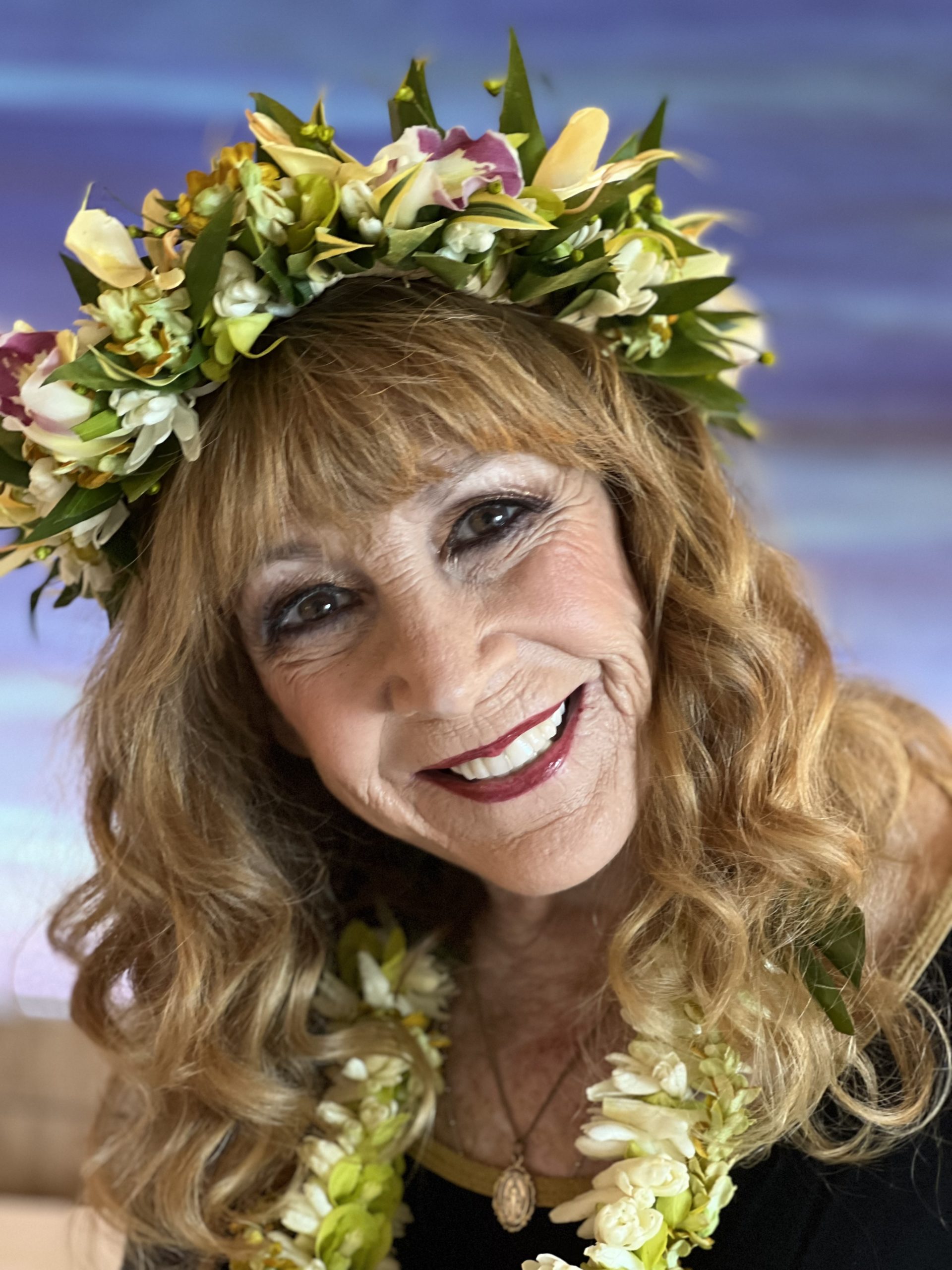
Rev. Dr. Cindy Paulos is a Maui radio personality, minister, artist, composer, lyricist, and author. Her CD, Practicing Aloha won the Hawaii Music Award in the Inspirational Category, and was nominated for a Hoku (her 6th nomination) by the Hawaii Academy of Recording Arts. Recently, Paulos and composer Stephen Melillo won two gold medals at the Global Music Awards and the 2022 Hollywood Music in Media Award in the Epic/Orchestral category for their CD, Love Conquers All.
In Paulos’ latest book release, The Christmas Gift: When Heaven Merges with Earth, a companion for the latter CD, she brings the light and spirit of Christmas into the hearts of all people and all faiths. “The meaning of the holiday is a human one of experiences, tolerance, kindness and love,” she said. “The gift of Christmas transforms lives. When people live with more understanding of these qualities, they naturally bring more compassion into their daily lives. These are the kinds of gifts at Christmas which we need to relate to, every day of the year. I hope my book inspires others to see that ‘Love’ merges heaven and earth.”
After reading the book, Melillo said, “What would be the use of great accomplishment, success, degrees, massive output, or any measure of accolades and gifts without love and kindness? Paulos looks at the world and hears words, looks up to the stars and sees poetry. She congeals these messages with great tenderness and releases them into her music and books. Her flow of words spread much needed lovingkindness and goodwill into our world.”
Paulos added, “It seems so many do not understand the significance of all the elements represented in the Christmas story and the deeper meaning of them. There is a mystical perspective to the timeless story. It is a tale of light for all mankind. If we go within and find the symbolism and the true gift of Christmas we realize it is a celebration, a time for giving and not simply a day on which we exchange gifts. It is a day we think about others—a selfless time, when we forgive, take stock of what’s important, and become better versions of ourselves.”
Christmas, a time of promise, generosity and hospitality, is the Yuletide hope for peace on earth and goodwill to all.
Cindy Paulos, Author, The Christmas Gift: Where Heaven and Earth Merge
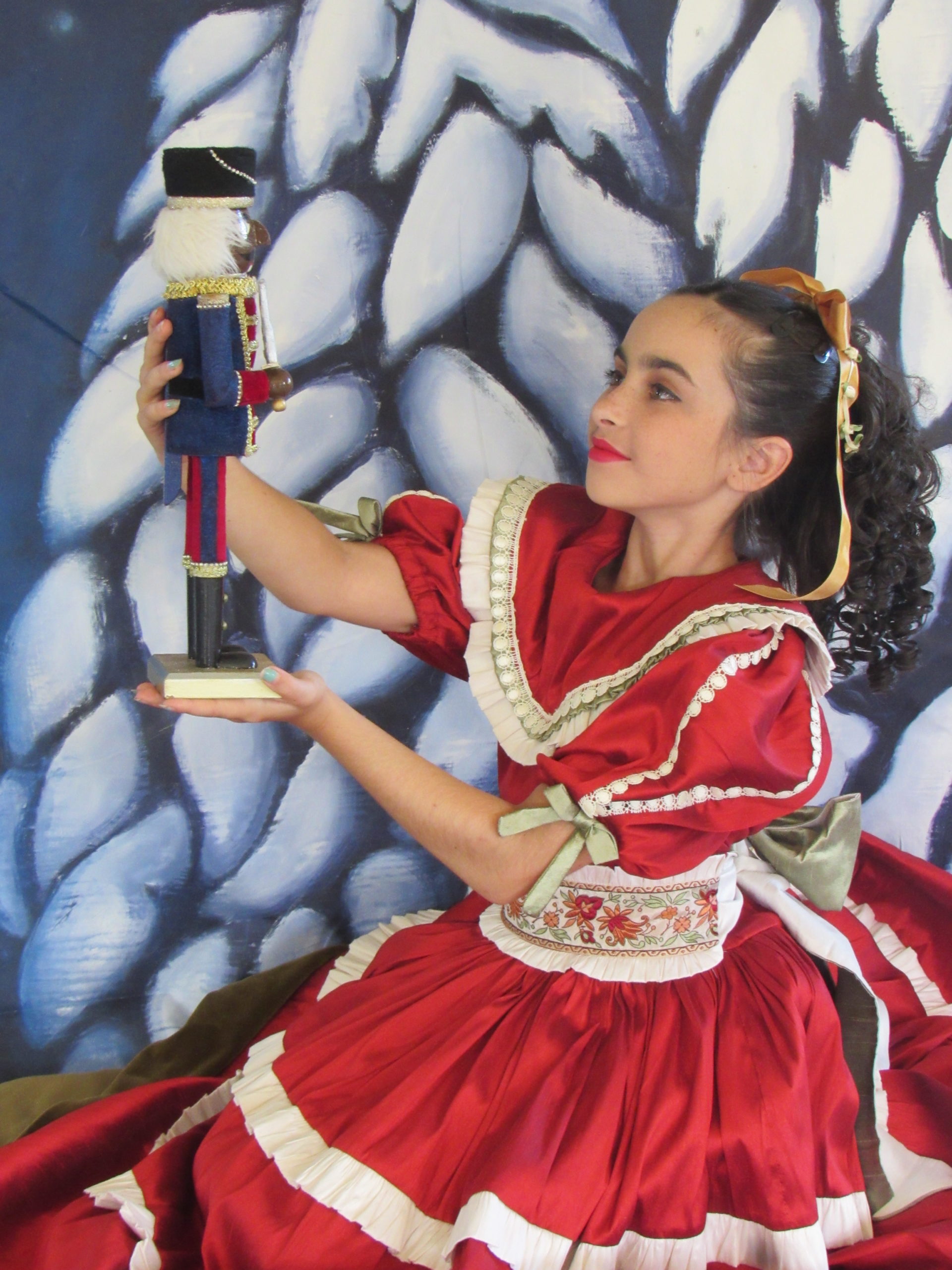
Ten-year-old Moorea Winter Feliciano is both a dancer and an Upcountry junior rodeo participant. Dancing ballet since she was three years old with the Alexander Academy of Performing Arts (AAPA), she is also a member of the nonprofit Maui Youth Rodeo Organization (MYRO). Ballet and rodeo make such a unique and unexpected combination. Yet, they have a few important similarities: both take time and dedication, both take a specific skill level, both take passion, both have levels of difficulty that humble you greatly, and both take hours of extra practice.
Feliciano explained, “I spend many hours after my schoolwork practicing both ballet and riding. I help clean the ballet studio in exchange for extra classes, and I am a teacher’s assistant to younger dancers. Also, I volunteer time to help set up for rodeo, and fundraise for both ballet and rodeo. For me, it is being part of something greater than myself. Also, the number of friends from ballet who are coming to my rodeo shows, and the rodeo friends who are coming to ballet shows, makes my heart so full.”
MYRO provides opportunities for children on Maui to participate in rodeo events throughout the year: riding, roping and more. Members practice good conduct, sportsmanship, and a commitment to good grades. Morag Rice Miranda, Maui District-Hawaii High School Rodeo Association representative, always announces Feliciano as, “an accomplished dancer, our ballerina rider.”
This year, Feliciano landed the ‘every little girl’s dream role’ of Clara in AAPA’s 2022 annual holiday tradition, The Nutcracker. She will dance the role on Saturday evening and the closing performance, besides other parts. “A lot of hard work must happen first,” she said. “Both dancing and rodeo help me to set big goals for myself and see them through. My motto is: If you believe you can, you will!”
Paul Janes-Brown, Maui Curtain Call, said, “At ten years old, Feliciano is a young lady to watch. She helped choregraph a wonderful contemporary dance performance in the 2022 AAPA performance of Sleeping Beauty. I look forward to seeing her perform the role of Clara in this year’s Nutcracker.”
I love the magic that happens onstage and at the rodeo!” The Nutcracker will be performed December 16-18 at Seabury Hall’s ‘A’ali’ikūhonua Creative Arts Center. Visit Eventbrite for Nutcracker tickets and www.mymyro.com for rodeo information.
Moorea Winter Feliciano, Member, AAPA and MYRO
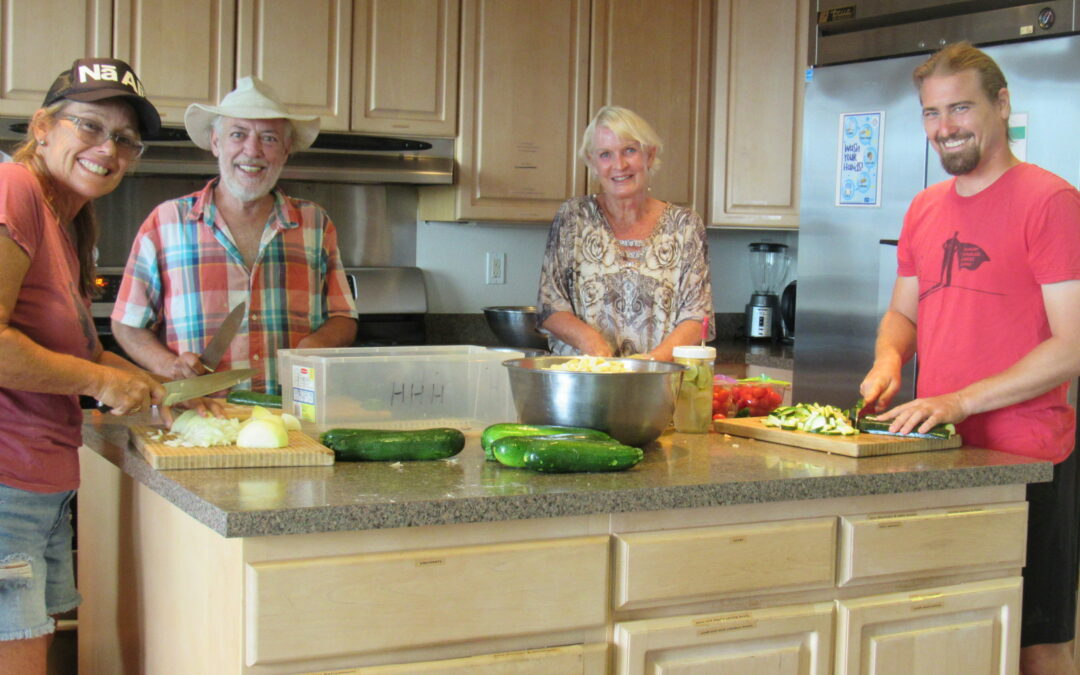
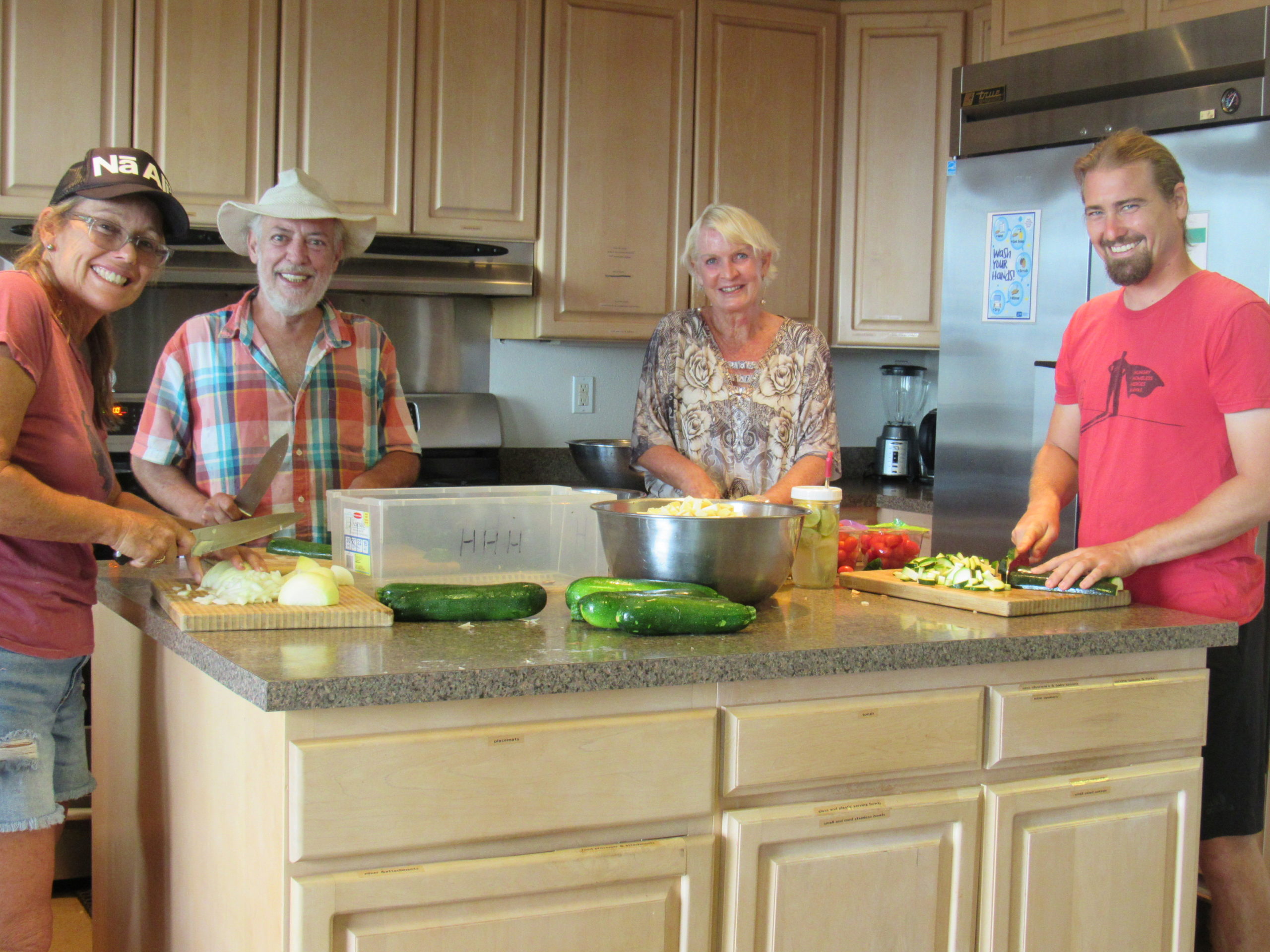
As we prepare to celebrate Thanksgiving, we are reminded of the grassroots community project started to reduce hunger during Covid-19 and beyond. Co-founded by Brad Kukral and Steven Calkins, the Hungry Homeless Heroes Hawaii (HHHH) uses quality excess food to fill the stomachs and hearts of Maui’s hungry rather than the landfills. Kukral and Calkins set up a food redistribution organization that receives food from community members and farms with surplus, besides growing their own food at Anuhea Chapel in Pukalani. Additionally, they have put together an all-volunteer team who garden, prepare nourishing meals and personally deliver them to the unsheltered on Maui.
In the midst of the pandemic, Kukral witnessed a homeless man get into trouble while trying to obtain food from a local grocery store. “This incident was the impetus of the project,” he explained. “The man was hungry and just wanted to eat, and was begging for help. So, the next day my friend Steven and I decided to cook and distribute meals. The operation increased literally overnight.”
Kukral continued, “The pandemic impacted the unsheltered community in its own unique way in terms of limited restroom facilities, the inability to comply with stay-at-home orders, and difficulties obtaining food. Through a Facebook network on Maui, we were able to collect donations and supplies. As the program grew, so did the area of response. Volunteers and donations rolled in from a variety of area businesses, organizations, and private citizens.”
Currently, the program can produce as many as 200 meals a day. However, a main ingredient that the homeless need is the feeling of not being abandoned. Kindness is as appreciated as food. “HHHH works with compassion to bring hope to the hopeless,” Calkins said. “Our future vision would be to take another step toward a permanent solution by galvanizing the community around this most dire issue. Ideally, we would like to find a self-sustaining property where families could come on a work-trade basis.”
In the meantime, the HHHH purpose is to feed the hungry with hope, one meal at a time. The staff have been mindful of sustainability and work to create an environment that recognizes, validates and enhances the dignity of everyone experiencing homelessness.
MEDB applauds all those in the community who serve to make sure no one goes hungry. We wish a Happy Thanksgiving to all.
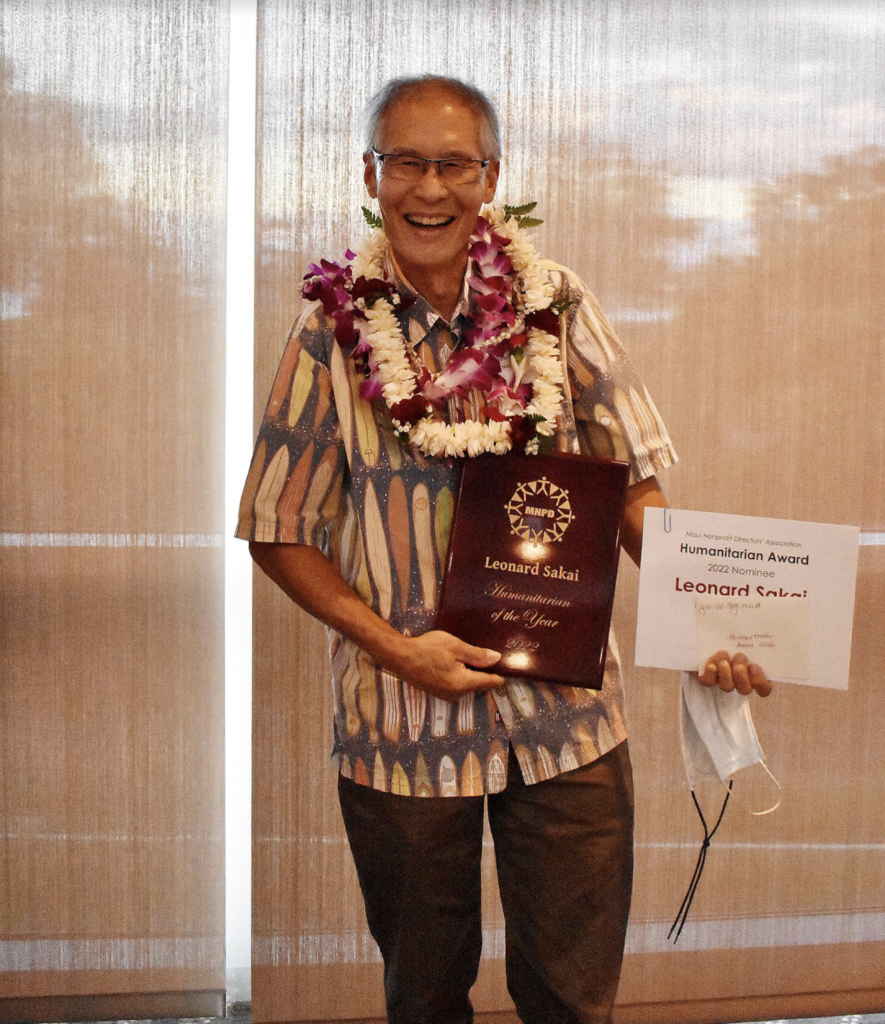
Dr. Leonard Sakai of Kula was recently honored by the Maui Non-Profit Directors Association. Nominated by Habitat for Humanity, Sakai was named 2022 Humanitarian of the Year. The citation reads, “Dr. Sakai earned this award for his volunteerism and dedication to give back to our community. Mahalo Leonard, for all of your hard work and helping families build strength and stability through shelter.”
Sakai is a retired general surgeon with concentration in colorectal disorders including colon cancer, and was affiliated with several hospitals in the area including Maui Memorial Medical Center and Kaiser Permanente Moanalua Medical Center. He received his medical degree from the University of Hawaii John A. Burns School of Medicine and was in practice for more than 20 years.
Recognized for his ‘can-do’ attitude and positive personality, Sakai is the guy everyone working at Habitat for Humanity enjoys being around. He regularly volunteers each week on construction sites. To date, he has contributed over 600 hours of his time across Maui, helping families at both the Kahoma Residential builds in Lahainaand Hawaiian Homelands in Kula.
Humbled, Sakai said, “I truly appreciate this award. However, I get back even more than I put in. I have been working with Habitat for Humanity for over five years. And I’ll try whatever jobs come my way. There are so many different jobs to work on while building a house. In a certain way, it reminds me of surgery: a crew of five or six people and a work crew accomplish what they are supposed to get done, together. At Habitat, we also need to work as a team. At the end of the day, building houses is a different kind of exhaustion than doing surgery, but also a rewarding one. Habitat for Humanity has been on Maui for over 2 decades. It is an amazing organization.”
Sakai added, “So now, I am a beginning carpenter! I am learning a whole new and useful trade. Besides, I read in AARP that it is useful for old people to learn new skills.”
People talk a lot about affordable housing. The business model that Habitat has works very well. It actually created the affordable housing model.
Dr. Leonard Sakai, Maui Non-Profit Directors Association ‘Humanitarian of the Year’
Nationwide and on Maui, October is observed as National Breast Cancer Awareness Month. This health campaign, organized by major breast cancer charities and non-profits, was developed to increase awareness of the disease and raise funds for research on its cause, prevention, diagnosis, treatment, and cure.
Various Maui hotels, businesses, schools, and organizations, including the Maui Police Department, band together to educate the community. Their message emphasizes early screenings for cancer, currently the most effective way of dealing with the disease before it becomes too advanced to control. Awareness of the signs and finding help after a diagnosis are a vital part of this education.
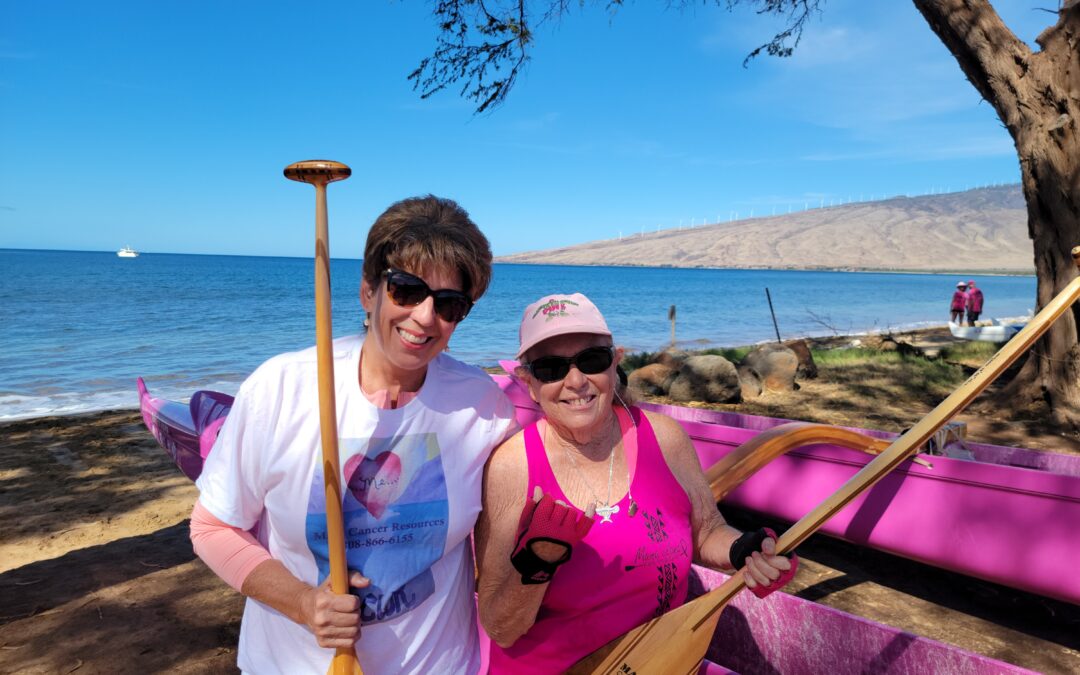
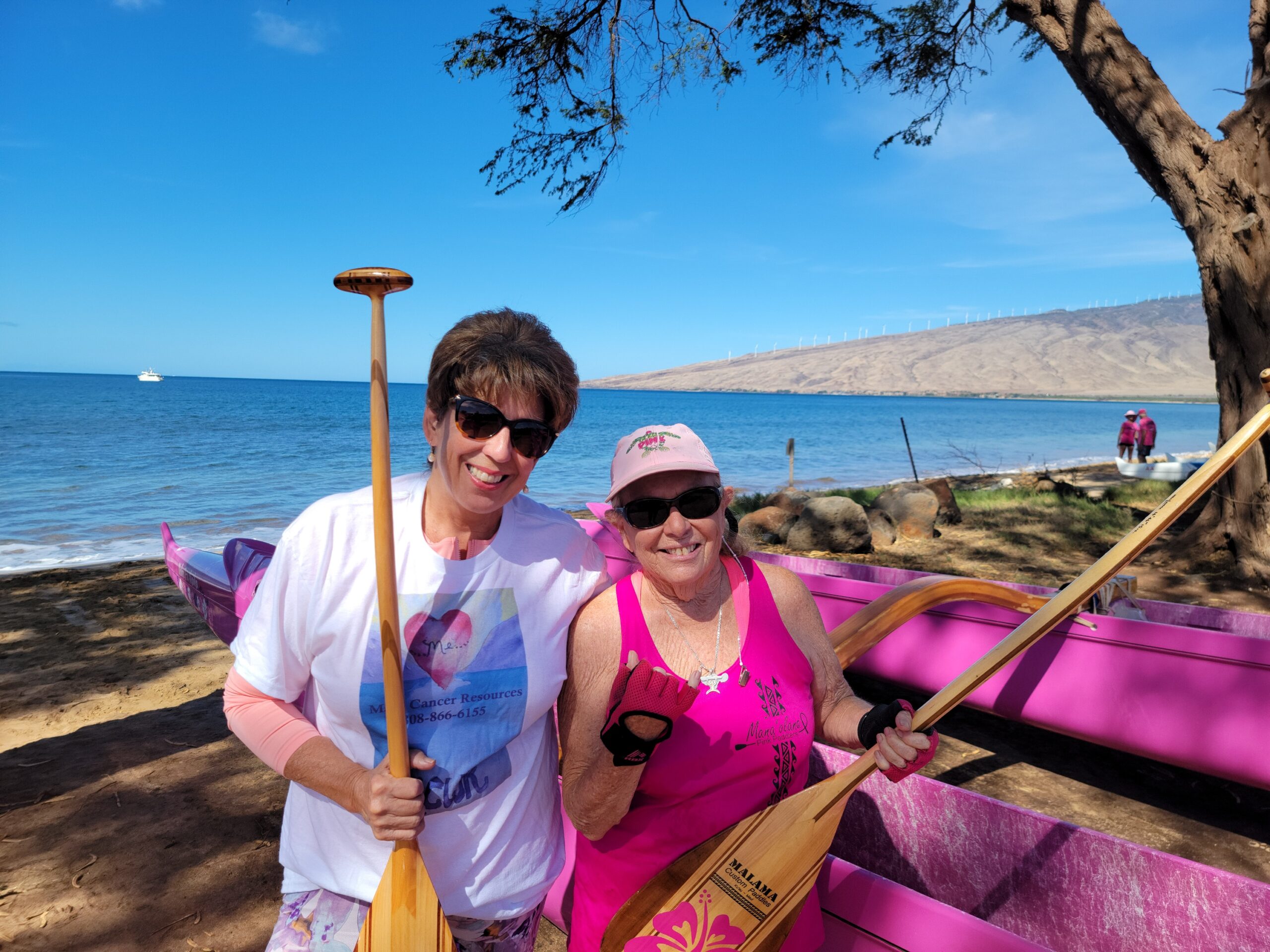
Two Maui nonprofits, Mana’olana Pink Paddlers and Maui Cancer Resources (MCR) have joined forces in their efforts to assist cancer patients and survivors. Dr. Bridget Bongaard, Maui Cancer Resources Medical Director, founded MCR to offer Integrative Oncology consultations.
“Our goal is to create a comprehensive cancer support program and grow outreach services to support Maui cancer patients to achieve maximum positive outcomes,” said Bongaard. “By providing survivors with a personal cancer journey guide, we walk them step-by-step through the challenges that arise from diagnosis and treatment to recovery. In addition, MCR offers weekly on-line support groups, mindfulness training, cooking and nutritional education, self-care consults and quarterly day-long workshops which share different effective-movement strategies.”
Medical research shows the importance of physical activity in cancer prevention and survival. Findings demonstrate that those with high physical activity have a 40-50 percent reduction in the risk of cancer. Dr. Bongaard collaborated with the Pink Paddlers, Maui’s only nonprofit paddling club, to help cancer survivors regain health and fitness through outrigger paddling. Mana’olana’s paddling programs are open to persons with any type of cancer, both men and women. Mary Dungans, Mana’olana President noted, “Our program works magic for survivors wanting to regain mental and physical health after the grueling effects of cancer treatment. Paddling together builds confidence as we become part of something bigger than ourselves. Working with MCR, our mission is to create a comprehensive cancer support program and outreach service to help Maui cancer patients achieve the best possible results.”
MCR and Mana’olana Pink Paddlers are collaborating to help Maui cancer survivors achieve lifestyle changes that make a difference as well as lifelong friendships.
Dr. Bridget Bongaard, Maui Cancer Resources, Medical Director
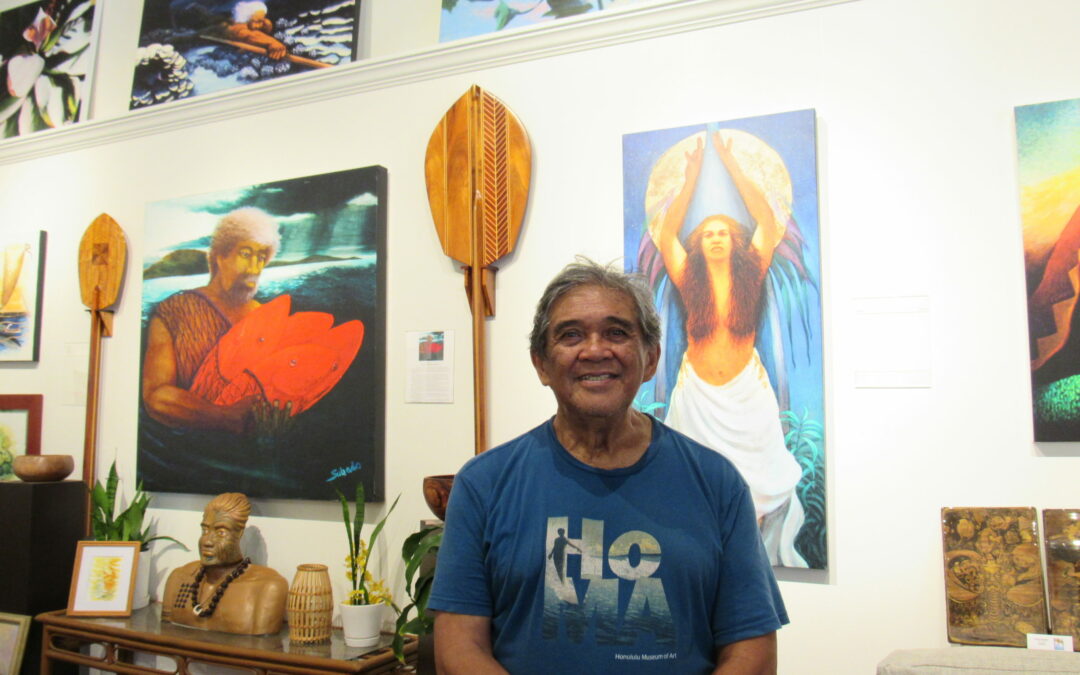
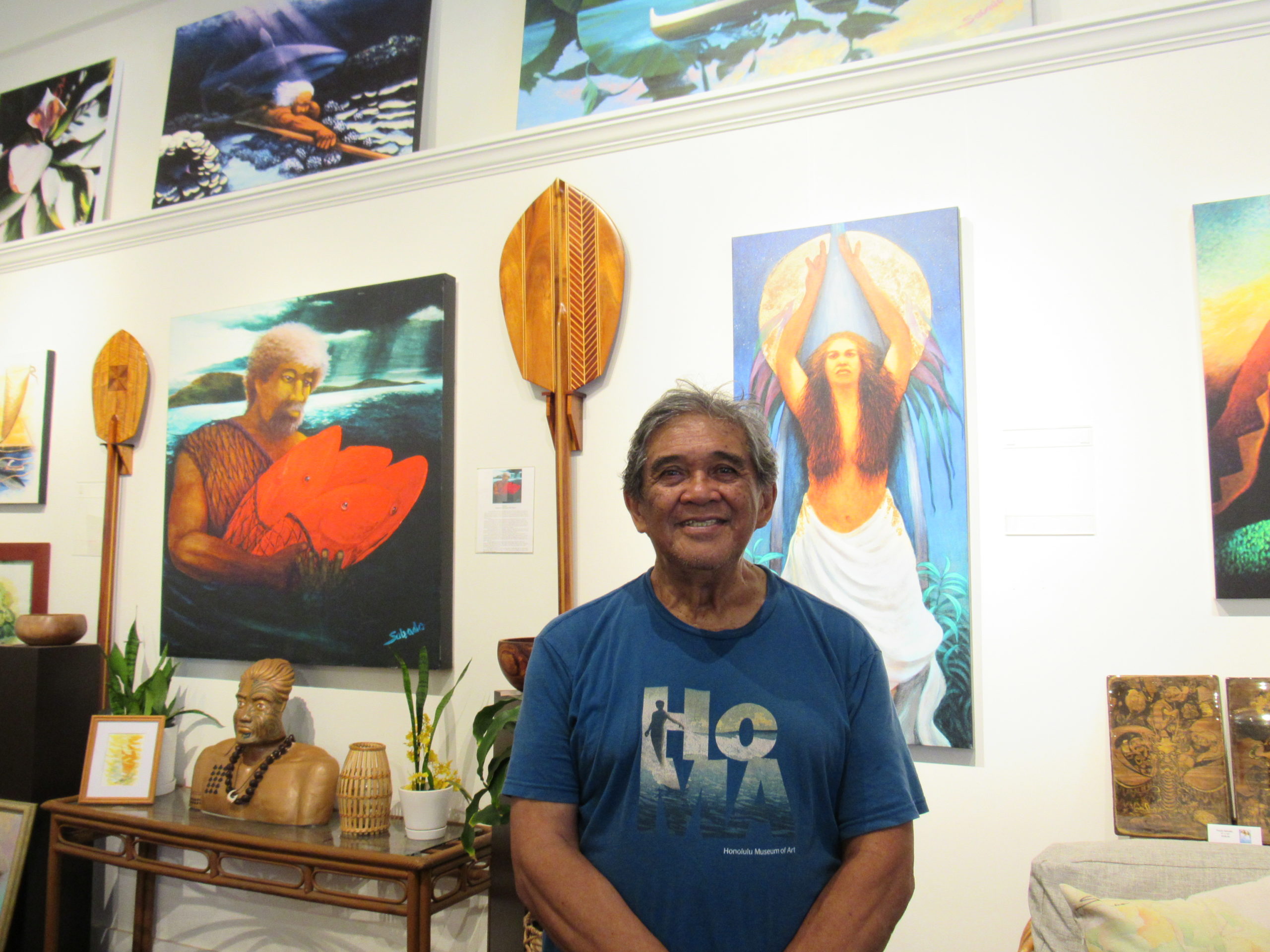
World-renowned Maui artist Philip B. Sabado, formerly of Sabado Art Studios in Wailuku, has a new location. Still in Wailuku, he recently moved into a more spacious location on Market Street called Sabado Galleries, where his commitment to creating art that is historically accurate and expresses the essence of Hawaiian culture continues. His work, depicting his love for the nature and culture of Hawaii, has been commissioned for numerous public and private murals over the years, is in many businesses and hospitals throughout the islands, and is celebrated within the collector community.
A long-time Maui resident, also with a gallery in Wailea, Sabado was born and raised on Molokai where his mother regularly put aside enough money for paint and paper for the fledging artist. After serving in the United States Army, he began studying at the Honolulu Academy of Arts. Sabado furthered his studies at the Art Center College of Design in California, worked in illustration and design, and carved out a successful career as an art director. Selected as one of the top 50 illustrators in the country, Sabado was chosen to attend an art university in Paris.
“I have been blessed with an incredible career,” Sabado said. “Yet, with all that success, home called me back to the islands where I began the next phase of my life within the fine arts. Back on Maui, I became immersed in painting the beauty of the Hawaiian culture and the Hawaiian spirit. As a young child I was absorbed in the local culture around me; however, painting it came later in life. My kumu told me that these things were waiting for me to paint when I was qualified, mentally, spiritually and physically.”
According to Sabado, the space in his new Market Street location will also be used to exhibit the work of other local artists and provide art lessons to children and adults. “We pride ourselves on teaching art students the fundamentals of drawing and painting in a variety of media and on recruiting UH students to work on commissioned murals, with college credits. We provide all of the tools and supplies for their journey into art!”
Wailuku is in the talking stage of becoming an art and cultural district with qualifications for art grants. We are hoping for a wonderful new area to emerge.
Philip Sabado, Sabado Galleries, Wailuku and Wailea
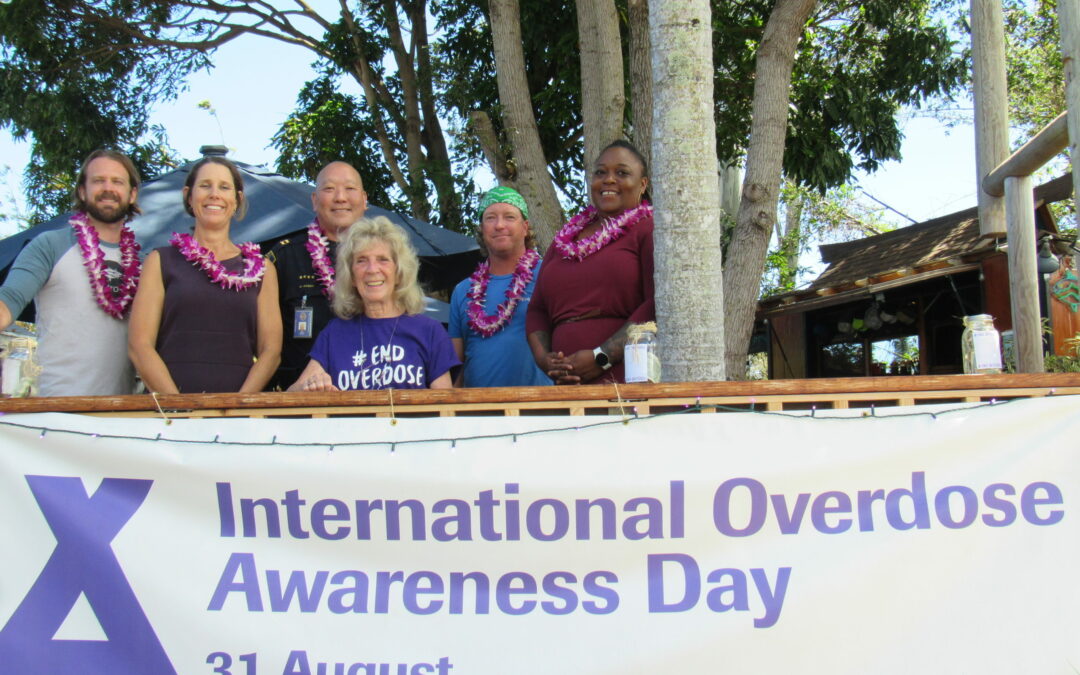
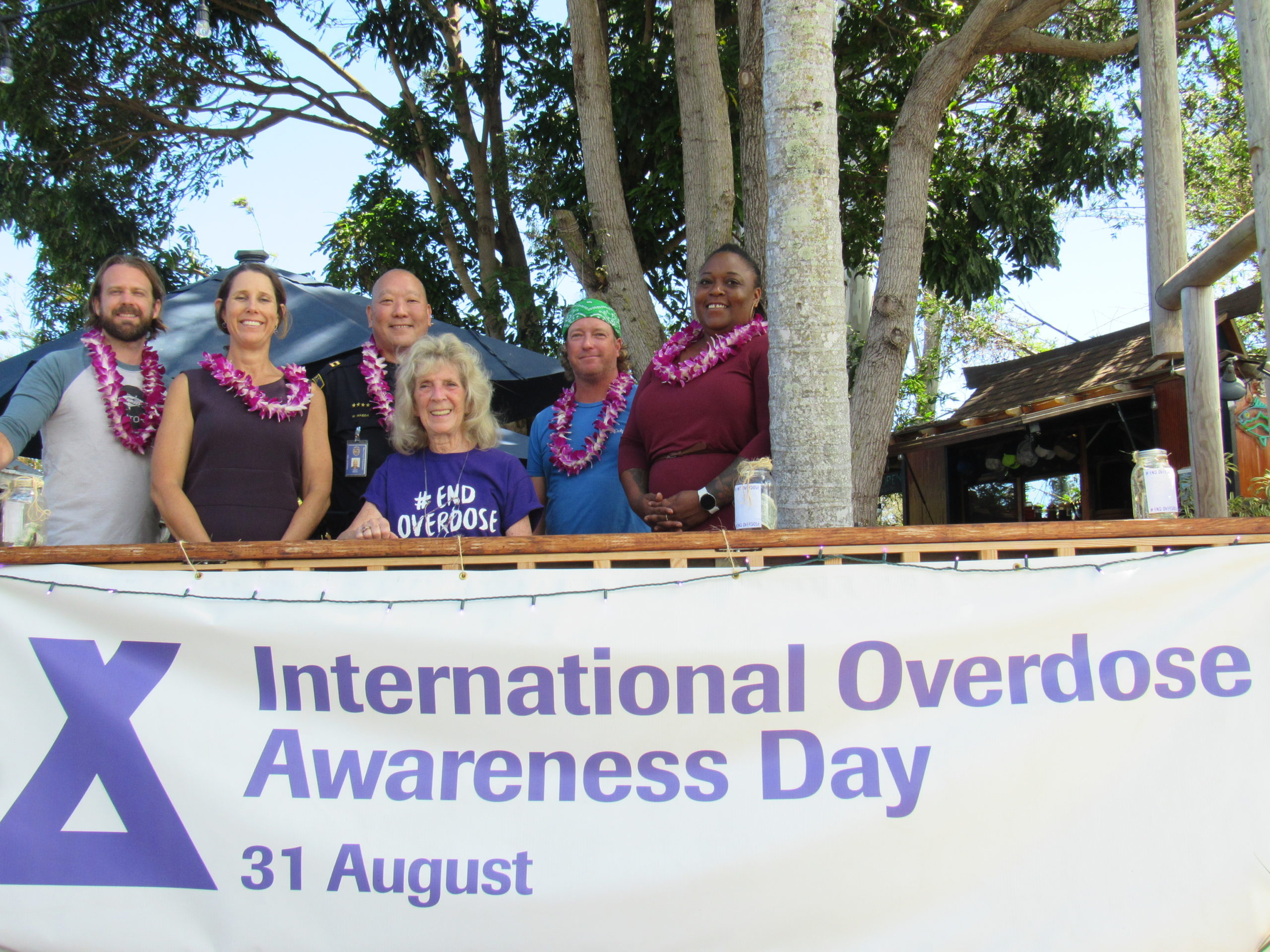
Linda Vincent of Kula has spearheaded the International Overdose Awareness Day (IOAD) project on Maui to honor her son who died on August 12, 2019, of an accidental opioid overdose. The IOAD is the world’s largest annual campaign to end overdose. It is a day to remember without stigma those who have died and to acknowledge the grief of the family and friends left behind. Millions of opioid painkiller prescriptions are still written annually and Americans are dying every day from overdoses.
Vincent first learned of IOAD when the Mayor of Honolulu sent to her family a picture of the government buildings lit with purple lights. “It was so touching to me as a way to honor my son and all of those who have died from this preventable disease,” Vincent said. “I previously organized this project in Rhinebeck, New York with great success. Now that I live on Maui, I plan to continue the work with Malama Family Recovery Center, Aloha House Makawao, and other non-profits.”
Jud Cunningham, CEO of Maui Behavioral Health Resources, the umbrella organization for the non-profits Aloha House, Malama Family Recovery Center and Maui Youth & Family Services, noted “We are working on preventing overdose through our efforts at treatments for substance use disorder and care for long-term recovery. Our agencies have programs in Makawao and throughout central Maui, which help adults and youth with mental health and substance use issues. We appreciate all support for this initiative.”
Wade Maede, Acting Maui Assistant Chief of Police, added, “On behalf of Chief John Pelletier and Deputy Chief Charles Hank III, the men and women of the Maui Police Department would like to acknowledge IOAD annually on August 31 and each day. Every year, community members lose loved ones to narcotic overdose. The Maui Police Department is committed to reducing the number of deaths by providing each officer with a Narcan kit. We will continue to educate the public on the dangers of opioids and other narcotics, so no family has to suffer losing a loved one again. Together, we can make a difference.”
Over 25 Makawao merchants observed the first International Overdose Awareness Day. We hope in 2023 to go island- and state-wide. It’s time to remember and time to act.