Mauna Kahālāwai, commonly referred to as the West Maui Mountains, is an ancient, heavily eroded shield volcano rising to 5,788 feet at the summit of Puʻu Kukui. Receiving over 380 inches of rain a year, Puʻu Kukui is one of the wettest spots on Earth, and that rainfall is filtered down through bogs, shrublands, and critical watershed forests. The Mauna Kahālāwai Watershed Partnership’s (MKWP) mission is to protect these resources to ensure that West Maui has a continuous supply of water for generations to come.
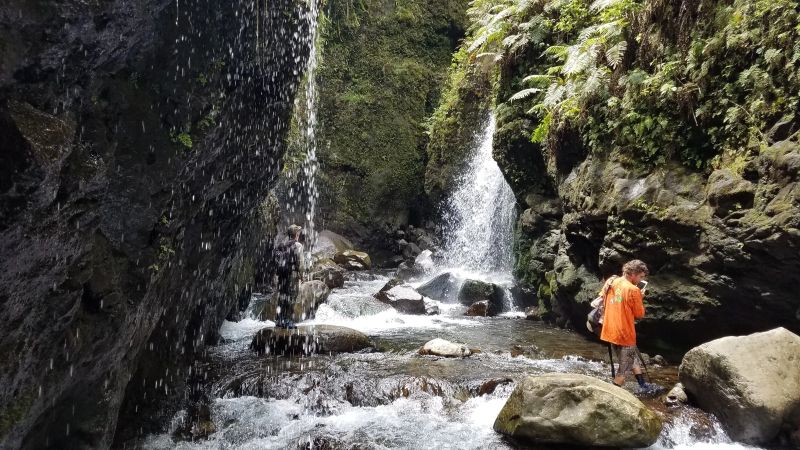
The MKWP is a voluntary alliance protecting 50,000 acres of West Maui mountains, which provide 75% of West Maui’s freshwater. Established in 1998 through a voluntary alliance of state, county, and private landowners, its purpose is to reverse the negative trend of forest degradation caused by numerous threats. MKWP protects and restores native ecosystems, the forested watershed, and the freshwater supply through cooperative management of fencing, watershed health, removal of invasive species, storm management, and public education. The watershed acts like a sponge and is vital for Maui’s water supply; without protection, the forest covering the watershed will continue to degrade due to the impacts of invasive species.
“Healthy watersheds are blanketed by healthy native forests,” said Chris Brosius, MKWP Program Manager. “In a pristine native forest, trees, shrubs, ferns, and mosses are intimately intertwined. The many layers of vegetation capture moisture from fog and passing clouds and soak up falling rain. While some of this water gently flows over the surface of the land to be filtered into streams, the underground network of roots helps water percolate down through the soil and recharge our aquifers.”
The work that MKWP does also protects and preserves approximately 150 rare and endangered flora and fauna, some of which are found nowhere else in the world. Brosius added, “We invite the public to help with stewardship activities to protect the area’s natural ecosystem and cultural heritage. We offer opportunities for groups, clubs, classes, or teams who want to volunteer with us and monthly volunteer service trips at both our Waiheʻe Ridge and Olowalu Valley restoration sites.”
Community members are invited to sign up for MKWP’s volunteer mailing list to learn more about future volunteering opportunities. The MKWP volunteer webpage can be found here: https://www.maunakahalawai.org/volunteer-mauna-kahalawaimaui.
We highly encourage public involvement through our outreach and educational programs so that the people on Maui have opportunities to experience and understand why watersheds, our native ecosystems, and cultural stewardship are all important. Chris Brosius, Program Manager, Mauna Kahālāwai Watershed Partnership