Jan 10, 2018 | Community, Sustainability
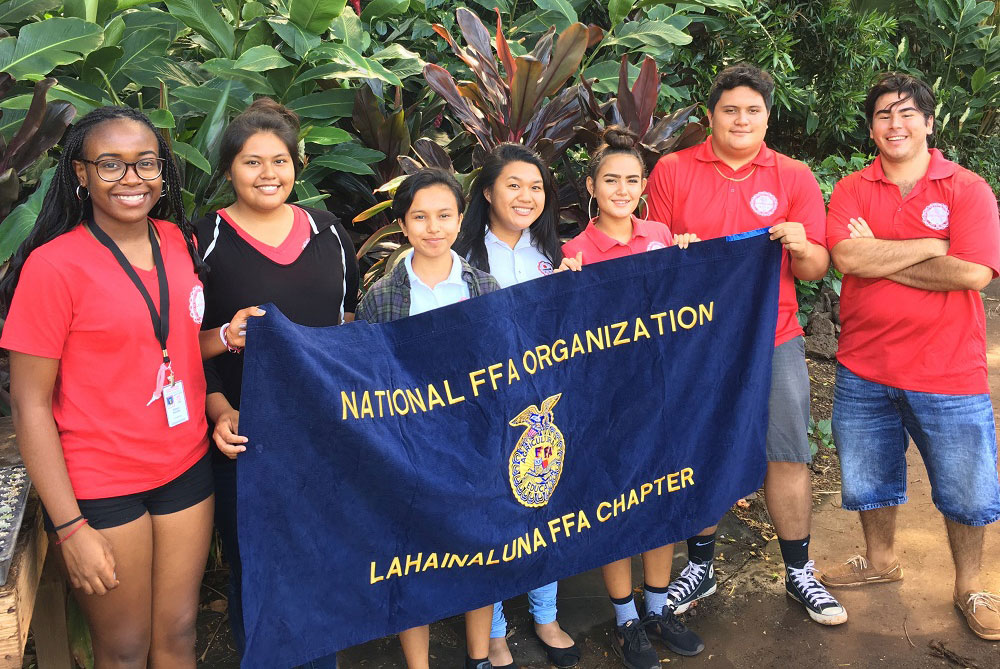
M’Chelle Aguinaldo, a senior at Lahainaluna High School, was elected and is serving as Secretary of the Hawai’i Chapter of Future Farmers of America (FFA) for 2017-2018. A student-led national organization, FFA is committed to fostering projects that increase awareness of the global importance of agriculture. FFA’s initiative complements Maui Economic Development Board’s (MEDB) vision of achieving a diversified Maui County economy, including agri-tech. Both MEDB and FFA encourage wise management of economic, environmental and human resources in the community, and promote teamwork, citizenship, and volunteerism. They teach that agriculture is more than planting and harvesting—it’s a science, it’s a business, and it’s an art.
“The Lahainaluna High School Agriculture Program’s mission is to help our community grow the next generation of young farmers,” Aguinaldo said. “As this year’s FFA State Secretary, I travel to state and national FFA meetings and assist in work-related activities at Lahainaluna. I also support Maui’s school garden programs with plant donations and other volunteer work.”
Aguinaldo continued, “At Lahainaluna we see a thriving and sustainable Hawaii. We maintain a pono lifestyle by having aloha for all, and by respecting the culture. We need the next generations of farmers. We also need to help drive Hawaii in the direction of becoming sustainable and help keep produce here. We’re working for a better future for Hawaii’s youth and economy.”
Lahainaluna Ag offers a variety of classes. Their facility consists of two classrooms, a shop, a greenhouse, multiple small and large fields, a plant nursery, and a Hawaiian garden. “The curriculum places a high emphasis on giving students as many visual and hands-on learning experiences as possible,” said Aguinaldo “We sell our produce to the community and at local farmers markets, to our school staff, to other Lahaina schools, and to local businesses. We also give back to our community by providing donations of produce and plants to school gardens, homeless shelters, senior housing complexes, and the Maui Food Bank.”
FFA students develop an appreciation for a farming career and other agriculture-related professions such as biologists, chemists, veterinarians, engineers and entrepreneurs.
M’Chelle Aguinaldo, Lahainaluna High School, 12th grade
Jan 3, 2018 | Education, Stemworks
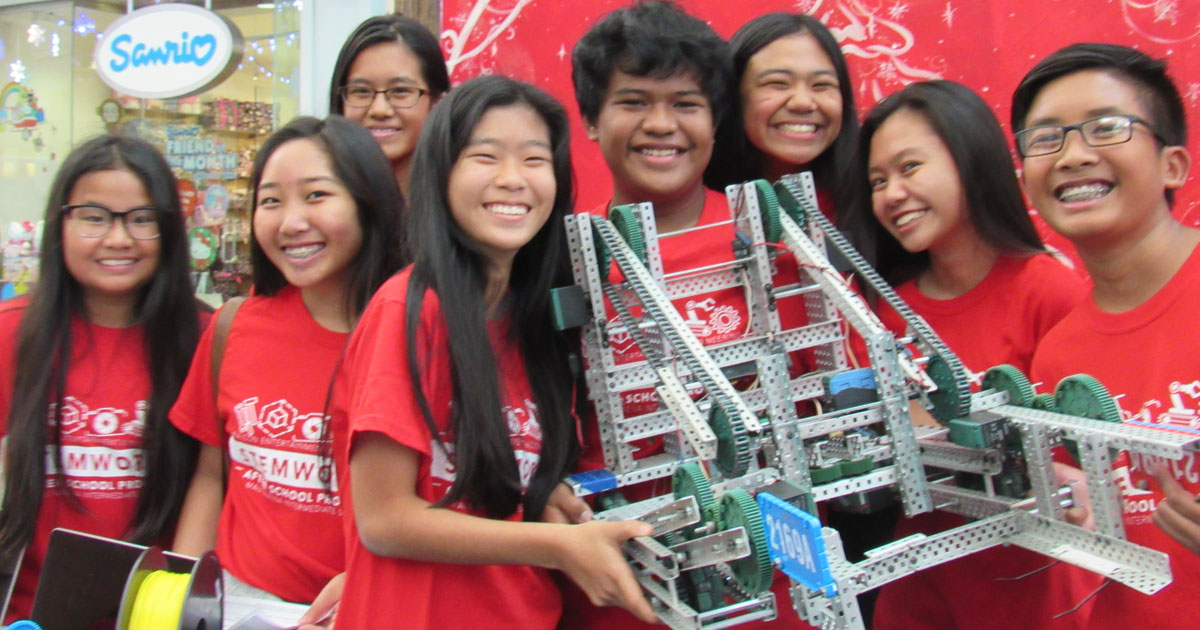
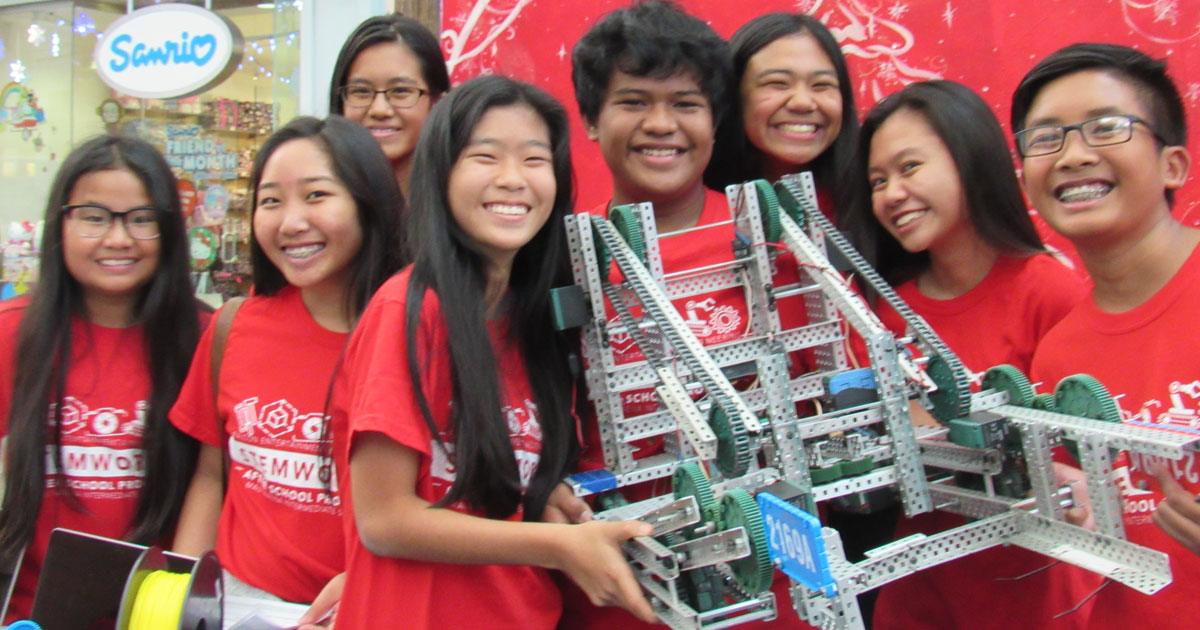
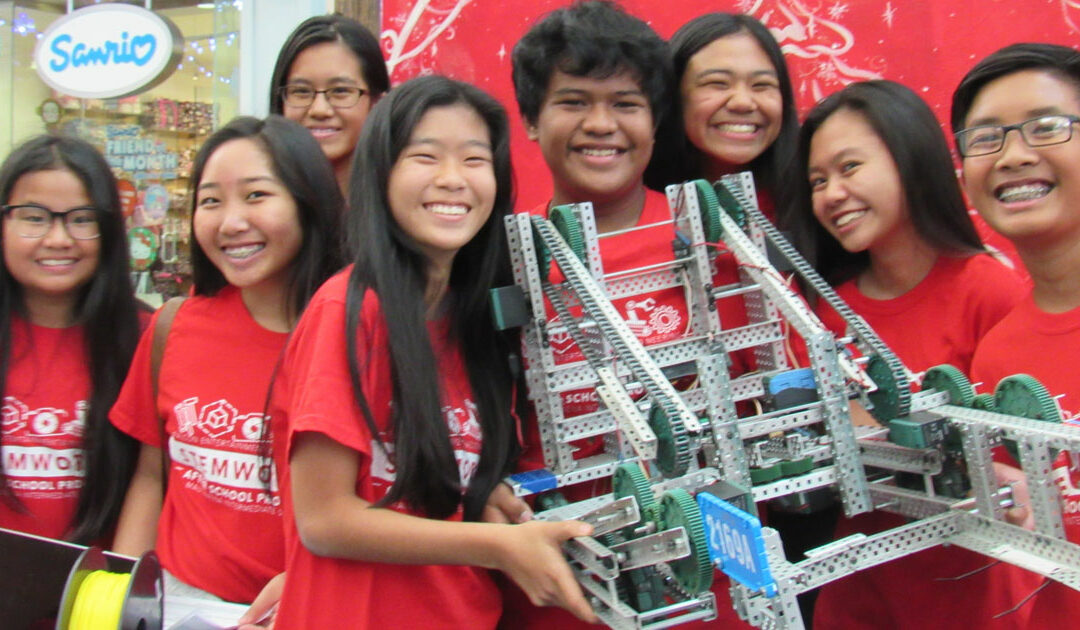
Maui Economic Development Board’s Women in Technology (WIT) Project recently showcased the STEMworks™ AFTERschool program at Queen Ka’ahumanu Center. Students from participating Maui County schools, Pukalani Elementary, Maui Waena Intermediate, Lahaina Intermediate, Lokelani Intermediate, and St. Anthony School presented demonstrations with enthusiasm and proficiency. “STEMworks™ is a multifaceted, hands-on program where students get to use the most current, high-end technologies in actual learning projects,” said Isla Young, WIT Program Director of STEM (science, technology, engineering, mathematics), Education and Workforce Development. “It hopes to prepare students throughout their high school and post-secondary education to meet the 21st century STEM needs of their communities.”
Jennifer Suzuki, Maui Waena Intermediate STEMworks™ AFTERschool technology advisor said, “Our program has over 150 6th-8th grade students enrolled. Students participate in a variety of activities with a group of talented mentors to guide them through the different offerings such as the finer points of video editing, motion graphics, and 3D printing. They also learn how to build and program robots and drones.”
Maui Waena 8th grade Robotic Build Captain Renzo Gaoiran said, “It’s so exciting to work with my team on the building issues. We have to figure out what design would be best and work out problems such as what drives, lifts and accessories to use.” Program Captain Emily Tom, 8th grade, explained, “My job is to teach others how to make the robot do simple actions like go forward, turn, go backward, etc. Our team works together on codes to operate the robot and ways to solve the errors.”
STEMworks™ Instructor Jared Nagura’s students are working on their final semester projects at Pukalani Elementary School. “One team is using a scientific method to test the difference in conductivity between water and salt-water with Snap Circuits,” he noted. “Another team is using the engineering design process to build a motorized ferris wheel out of Kinects. The WIT STEMworks™ AFTERschool program is the ideal organizer to reinforce fundamental mathematics and scientific processes. It gives students the opportunity to apply skills they have learned and share them with others.”
The STEMworks™ AFTERschool program builds confidence. We learn to solve problems and are challenged to gain teamwork skills. Thanks, MEDB and WIT, for supporting the students!
Emily Tom, Maui Waena 8th grade Robotics Program Captain
Dec 27, 2017 | Community
MEDB would like to be among the first to wish you: Hau’oli Makahiki Hou, Happy New Year!
With the countdown to 2018, Hawaii will be one of the last places on earth to celebrate the New Year, a full 24 hours after the Republic of Kiribati, and one hour ahead of American Samoa. Around the world, fireworks are a common celebration with spectacular shows highlighted in Sydney, Australia; London, UK and in New York, USA with the renowned ball drop. Before we break into a verse of Auld Lang Syne we take a look at some curious New Year traditions from around the world.
The Filipinos have several traditions, with many of them centering on all things ‘Round’ which signifies prosperity. Clothes with polka dots, round coins filling pockets or left on top of tables and drawers; and round fruit. In Japan, a Buddhist tradition is to ring bells 108 times to cleanse away the 108 worldly desires, with the last strike to be at midnight, wiping away the problems of the former year.
To bring good luck or fortune, you might choose to eat twelve grapes starting at midnight, with one grape on each toll of the clock (Spain), toss spare coins into the river (Romania) or shatter unused dishes and plates against doors of friends and family or climb on top of chairs and jump into the new year (Denmark). Want to attract a travel-filled year? Do like the Colombians and grab a suitcase at 12 o’clock and run around the house/block.
How you start the year means everything in some cultures – the condition of your wallet (make sure there’s money in it – $1 will do it for the Colombians), the neatness of your home (clean it before January 1) and most importantly the color of your underwear. This last one is a South American tradition with yellow bringing prosperity and success, red brings love and romance, white for peace and harmony and green will ensure health and well-being.
Whatever way you plan to celebrate this coming New Year, be sure to smile as the clock strikes midnight. It’s the easiest tradition that can bring good luck.
MEDB would like to be among the first to wish you: Hau’oli Makahiki Hou, Happy New Year!
MEDB would like to be among the first to wish you: Hau’oli Makahiki Hou, Happy New Year!
Dec 20, 2017 | Community, Sustainability
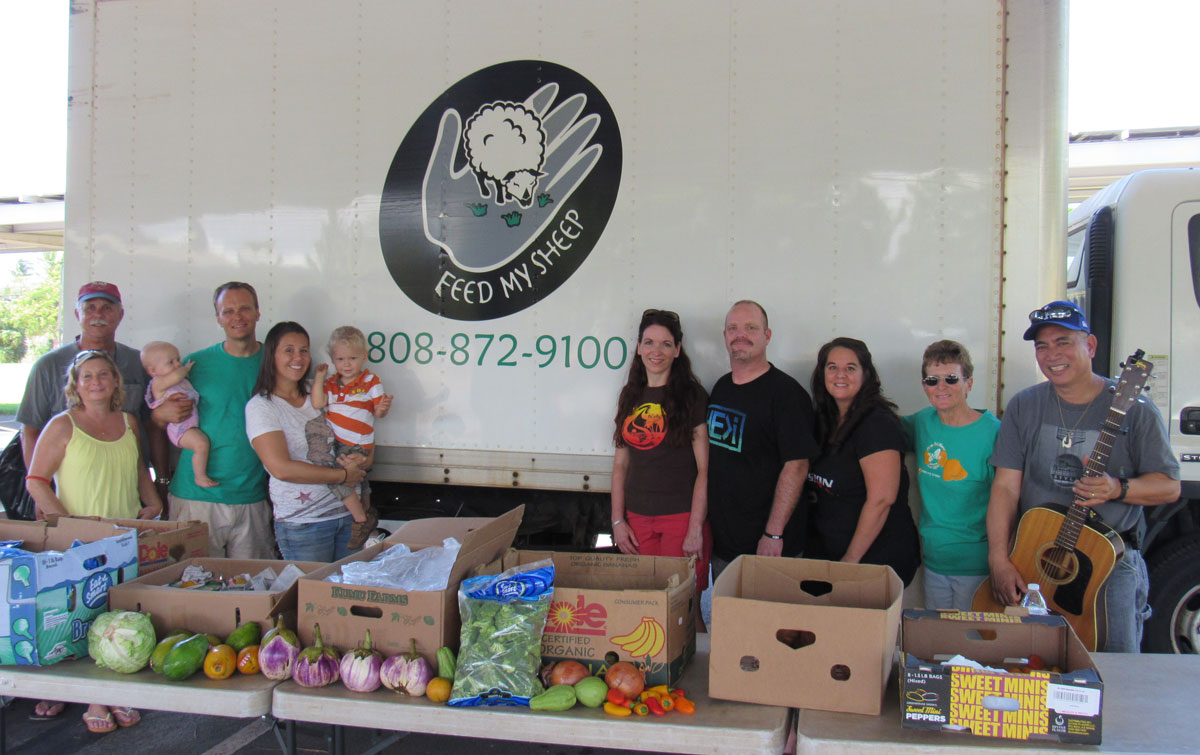
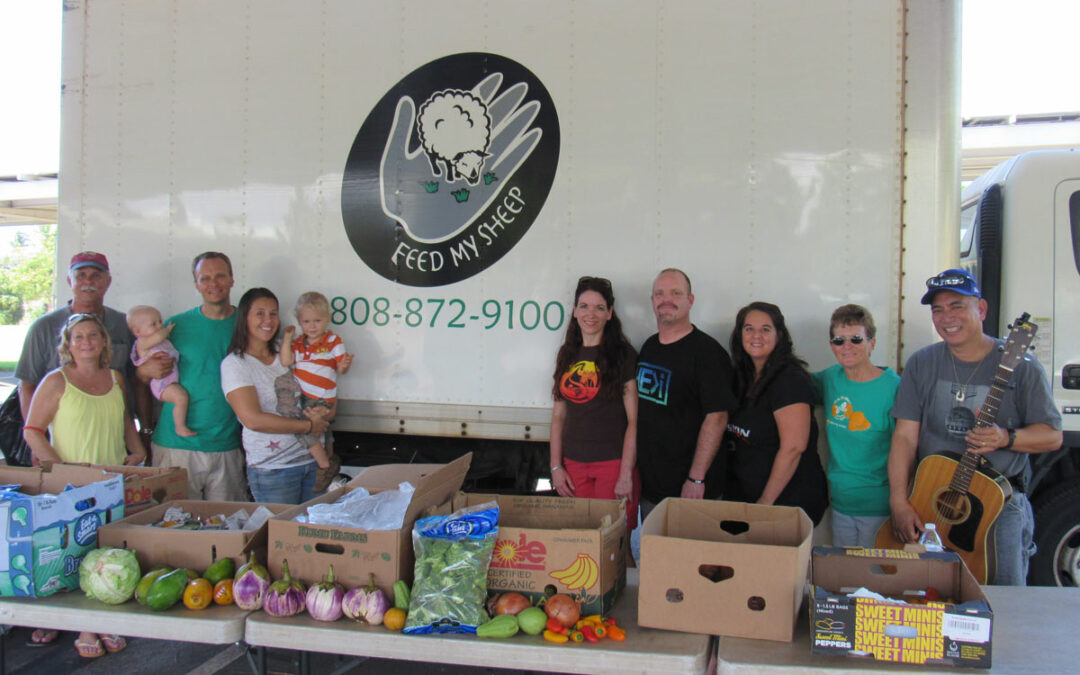
Maui Economic Development Board applauds the community service of Feed My Sheep (FMS). Serving with integrity and sincerity, this nonprofit makes an immediate impact on the lives of the less fortunate. Bringing positive hope, the many FMS volunteers lift the morale of low-income workers and the unemployed while helping them through rough economic times. “In an effort to make Maui hunger-free, FMS provides about 69,000 half-pound meals a month throughout the island,” said FMS Founder and CEO, Joyce Kawakami. “In the last year we have given food to 3,200 people including working but poor families, seniors on fixed incomes, and homeless men and women. A few moments of emotional support are offered to each person who comes, besides food for their week. We feel blessed to serve so many.”
A unique mobile food distribution program, FMS takes deliveries to designated neighborhoods of need each week. Bags of food are distributed to the needy in five different locations. “Anyone who needs food is welcome to come to one of our many mobile food distributions,” said Operations Director Scott Hopkins. “Our volunteers make FMS such a welcoming place. Plus, many local farmers offer participants a focus on healthier food choices.” For example, Kumu Farms provides FMS with healthy options for both their free distributions and their discounted produce market. They have been a consistent source of nutritious items such as kale, papaya, chard, bananas, arugula, salad greens, beans and fennel.
FMS staff surveyed over 100 people to find out how fresh produce, fruit and vegetables have benefited the participants. “Ninety-six people said that the food they received from FMS improved their health in ways that doctors confirmed,” Hopkins noted. “We documented reduced blood pressure, better heart health, improved mental clarity and increased strength. Through FMS I have seen many people go from their lowest point to a new beginning. That’s what makes it all worthwhile!” FMS is always seeking volunteers for distribution locations in Hana, Lahaina, Wailuku, Kahului, and Kihei. To inquire call (808) 872- 9100.
Through Feed My Sheep I have seen many people go from their lowest point to a new beginning. That’s what makes it all worthwhile!
Scott Hopkins, Feed My Sheep Operations Director
Dec 13, 2017 | Community
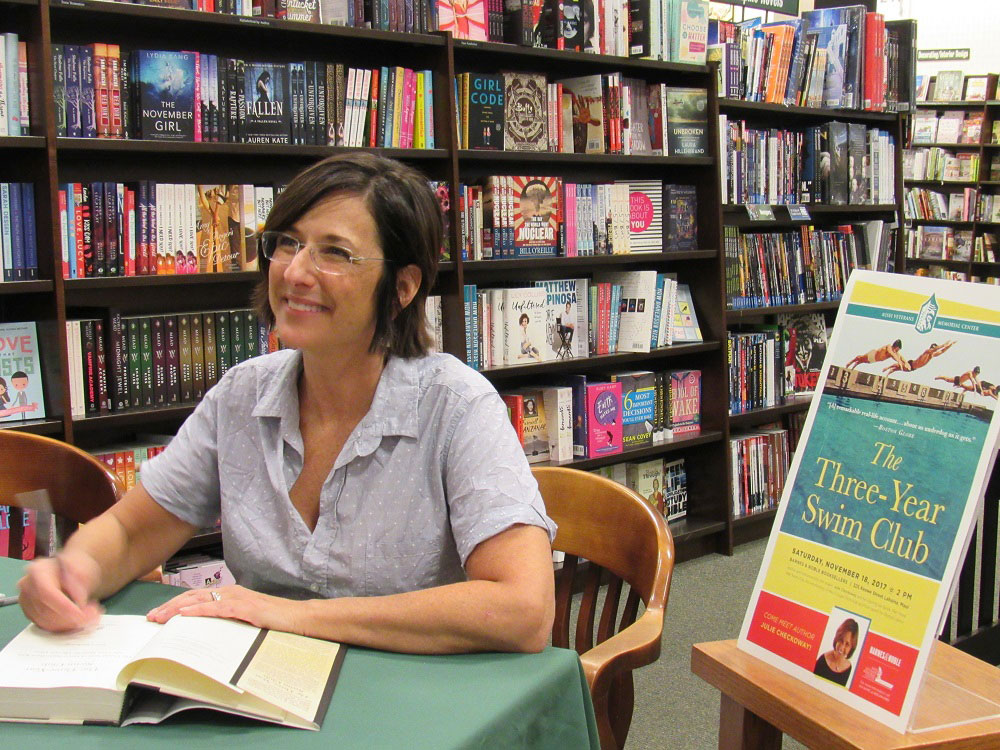
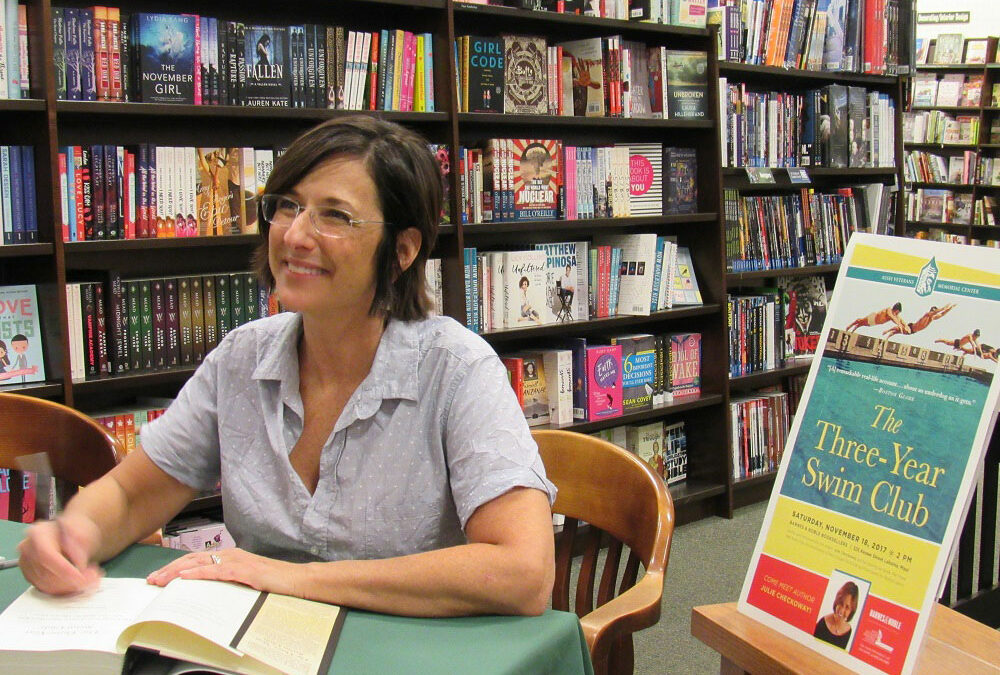
The community came out in droves for a November Barnes & Noble-Maui book signing to meet Julie Checkoway, author of The Three-Year Swim Club: The Untold Story of Maui’s Sugar Ditch Kids and Their Quest for Olympic Glory. The book, detailing the story of how Maui Coach Soichi Sakamoto developed Olympic swimming champions in the 1930s and 40s, is an extraordinary tale that Checkoway felt called to tell. “I’m from New England, so writing a story about another culture was a very delicate mission to undertake,” she explained. “In 2008 I received a phone call from a friend asking me if I had heard the story of these Hawaiian-Japanese American kids in the 30s who, against all odds, became Olympians. They were from poor families, swam in irrigation ditches on the Pu’unene sugar plantation, and trained with a coach who didn’t even know how to swim well. The more I researched, the more I realized that there was no one source that told the whole story of these extraordinary people and events. I’m honored to share their story with Maui and the world.”
Checkoway said Coach Keith Arakaki, Hawaii Swim Club-Oahu, was the bearer of the story for her. She then interviewed Bill Smith, now deceased, who won two Gold Medals in the 1948 Olympics. “The Smith family provided me with scrapbooks and priceless information,” she said. “The book includes everything about the swim team and their travels around the world as National Champions. I’m still amazed at how shoeless kids who sucked on sugarcane for their strength, did something so formidable. Teaching perseverance, Coach Sakamoto got them to believe in themselves.”
Bob Pellettieri, president of Hawaii Swim Club-Maui, agreed, “All the swimmers are proud of Checkoway’s book. It speaks of the determination that keeps going in the swim world and it’s great to finally have the whole story told.”
Deidre Tegarden, executive director of Nisei Veterans Memorial Center-Maui County, concluded, “Many of the swim team served in the military. Their story continues to inspire people to find the hero in themselves.”
As a former swimmer with Hawaii Swim Club-Maui, I appreciate all the research Checkoway compiled. The Three-Year Swim Club story will be passed down through generations.
Cecelia Romero, Baldwin High School Biology Teacher