Jun 7, 2017 | Education, Stemworks
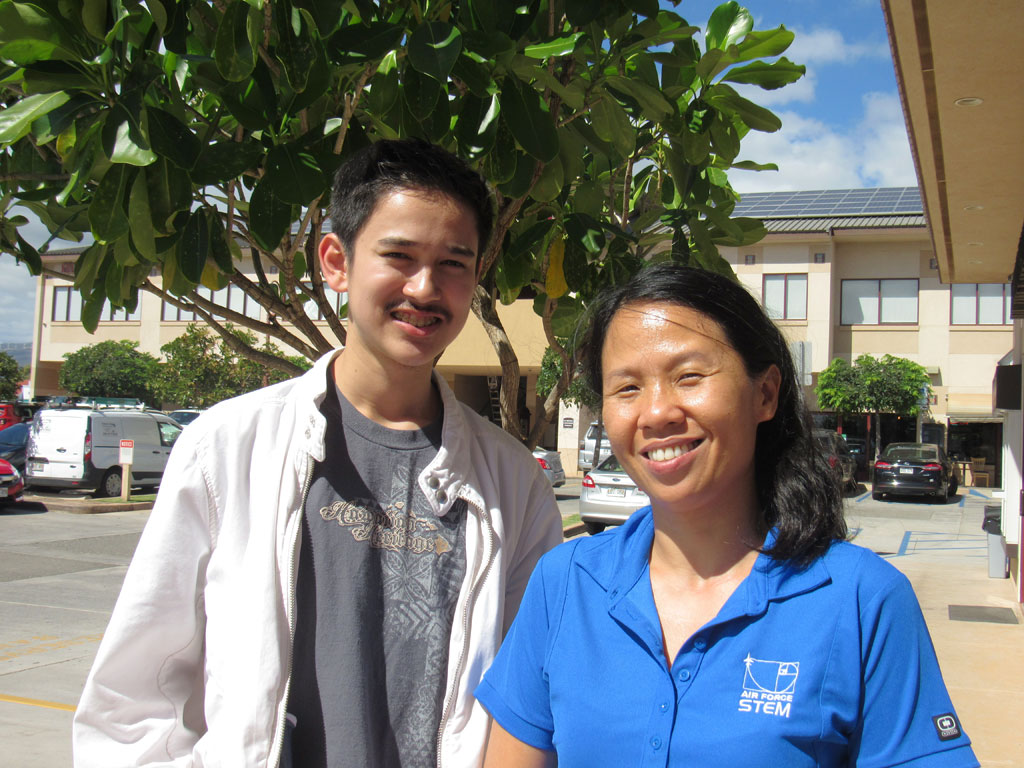
MacKelan Mitchell, a King Kekaulike High School senior, wants to be an aerospace engineer. Luckily, he also happens to be a student in Maui Economic Development Board’s (MEDB) Women in Technology (WIT) STEMworks™ Laboratory. “WIT’s program helps students gain real world experience in a career they are pursuing,” said Mapu Quitazol, MEDB Project Manager. “Mitchell wanted to learn from experts about what they do in their career and what college courses got them where they are. We are fortunate to have a handful of specialists at the Air Force Research Laboratory (AFRL) like Senior Aerospace Engineer, Dr. Kim Luu.”
Dr. Luu, who works at AFRL’s Directed Energy Directorate, has been honored by the Air Force for her leadership and management of critical Department of Defense Space Situational Awareness research programs. Dr. Luu has over 20 years experience and is internationally recognized for her technical expertise in satellite characterization, astrodynamics, and space debris.
“It was really great to be able to job-shadow Dr. Luu for a day,” said Mitchell. “She explained about the different aspects of a career in aerospace engineering and what courses will help prepare me in the field. To be honest, I didn’t actually know that there were so many different branches to the space side of engineering.”
Additionally, Mitchell accompanied Dr. Luu to Wailuku to help set up the AFRL portable planetarium for a STEMworks™ outreach event for elementary and middle school students. “The digital planetarium teaches students how to understand astronomical coordinate systems, and how to use significant points to find stars, planets, and even satellites,” said Mitchell. “I learned the importance of ground-based astronomy across the world. After we looked at the night sky in the planetarium, we played a short film about the Curiosity Mars Rover landing and one about going back to the Moon.”
“My day of job-shadowing was very enlightening,” said Mitchell. “I’m thankful to MEDB and WIT for the hands-on opportunities they offer students in the most current technologies.”
Students in STEMworks™ labs are afforded the opportunity to work with local industry partners and gain skills ranging from animation to computer-aided design to engineering design and more.
Mapu Quitazol, MEDB Project Manager
May 31, 2017 | Small Business
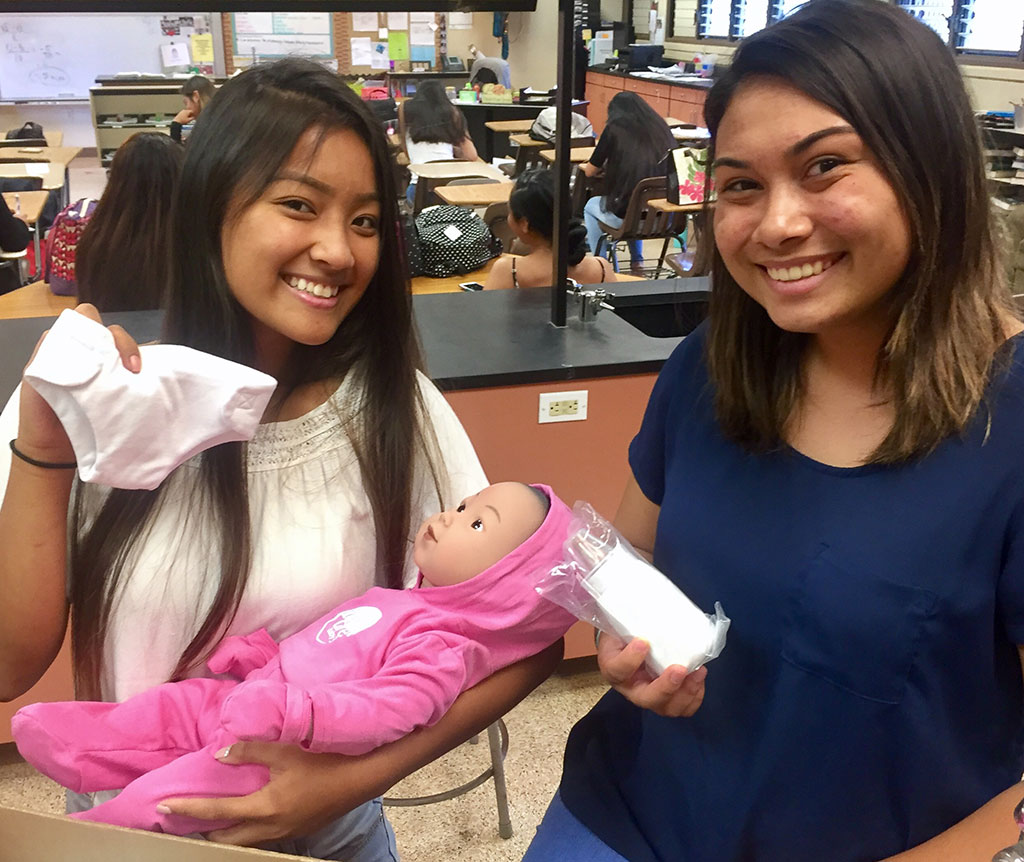
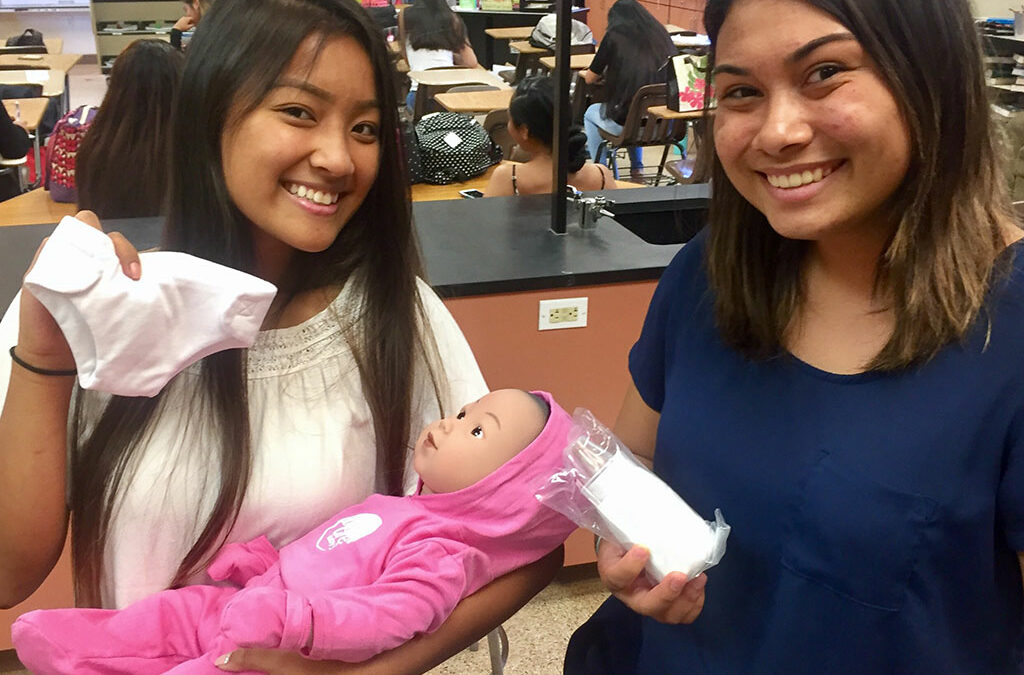
King Kekaulike High School, a grantee of Maui Economic Development Board’s (MEDB) Ke Alahele Education Fund, received funding toward educational materials for their Clinical Health students. “This project, Child and Human Development, will primarily impact the students’ choice of health care professions,” said Dodi Pritchett, science teacher at King Kekaulike. “Goals of the class include a more complete understanding of the cycle of life through the study of pregnancy and birth, infant care, and child and human development, as well as developing empathy for patients as students learn how to care for each individual. We obtained four new simulation babies, hospital scrubs, and HOSA (Health Occupations Students of America) membership fees for each student enrolled in the class.”
King Kekaulike partnerships were created with a variety of local physicians and clinical health offices. “Our Clinical Health students are also in close partnership with Dr. Celeste Baldwin and the Nursing Program at UH Maui College as well as various community outreach organizations,” Pritchett noted. “Through support for this project, not only will our Clinical Health students benefit, but each and every life these students come into contact with will be positively impacted as a result of their experiences in this class.”
King Kekaulike senior Isabel Riethbrock explained, “This unit is the start of Clinical Health studies for me. Learning about pregnancy, and the ups and downs that come with it, is a huge aspect of what clinical health is. What a woman’s body endures through this process fascinates me, not only as a potential health care provider, but also as a potential future mother.”
MEDB’s Ke Alahele Education Fund grantee programs educate and train students for new career pathways that address the community’s challenges and opportunities. MEDB partners with the private, public and nonprofit sectors at the local and national levels to achieve its goal of helping the next generation soar into the future.
Thank you MEDB for positively impacting our community by investing in our future health care professionals.
Dodi Pritchett, Science Teacher, King Kekaulike High School
May 24, 2017 | Community, Education
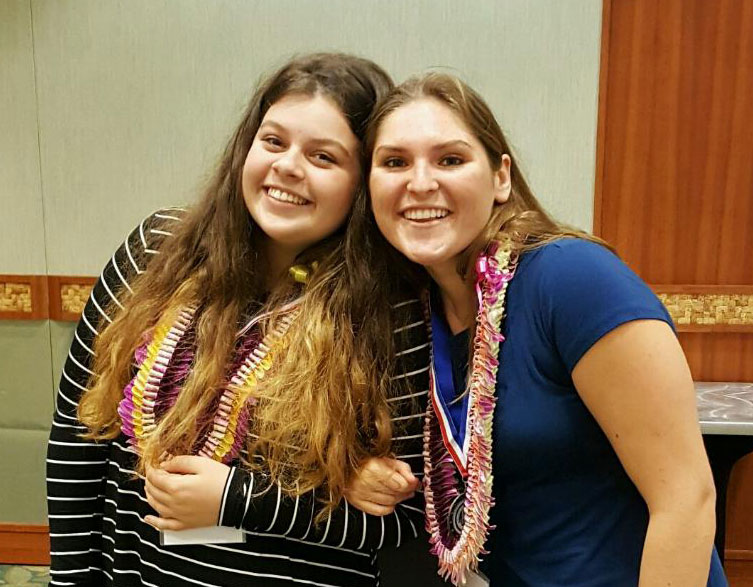
Maui students and best friends, Erica Sawczynec, Kihei Charter School 12th grade, and Celeste Jongeneelen, home-school 11th grade, have received high honors and recognition in astronomy and physics. The girls attended the 2017 Pacific Symposium for Science and Sustainability (PS3) where Jongeneelen was awarded first place and Sawczynec received fourth place. That placement sent them both to the National Junior Science and Humanities Symposia in San Diego where they both placed third in their respective categories in physics. Jongeneelen earned a $4,000 scholarship and both girls were selected as two of eight people who met with Dr. William Daniel Phillips, co-winner of the 1997 Nobel Prize in Physics.
In May, Sawczynec was awarded second place at the Intel International Science and Engineering Fair (ISEF) held in Los Angeles. In addition, she received $500 and an all-expenses-paid trip to the ISEF conference in Washington, DC next January, where she will present her work again. Sawczynec was a summer intern in 2016 with Maui Economic Development Board’s (MEDB) Women in Technology (WIT) Project. Her research as an intern won awards at the three competitions.
“Thanks to MEDB, I learned about the various opportunities we have here in Hawaii for STEM students, something that WIT gives much attention to,” said Sawczynec. “My astronomy project, determining the age and distance of star clusters, is important because it helps us to better understand what is happening in the universe around us. Stars of a certain age have certain characteristics that teach us more about stellar evolution as a whole. This can also aid with identifying stars which could possibly have exoplanets around them, based on how similar they are to our own sun. I would like to major in physics in college because there are still so many astronomical discoveries to be made.”
Thanks to MEDB and WIT for the Summer Internship Program and thanks to my mentor, Dr. JD Armstrong from UH’s Institute for Astronomy, for inspiring me to discover something new about the Universe.
Erica Sawczynec, Kihei Charter School 12th grade
May 17, 2017 | Community
The fourth annual Maui Energy Conference, held in March, broadened its focus this year to become a timely and innovative forum as Hawaii continues its transition to a 100-percent clean-energy economy by 2045. Presented by Maui Economic Development Board (MEDB) and the Mayor’s Office of Economic Development, the conference explored the theme, All Things Energy: Pursuing Opportunities for Electricity and Beyond.
“Energy experts and stakeholders, both national and international, examined groundbreaking strategies, and analyzed how concepts such as resilience and sustainability apply beyond the traditional grid,” said Frank De Rego Jr., Director of Business Development at MEDB and member of the conference Program Committee. Resilience, this year’s conference buzz word, suggests toughness and the ability to bounce back from catastrophic circumstances. Since the last energy conference, Hawaii has seen a failed merger of electric utilities and several near misses from hurricanes. That is why all sectors of the economy need to work together for energy resilience and sustainability.
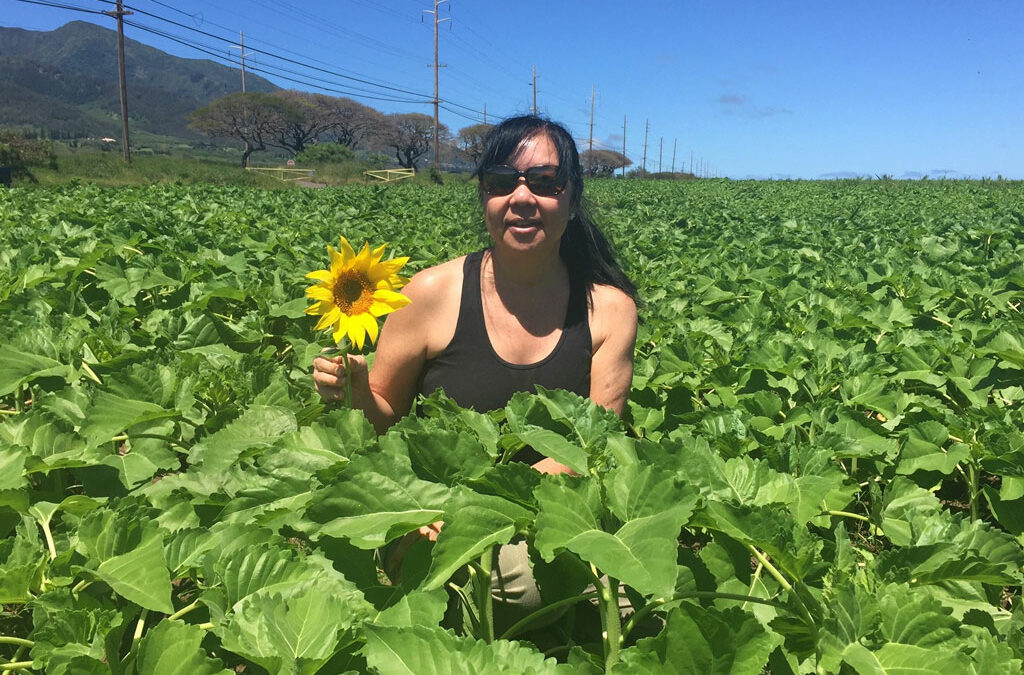
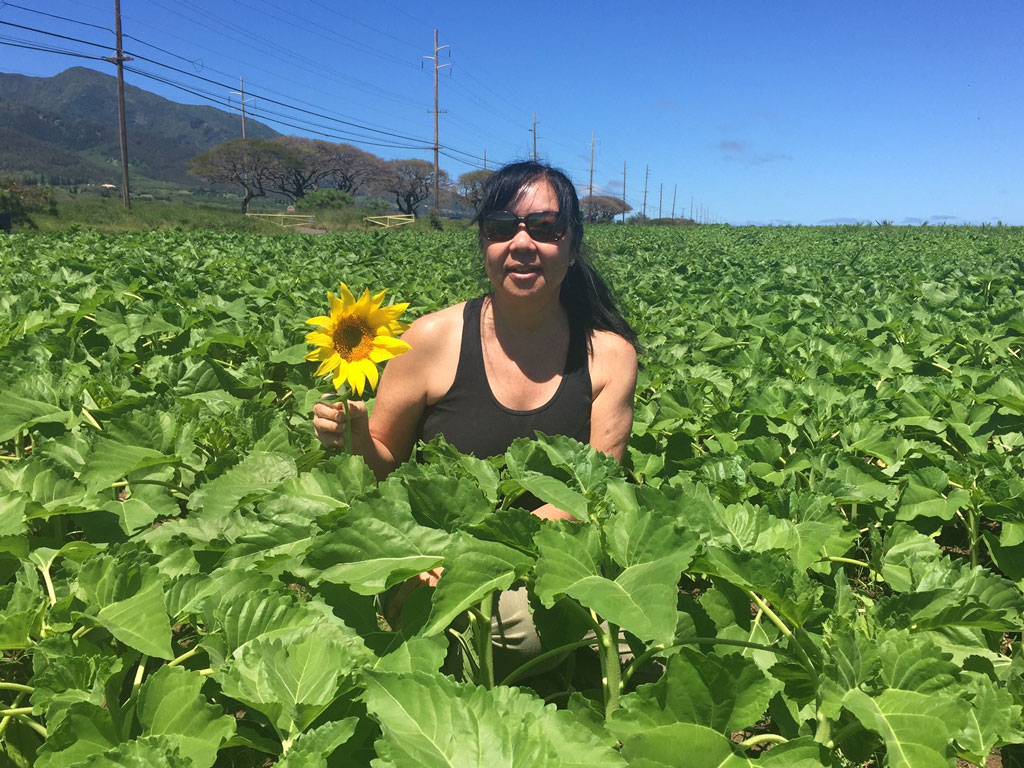
Pacific Biodiesel Technologies, an Energy Conference participant and Hawaii’s largest biofuel company, is now farming sunflowers and other biofuel crops on 115 acres previously used for sugar cane production on Maui.“These crops can be harvested in 100 days or less, provide acres of energy storage and carbon sequestration, and can be used to produce the highest-quality biodiesel in the USA,” said Kelly King, Maui County Council member and Vice President and Co-Founder of Pacific Biodiesel. “We’re focusing on several different crops in various crop rotations and experimenting with different soil amendments such as compost and others made from by-products of the production of our biodiesel, like glycerin and potassium sulfate. There are 36,000 acres of fertile lands on Maui that ceased sugar cane operation at the end of 2016. It is important for the community and the state to keep this land in agriculture to benefit our economy and environment, to help the state increase its energy security, reduce reliance on fossil fuel, and achieve its 100-percent renewable-energy mandate by 2045.”
Our first sunflower crop has been a harbinger of hope bringing folks together in support of local sustainable agriculture for food and fuel.
Kelly King, Maui County Council member and Vice President and Co-Founder, Pacific Biodiesel
May 10, 2017 | Education
Maui Economic Development Board’s (MEDB) Ke Alahale Education Fund is a key contributor to the innovative use of STEM (science, technology, engineering, mathematics) education throughout the state. Thanks to generous businesses and other community stakeholders, MEDB has expanded STEM curriculums, touching thousands of students.
“I am so grateful to Maui Economic Development Board (MEDB)!” exclaimed Liz Buchter, Technology Teacher at Kihei Charter School (KCS). “I received a grant from MEDB’s Ke Alahele Education Fund which went towards equipping my lab with much needed materials, including a 3D (three-dimensional) printer. A 3D printer allows students to participate in the engineering design process from inception to implementation. The students begin by defining a problem based on specific requirements. Then they create design solutions using Autodesk Inventor, a 3D modeling software package.”
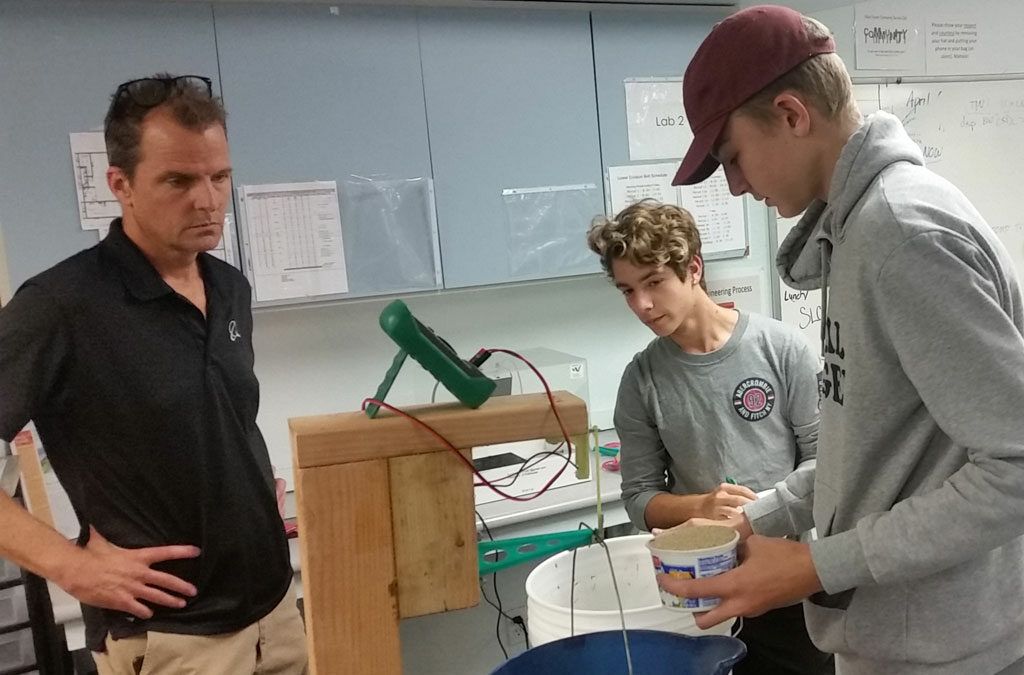
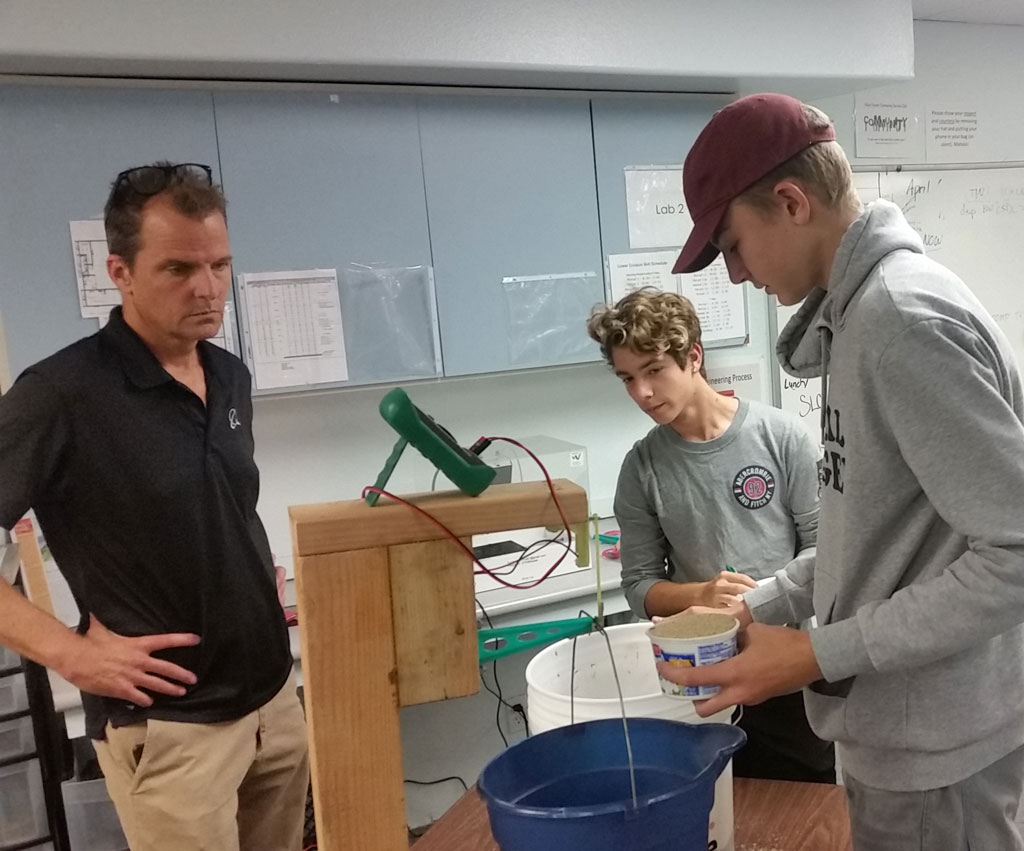
A recent KCS project tested the load of newly designed brackets. “The students hooked a bucket to their 3D-designed bracket and they used a potentiometer and a scale to measure how much weight each bracket could withstand,” Buchter explained. “As they kept filling the bucket with incremental units of beach sand, team members graphed how much load the brackets withstood, until the brackets eventually gave way. This hands-on, real-world experience further sparked the student’s motivation for the endless possibilities of 3D modeling and printing, including the advanced technologies that have come about across all fields.”
Dr. Steven Griffin, Senior Technical Fellow and Chief Engineer, Boeing LTS Inc., helped with the setup of the 3D printer and the engineering process. “The 10th graders at KCS generated creative and interesting designs for an engineering challenge that involved computer-aided design, 3D printing, stress analysis and testing,” Dr. Griffin noted. Lucas Lavin, a KSC 11th grader added, “The use of 3D modeling software and printers adds to our creativity and provides us with the opportunities for actual experiences that replicate the engineering process. We hope that one day our ideas and designs will help shape the world.”
It has been a great experience learning how our next generation of engineers crafts solutions to real-world problems.
Dr. Steven Griffin, Senior Technical Fellow and Chief Engineer, Boeing LTS Inc.