Oct 10, 2018 | Education, Stemworks
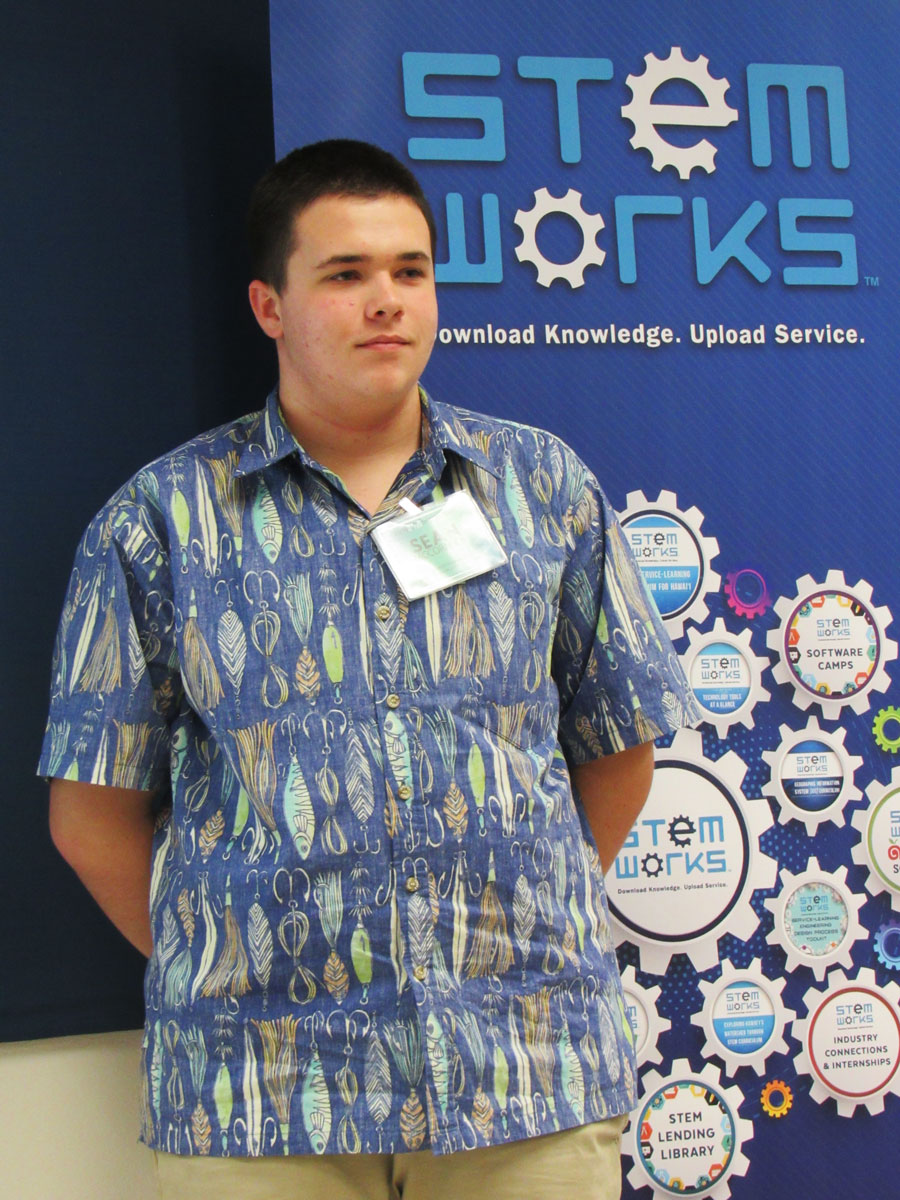
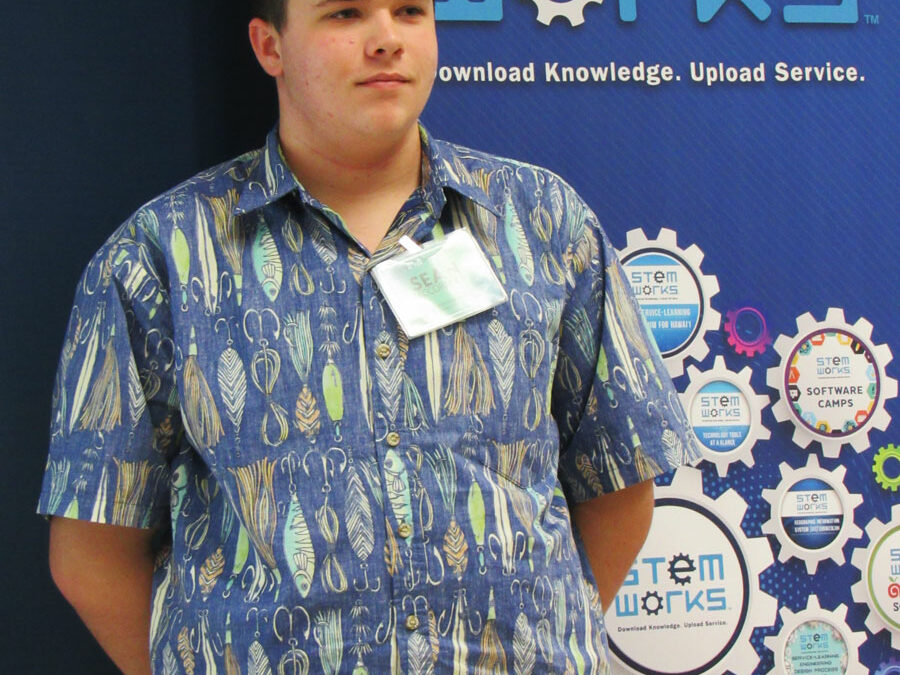
Sean McCormick, King Kekaulike High School, was among the 31 high school students participating in Maui Economic Development Board’s (MEDB) Women in Technology Project (WIT) STEMworks™ Summer Internship Program. For six weeks, the STEMworks™ interns aligned their abilities and interests with industry professionals throughout the islands. The experience provided invaluable work-based learning for the STEM (science, technology, engineering, mathematics) students to explore career pathways.
McCormick’s STEMworks™ Internship project included creating a computer program that can help astronomers find and predict the transit of an exoplanet, the passage of a planet between a star and the Earth. He worked with Dr. J. D. Armstrong, an astronomer and the Education Outreach Specialist from the University of Hawaii Institute for Astronomy (IfA).
McCormick explained, “An exoplanet is a planet orbiting around a star other than the Sun. Exoplanets are difficult to identify as they cannot be directly seen in a telescopic image due to their distance from Earth. Exoplanets are identified when they block a small amount of light from the star they are orbiting. Observations are collected, and the intensity of the star is graphed over time. If there is an exoplanet, the graph will have a U-shaped dip. The radius of the planet, relative to the parent star, can be determined at this point by using the ratio of the star’s intensity when the exoplanet is transiting and when it is not. This is indicative of how much of the light from the star is being blocked by the exoplanet. I discovered that entering the collected data into a supercomputer is the best approach to this problem.”
McCormick found his project fun and challenging—trying to learn the math and figure out how to automate it. He noted, “I am looking forward to continuing to work on research projects with both STEMworks™ and the IfA in the future.”
Dr. Armstrong concluded, “Every year MEDB sends me some amazing interns to work with. I appreciate the level of skills, hard work, and creativity they bring to the IfA.”
During my summer internship I had the chance to analyze the light from stars to discover exoplanets. Thank you STEMworks™ and IfA for the opportunity to experience a job in astronomy!
Sean McCormick, King Kekaulike High School
Sep 19, 2018 | Education, Stemworks
For the nearly 500 guests who attended this year’s annual Maui Economic Development Board’s (MEDB) Ke Alahele Education Fund Benefit Dinner, the love of science, technology, engineering and mathematics (STEM) was in the air. Held at the Grand Wailea Resort, the festive evening showcased Maui County’s STEM stars and raised funds to support MEDB’s STEM education programs throughout our county and across the state.
During the program, students also had an opportunity to share their love of STEM. Jeffrey Ho, 4th grader at Pukalani School enthusiastically said, “I’ve been a part of the STEMworks™ AFTERschool program for 2-years and have been exposed to robots, ozobots, coding, digital media, CAD, 3D printing, and more! These experiences have helped me gain leadership skills and confidence.”
Yasha Ronquillo, Maui High School alumna and STEMworks™ intern, observed, “If I were to describe the power of STEM for me personally it would be growth and opportunity. During my 6-week internship I networked with students and STEM industry professionals that I will continue to keep in contact with.” The students all thanked MEDB and STEMworks™ for the encouragement to embrace change and pursue opportunities for growth.
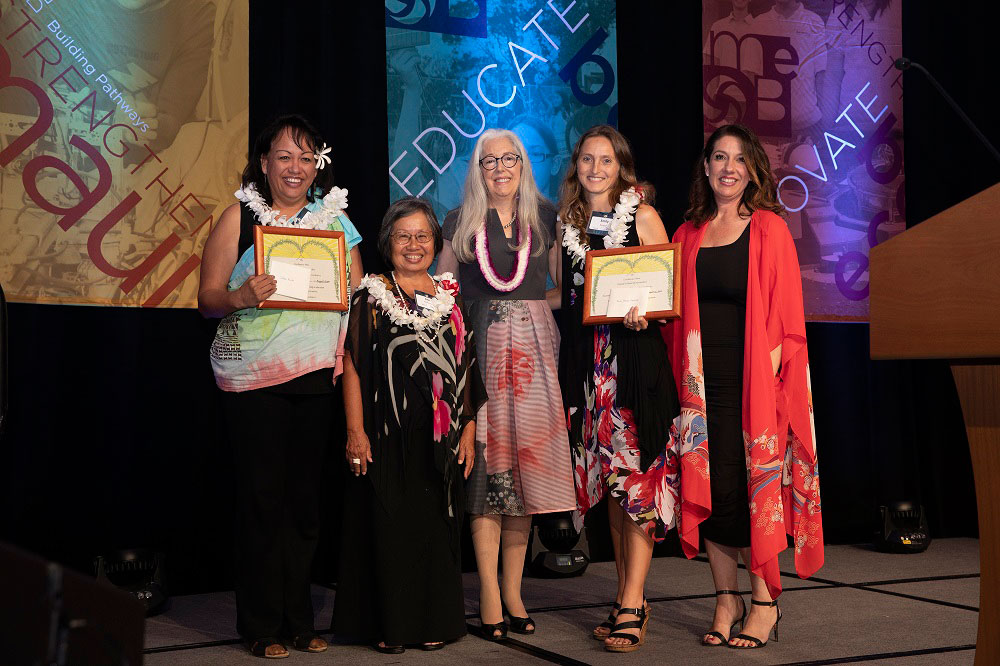
New to the event was the presentation of the Czechowicz Teaching Excellence Award, created by two former teachers, Lesley and Pawel Czechowicz, in honor of their mothers. The inaugural award recognized three exceptional STEMworks™ facilitators in Maui Nui: Cindel Jacintho of Lanai Elementary & High School’s after school program; Iolani Kuoha of ‘O Hina I Ka Malama, Molokai Middle Hawaiian Immersion School; and Emily Haines-Swatek of King Kekaulike High School.
The evening’s finale was the presentation of the Daniel K. Inouye Innovation Award, the highest student award MEDB presents. This year, the award went to 2018 King Kekaulike graduate Justin Hanks for integrating all the resources and skills he learned in the STEMworks™ program. For his senior project, Hanks put on elementary school STEM camps to encourage innovation and creativity in younger students.
MEDB Board President Ryan Churchill concluded, “We thank all those who have contributed and played a role in our youth’s love of STEM. It’s truly an investment that has the power to come full circle, helping to shape our leaders of tomorrow and ensuring a bright future for our islands.”
These funds will provide state-of-the-art technology tools for our students and training for our teachers — investments that will make a difference in the lives of our residents and our community.
Leslie Wilkins, MEDB President and CEO
Sep 5, 2018 | Education, Stemworks
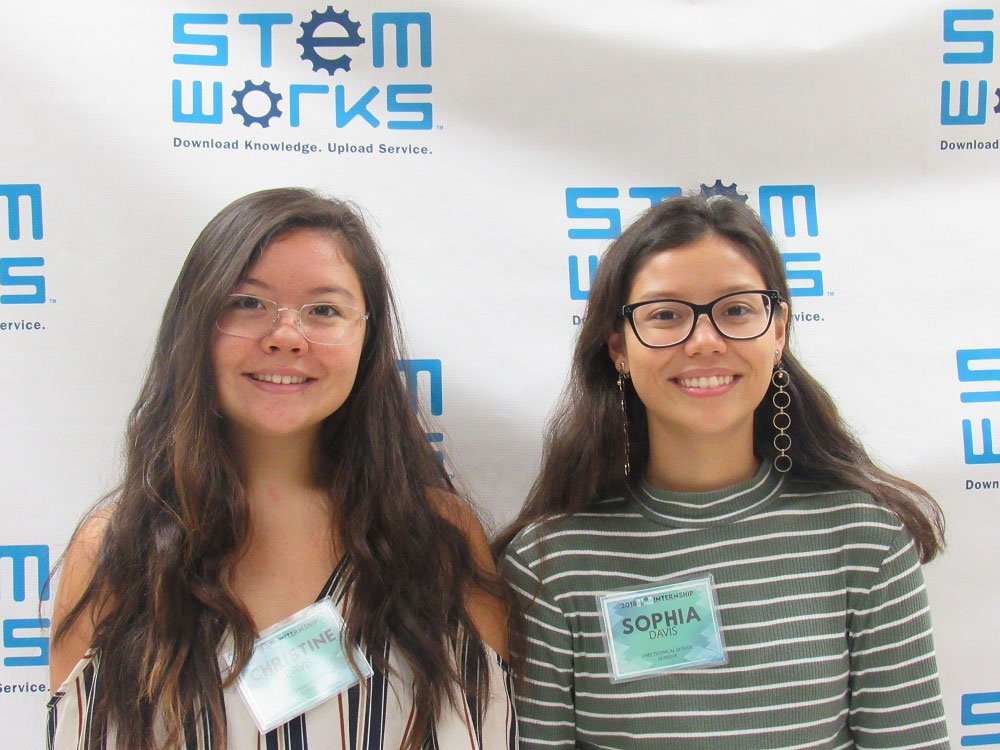
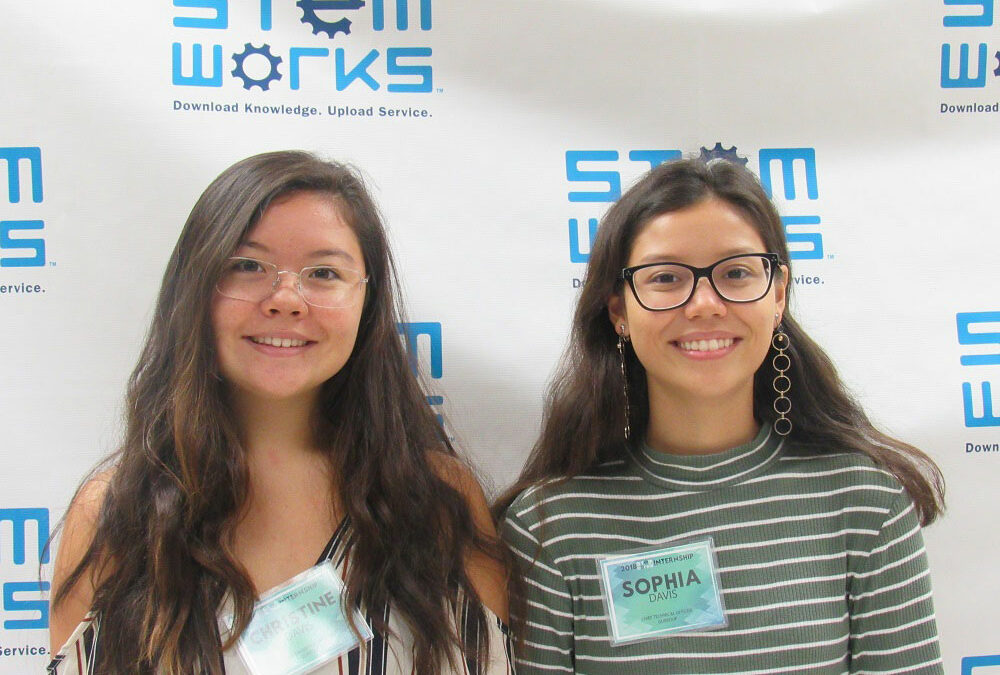
Sophia and Christine Davis, Kihei Charter School, were among 31 of the most promising STEM (science, technology, engineering, mathematics) high school and college students presenting their innovative projects at the 2018 STEMworks™ Summer Internship Showcase. Created by Maui Economic Development Board’s (MEDB) Women in Technology Project (WIT), the six-week STEMworks™ Summer Internship provides statewide, work-based learning opportunities for students, matching their interest and skills with the needs of the host company.
Mentor Ron Viloria from qubedup Company noted, “STEMworks™, cultivated by MEDB’s WIT, has proven itself to be the single most valuable resource for my company’s launch. The Davis sisters had the opportunity to step up and grow the qubedup work environment. During the last six weeks my company went from just being registered to having a web presence and items for sale. Sophia has built a prototype “smart lei” that has safety, medical, and entertainment applications. It’s our take on improving and promoting a portion of local Hawaiian culture.”
Viloria continued, “Christine heads the Social Media campaigns of the company and started a Hawaii-positivity movement for the community. Everything is rooted in stories and their stories are just unfolding.”
Sophia said, “My STEMworks™ Internship projects were several notably different yet connected projects. My first project was a smart lei, a unique Hawaiian-style wearable technology with various lights and sensors that react to the world around it. The second was creating digital designs that have an extra story or layer for our Redbubble portfolio and other print-on-demand merchandise services. The final project is designing and coding a special web app for qubedup that has a connection to some of my designs. Thanks MEDB for hands-on experience in a real workplace!”
Christine added, “At qubedup, I worked on creating innovative fashion technology that included marketing, social media managing, and logo designs for products. Being a STEMworks™ intern means being part of a network of passionate individuals in the STEM education movement. It helped me solidify potential career paths, dedicate myself to interesting and innovative work, and change the world through STEM.”
STEMworks™ students have a unique opportunity to explore technical and professional development and embrace new life skills to create change in their local communities.
Lalaine Pasion, WIT Project Assistant
Aug 15, 2018 | Education, Innovation, Stemworks
Molokai High School’s (MHS) Mākaʻikaʻi iā grant from Maui Economic Development Board’s (MEDB) Ke Alahele Education Fund provided support for the school’s O Hina I Ka Malama Hawaiian Immersion Program. “The main outcome of the grant produced a series of virtual field trips of environments on Molokai showcasing important natural and cultural resources,” said Gandharva Mahina Hou Ross, Molokai High School Hawaiian Language Immersion teacher and boys’ cross-country coach. “This curriculum model is place and culture- based and uses technology as a way of tying in the state performance standards and making education relevant. The grant gave the students the opportunity to create a website that documents the different environments on Molokai.”
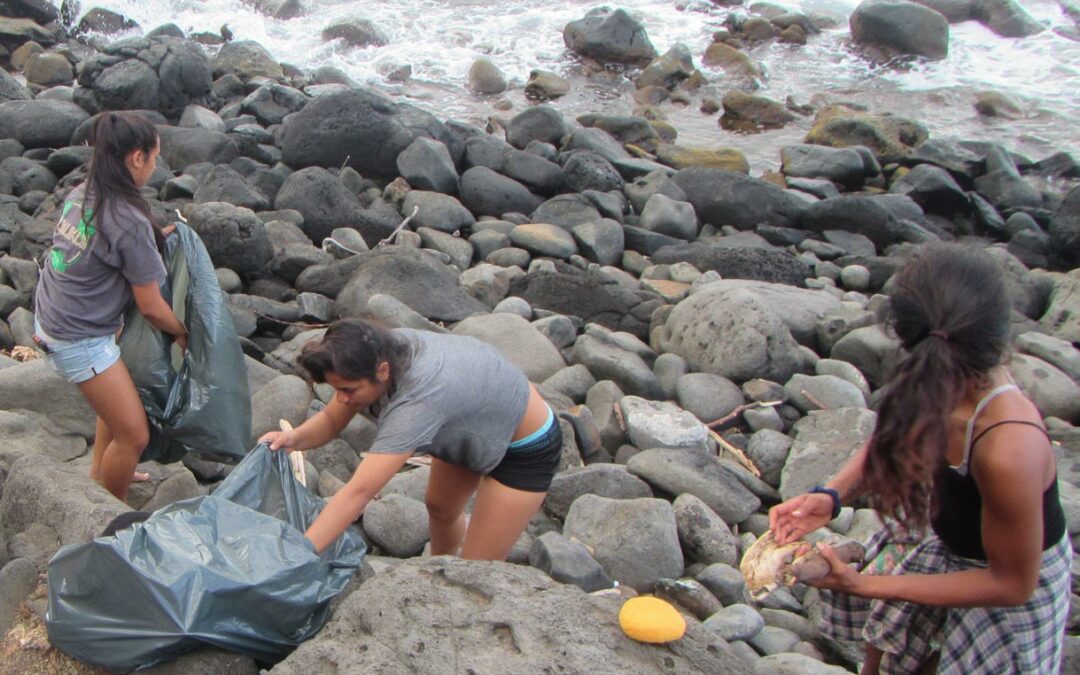
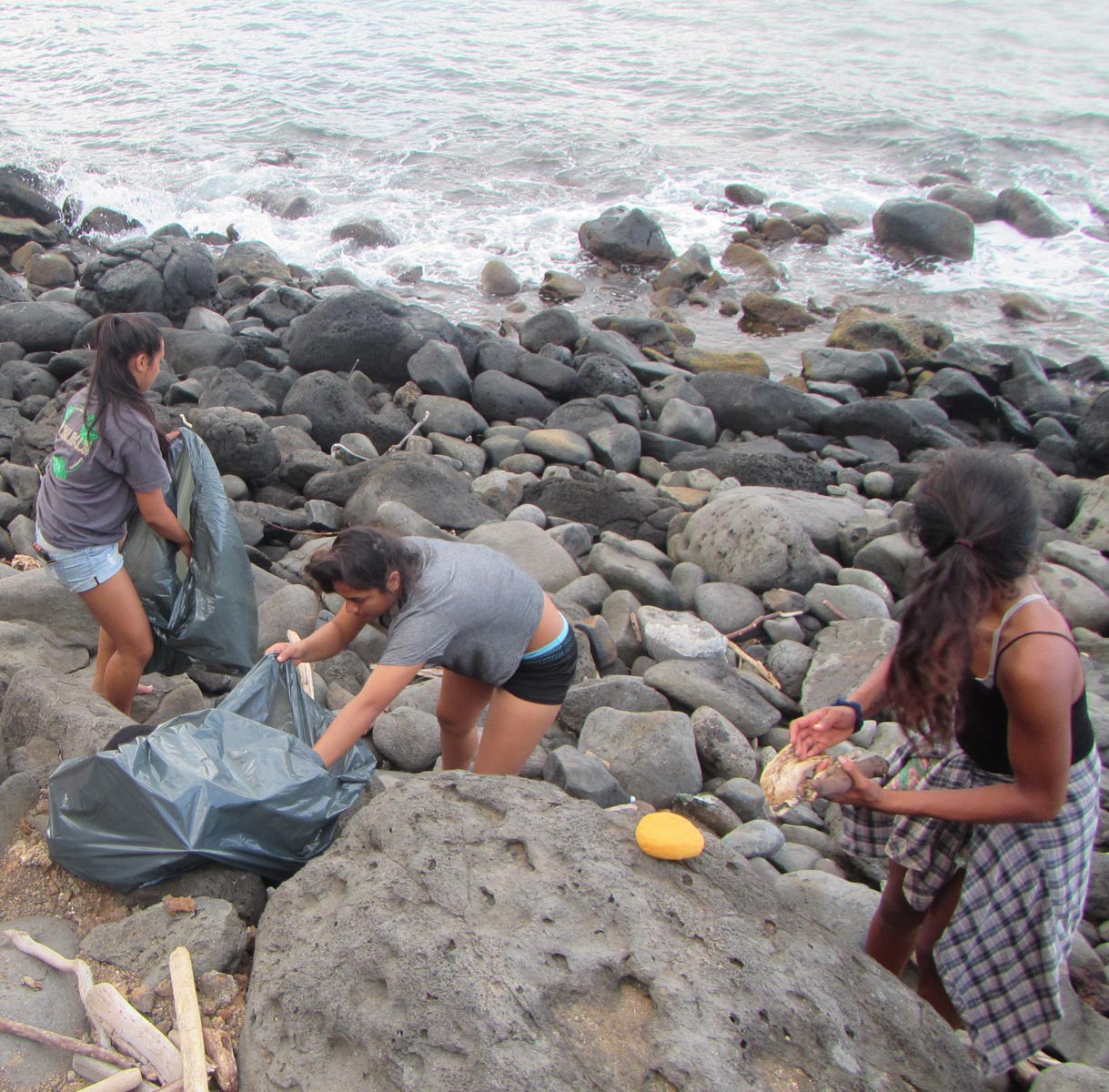
Ross explained, “We took monthly field trips to various marine environments to conduct culture-based inquiry of important marine resources. Students traveled to the northwest, south and east coasts of Molokai to do shoreline monitoring. They collected samples of marine algae, marine invertebrates and marine vertebrates for further investigation in the classroom. Samples were identified with Latin, Hawaiian and common names, along with their habitat, diet, life cycle, traditional Hawaiian uses and management practices. After taking film footage on our field trip, the students used green-screen editing technique to describe what they saw.”
Funds were also used to create an internet domain for O Hina I Ka Malama’s bilingual website as a database to archive our program activities. The marine field guide will be archived on the school website that the students designed. Through the virtual field trips, the grant also enabled the students to create multimedia presentations on Molokai, at the annual MEDB Women in Technology (WIT) STEM (science, technology, engineering, mathematics) Conference, and at Hawaiian Language Immersion schools throughout Hawaii.
“I want to thank MEDB and WIT STEMworks™ for the Ke Alahele grant,” said Kauiwai Poepoe-Mollena, MHS 12th grader. “They provided us with the newest technology resources to complete our field trip tasks such as meter-square plots, ARC GIS mapping, cameras and GPS to mark points at the designated areas.”
On Saturday, August 25, 2018, MEDB will hold their annual Ke Alahele Education Fund Benefit Dinner & Auction at the Grand Wailea Resort. For more information call (808) 875-2300 or email cari@medb.org. Please join us!
Leslie Wilkins, MEDB President and CEO
Aug 8, 2018 | Education, Stemworks
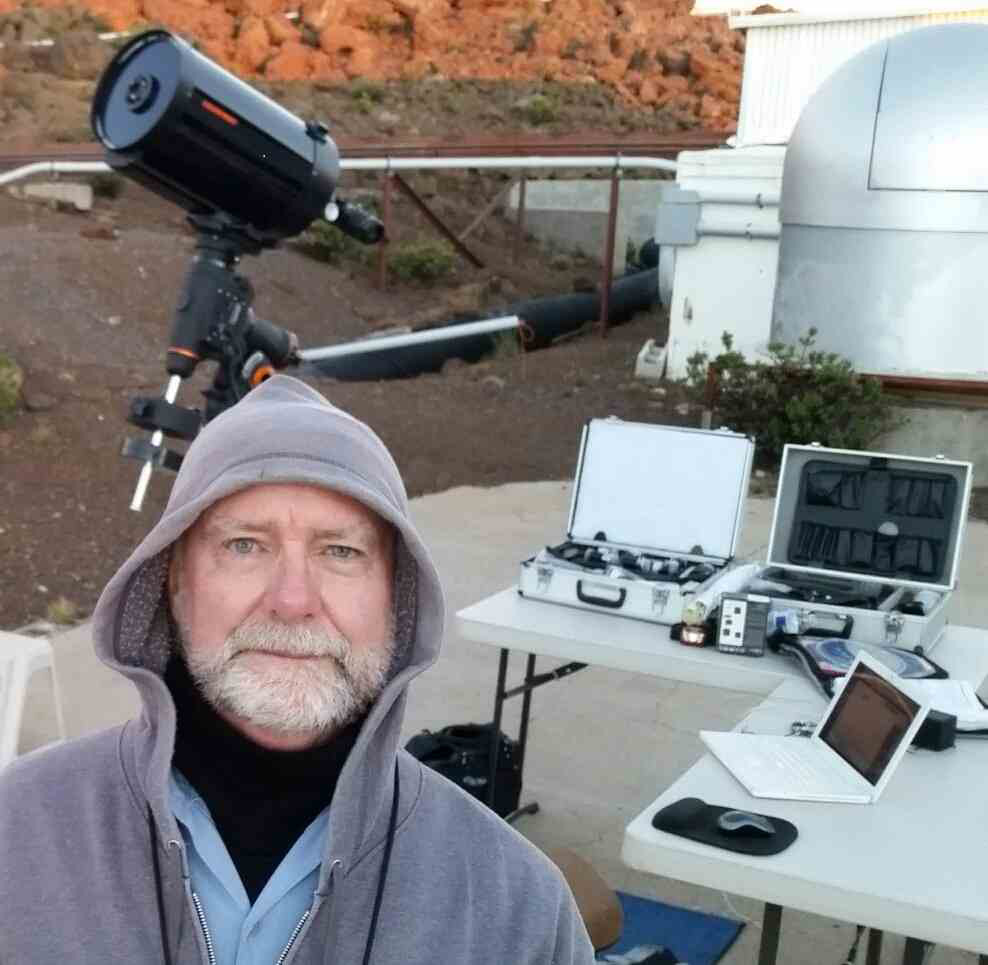
Maui resident Steve McCaughey recently joined a growing number of private-citizen space enthusiasts from all walks of life who serve as NASA Solar System Ambassadors (SSA). The nation-wide SSA program brings the excitement of NASA’s space exploration to children, teachers, and adults in the community. As an Ambassador, McCaughey will deliver information about NASA’s vast endeavor of missions and scientific study, through school programs, planetarium talks, telescope-viewing parties, mall displays and much more.
McCaughey describes himself as a “lover of the night sky.” He first came to Hawaii in 1973 on a 40-foot schooner, with no GPS satellites to help navigate. “We conducted daytime sun sightings at noon and 2pm with a sextant, and computed our position with logarithmic tables,” he explained. “At night I had the 4am watch and I steered the boat by the stars. I fell in love with the constellations and notable objects in the sky that can be observed with binoculars, and I began studying double stars.”
Soon after, McCaughey joined the Hawaii Amateur Astronomers (HAA). He purchased a Celestron 9.25-inch Schmidt-Cassegrain telescope with an equatorial mount on a pier, and a 104mm refractor that he uses for educational outreach. He began attending the University of Hawaii Institute for Astronomy (UH IfA) AstroTalks in Pukalani, and a few years ago helped form the Maui Double Star Association, a group of students and adults who do observations of double stars. Some of the student participants ended up being co-authors on a paper in the Journal of Double Star Observations, and one is majoring in physics because of this experience.
With the inspiration of Dr. J. D. Armstrong, UH IfA Educational Outreach Specialist, McCaughey’s HAA group has conducted astronomy outreach on Maui for the past ten years. They travel to STEM (science, technology, engineering, mathematics) conferences, conventions, schools and other events with their telescopes. “McCaughey’s dedication to community engagement with space science is outstanding,” said Dr. Armstrong. “Regarding his recent NASA Ambassadorship appointment, we look forward to sharing more with him.” For educational outreach information, call (808) 281-2468.
I look forward to bringing the world of NASA and astronomy to those who are interested in ‘looking up’. The youth of today are the ones who will take us on and beyond!
Steve McCaughey, NASA Solar System Ambassador

Aug 1, 2018 | Education, Stemworks
Maui Economic Development Board’s (MEDB) Ke Alahele Education Fund grantee, the Lihikai Elementary School Surferbots in Kahului, applied their grant towards the VEX IQ Robotics challenge events, purchasing parts and registration fees. “This program allows students the opportunity to apply STEM (science, technology, engineering, mathematics) classroom concepts to a technological product,” said Lihikai teacher, Kelly Imada. “It also introduces and reinforces the engineering design process through the challenges of competing with other teams. Our Lihikai robotics program builds interest for students in STEM subjects as they progress through elementary, intermediate, and high-school.”
“Thanks to MEDB, this was the Surferbots’ most successful year,” said Imada. “Our two teams competed in tournaments at Lahainaluna High School and the Valley Isle Tournaments. We were also honored with the Judge’s Award at the Baldwin High School Vex IQ Tournament.”
The Surferbots had fifteen members on two teams and both qualified for State competition at the Hawaii Convention Center. Team A qualified through the skills challenge and made it into the top 16 going to the elimination matches at the 2018 Hawaii State VEX IQ Tournament. Team B qualified by winning the Excellence Award at the Valley Isle Tournament in December and were awarded the Think Award in the State VEX IQ Tournament.
“In addition to building robots and competing, the students learn problem-solving skills, teamwork, responsibility, and commitment,” Imada said. “We are very grateful to the Ke Alahele donors. Without their support we would not be able to provide these valuable experiences in robotics to our students.” The Surferbots agreed, “Robotics helped us understand more about technology and working hard to reach a goal step by step, retrying and improving. Robotics taught us that if you want to achieve something, it takes trial and error, and working together as a team.”
On Saturday, August 25, 2018, MEDB will hold their annual Ke Alahele Education Fund Benefit Dinner & Auction at the Grand Wailea Resort to celebrate the STEM achievements of students in Maui County and statewide. For more information call (808) 875-2300 or email cari@medb.org.
Robotics helped me understand more about technology and working hard to reach a goal. I feel great about being on this team because I get to learn with others.
Surferbot Team Member, Lihikai Elementary School
Jul 18, 2018 | Education, Stemworks
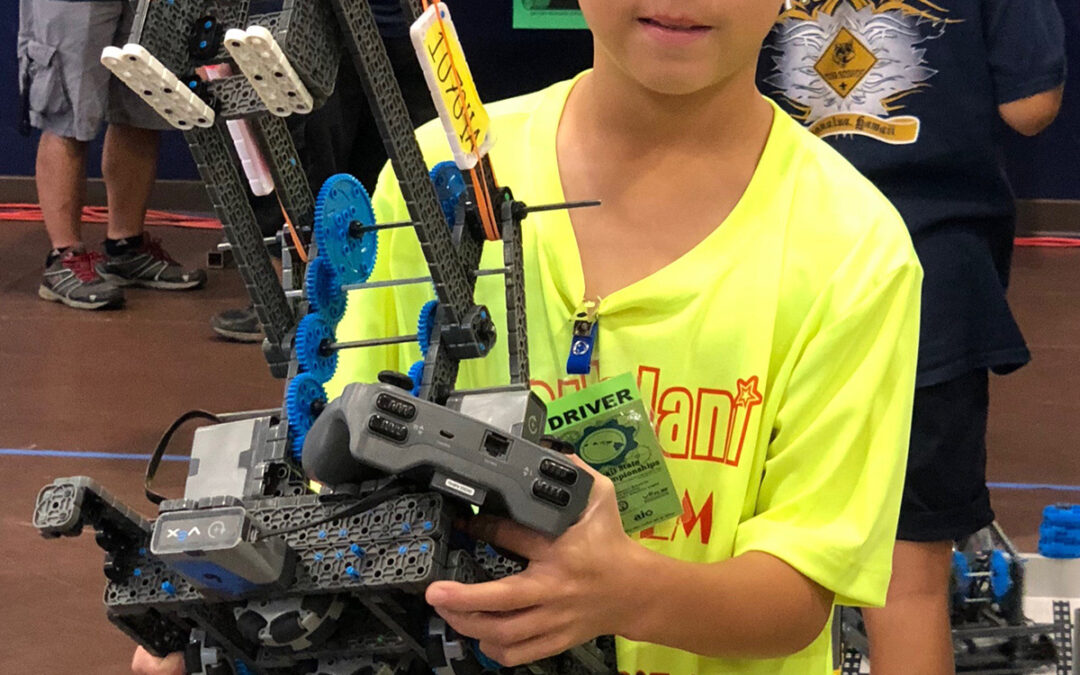
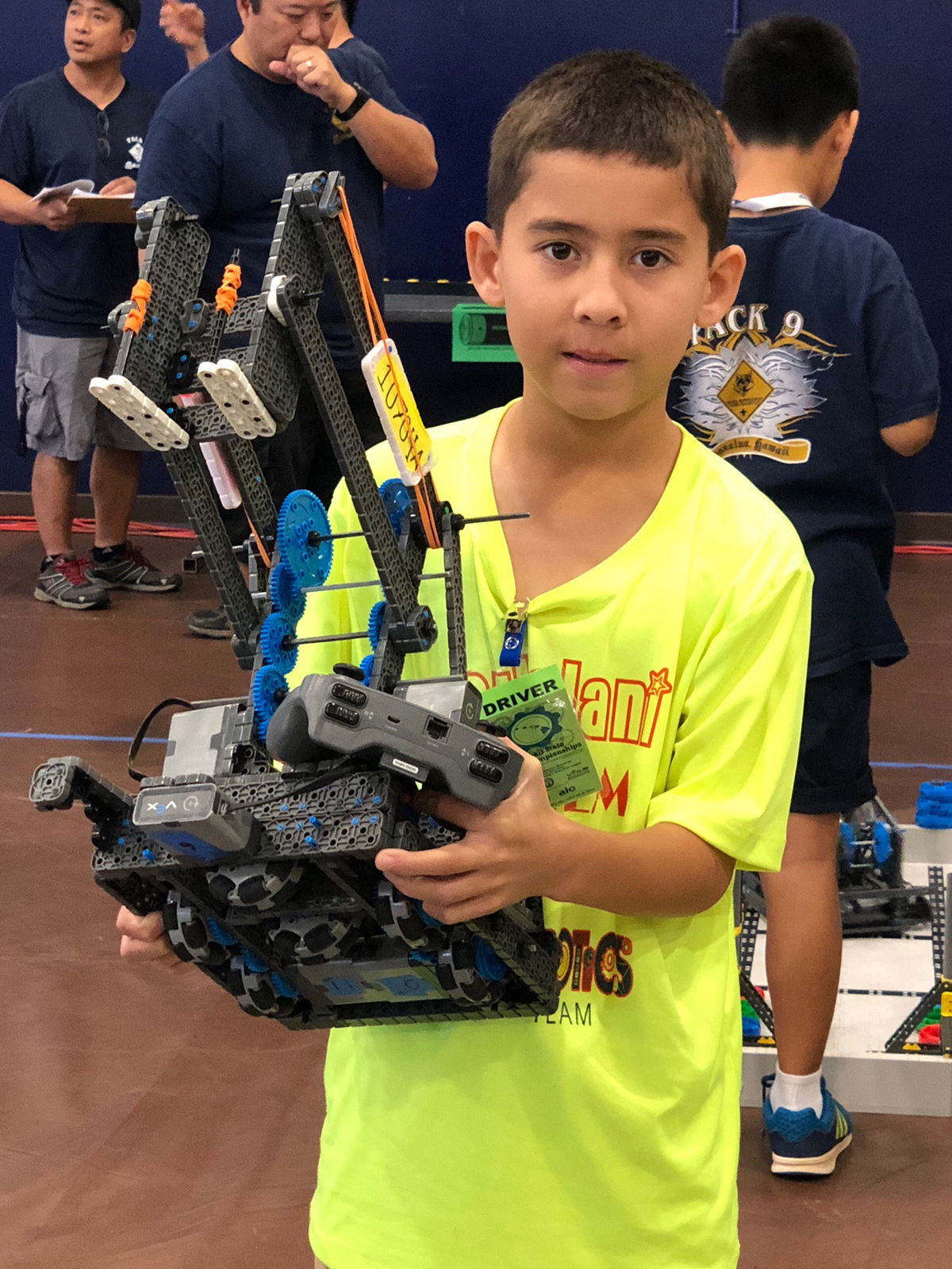 Pukalani Elementary School was most fortunate to have received two Ke Alahele Education Fund grants from Maui Economic Development Board (MEDB), one for the students and one for the teachers. The first funding gave the Pukalani School Imagineers Robotics team the means to travel to Oahu to compete in the Hawaii State Elementary VEX Championship in January of this year. “The VEX competition experience was priceless for the student’s STEM (science, technology, engineering mathematics) curriculum,” said Debbie Hisashima, Pukalani Academic Coach and STEMworks™ AFTERschool Coordinator. “What the students enjoyed most was meeting up with other teams, seeing their drive and motivation, and all of the possibilities that are out there as they advance in age.”
Pukalani 5th grader Kamaha`o Akana explained, “I learned so much from the Oahu Waialua Robotics Team before the start of competition. Watching the Waialua students work and seeing their drive and motivation was the greatest lesson of all. They kept on trying to adjust without giving up– which was helpful for us to notice when we ran into our own obstacles at the competition. We adapted quickly and tried our best.”
Robotics team member Kayden Volner added, “I enjoyed watching how the robots at the state level functioned. Our team observed different designs and changed our robot to be more efficient so that it would be competitive at the Create U.S. VEX National Championships. Most importantly, I learned that working together will get the job done.”
Hisashima said, “The second Pukalani School grant was written for our afterschool STEMworks™ teachers to attend the Hawaii State STEM conference on Oahu. It was the teachers turn to learn and we were really excited! Six of us participated in various STEM-related classes, which allowed us to network with other teachers from around the state. Three of our teachers ran mini-STEM sessions in the STEMworks™ Playground and gained valuable presentation skills in the process. With the funding from MEDB, our STEM teachers were able to meet with industry leaders and take new ideas back to our campus and our children.”
“Join us Saturday, August 25, for our annual Ke Alahele Education Fund Benefit Dinner & Auction at the Grand Wailea Resort. The Fund provides tools for our students and training for our teachers, investments that will make a difference in our community.” For more information call (808) 875-2300 or email cari@medb.org.
Leslie Wilkins MEDB President and CEO

Jul 11, 2018 | Education, Innovation, Stemworks

A recent talk at the University of Hawaii’s Institute for Astronomy focused on Listening to Planetary Orbits. Dan Tepfer, master pianist and astrophysicist, said to a captivated audience, “With most things, I’ve found, what’s very interesting is not the thing in itself, but rather its relationship to other things. Everything is relative, which is why harmony, pitch, and rhythm are so stunning in the relationships among the orbits of the planets around Trappist-1, a dwarf star about 40 light years away from us.”
Tepfer told how it is only in the past 25 years that we have been able to detect planets in orbit around stars other than our own, by measuring faint dips in a star’s brightness as planets pass in front of it. What makes the Trappist-1 system unusual is the existence of harmonious relationships among its planetary orbits. The farthest planet completes an orbit every 18 Earth days and the next farthest once every 12. Tepfer explained, “In the time it takes the farthest planet to go twice around the star, the next farthest has gone around three times. This same ratio can be expressed as a musical interval, which allows us to hear the structure of the planetary system.” In other words, we can listen not only to our own solar system, but to other planetary systems as well. Tepfer used a sound synthesizer to play this and other orbital harmonic intervals for the audience, an unforgettable experience for many of those present.
“We hear sound when the air around us vibrates and those vibrations reach our ears. Vibrations are like orbits: they repeat at a certain frequency,” Tepfer said. “With the Trappist-1 system, it is not only the outer two planets that orbit in resonant harmonic relationships. Surprisingly, all seven do—the only planetary system discovered so far with so many resonant orbits. Without approximating the orbits in any way, by just presenting the data scaled up to our range of hearing, we hear what we readily identify as harmonious music.”
Trappist-1 is located 39.6 light-years from the Sun in the constellation Aquarius. Seven terrestrial planets have been detected orbiting the star, a larger number than detected in any other planetary system.
Dan Tepfer, Astrophysicist and Master Pianist
Jul 4, 2018 | Education, Stemworks
On Saturday, August 25, 2018, Maui Economic Development Board (MEDB) will hold their annual Ke Alahele Education Fund Benefit Dinner & Auction, I ♥ STEM, at the Grand Wailea Resort to celebrate the STEM (science, technology, engineering, mathematics) achievements of students in Maui County and statewide. “The Ke Alahele funds provide state-of-the-art technology tools for our students and training for our teachers, investments that will make a difference in the lives of our residents and our community,” said Leslie Wilkins, MEDB President and CEO. “MEDB partners with the private, public and nonprofit sectors to reach its goal of helping the next generation soar into the future.”
MEDB recently announced that recipients received Ke Alahele Education Fund STEM grants totaling more than $142,000 during the 2017-2018 school year. The Ke Alahele event celebrates the Fund’s impressive giving which enhances education and training. MEDB will also present the Daniel K. Inouye (DKI) Innovation Award honoring the late Senator who inspired our youth and provided STEM opportunities throughout Hawaii.
“The DKI awards are presented to a Maui County student or team that demonstrates the most innovative use of STEM tools to improve our community,” Wilkins explained. “Students select a societal issue and then, by using sophisticated technology and possibly inventing their own tools, they create a real solution to address the community challenge.”
Agreeing, Curtis Tom, Maui County Senior Vice President Bank of Hawaii and Chair of the MEDB Education Fund, said, “Jobs today and in the future depend on the preparation of our students in critical thinking, problem solving, communication, collaboration, and creativity—all skills nurtured by STEM education. Those who support the MEDB Ke Alahele Fund through our annual fundraiser are helping to make this investment in our state’s future workforce.”
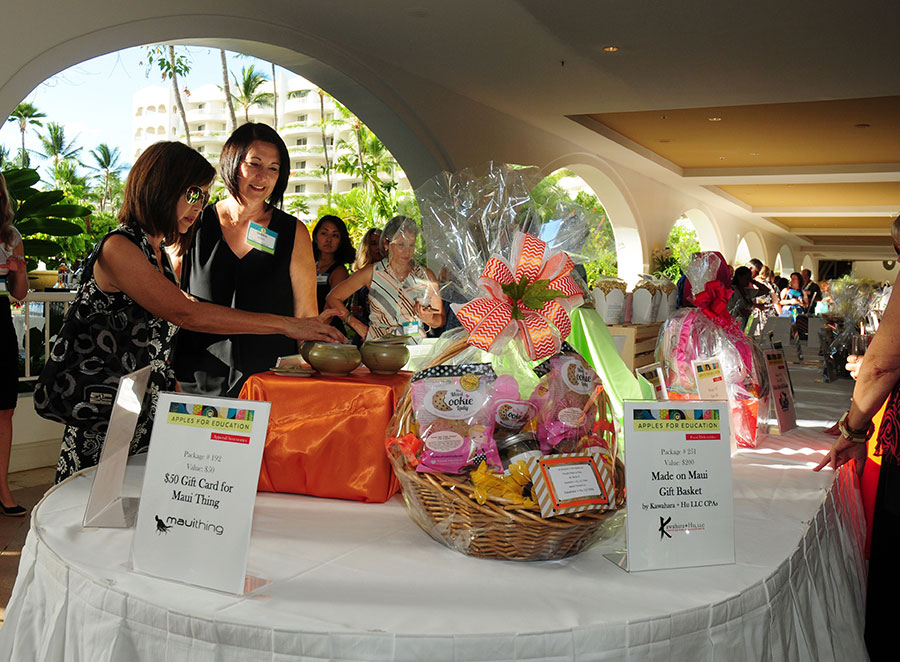
This year’s popular “Apples for Education” Silent and Live Auctions offers a great opportunity for donors to showcase their products and services to the 550+ guests, and for both donors and guests to contribute to a great cause! For more information call (808) 875-2300 or email cari@medb.org.
The MEDB Ke Alahele Education Fund Benefit Dinner & Auction will begin at 4:30 pm, followed by Dinner and Live Auction at 6 pm. Please join us!
Leslie Wilkins, MEDB President & CEO