Mar 16, 2011 | Community, Environment
 All volunteers who make a difference in the community by improving the environment deserve recognition, but volunteering every day for ten years and transforming an unkempt coastline into a thriving native ecosystem represents an extraordinary achievement.
Mike Perry, retired Lahaina Postmaster, has been instrumental in transforming 20 acres of Kanaha Beach Park, makai of the airport in Kahului, into a well-cared for habitat that supports diverse native plants and wildlife. Over the years, and with occasional help, Perry has cleared trash, pruned the understory of trees, trimmed back the kiawe, tended the Park’s wetlands, removed invasive weeds – an ongoing, endless chore – and nurtured heritage species that are now protecting the natural dunes.
“The County takes care of the campground in the park and mows the grassy areas, and Maui Community Work Day removes the green waste, but there’s a lot to do. I always welcome help, and there’s a lot that volunteers can learn about a unique environment of native plants growing naturally in a beachfront setting,” says Perry. (Volunteers can reach Perry through Maui Community Work Day). “Because this work does not depend on outside funding or grants, it’s sustainable all the while the voluntary effort continues,” he adds. Many locations around the State benefit from one-time improvement grants and volunteer labor, but Kanaha is special because of Perry’s ever-presence.
Before transforming Kanaha one section at a time, Perry taught himself about native plants. He apprenticed as a volunteer with Maui Community Work Day, the Nature Conservancy, and the Sierra Club, and on environmental projects on Molokai and the Big Island. “Over the years, Kanaha became a pleasant, family-friendly beach park,” observes Sharon Balidoy, coach of Lae`ula O Kai canoe club, which has been based at the park for 20 years. “Mike Perry is a treasure. He is a one-man force who tirelessly works hard and has made a significant difference in our community.”
Mar 10, 2011 | Community
 The Focus Maui Nui process identified the key role of government and public officials in responding to community values and needs, and the importance of open, ongoing communication. To promote the dialogue, we present the first in a series of profiles of the newly appointed County Department Directors.
David Goode, appointed in January 2011 as County of Maui’s Director of Public Works, has been here before – he served as Deputy Director of Public Works, and then Director, in the County administrations of Linda Lingle and James “Kimo” Apana between 1995 and 2002. Sandwiched between his two stints, David served as President of KSD Hawaii, one of Maui’s premier development companies. “Working in both the public and private sector has given me an excellent overall view of how things work – and how they can work better,” says Goode.
The Department consists of three divisions: Highways, Engineering, and the Development Services Administration. Its work includes road paving, designing, installing and taking care of sidewalks and drainage systems, maintaining traffic signals and signs, and managing the County’s Kalana O Maui complex in Wailuku. The Department of Public Works also oversees building and housing codes, grading and nuisance ordinances, and beautification projects. “One of our primary goals is to streamline the permit process and upgrade our codes, and help people navigate through the regulatory process” says Goode. “We also put a very high priority on responding to the public and listening to what our residents want.”
Goode has a long track record in construction project management. “I love to see things built and to play a part in making projects happen,” he says. When he’s not seeking constant improvement and efficiencies in his County role, Goode enjoys spending time with his family, playing golf, and coaching AYSO soccer. He is a member of the Board of Directors of Carden Academy, the independent school Upcountry, and serves on the State Board of Land and Natural Resources, which oversees all policy decisions for DLNR.
Feb 9, 2011 | Community, Sustainability

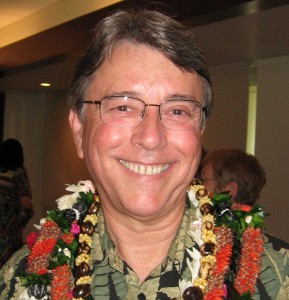
Harlan Hughes
Hughes has retired now from the food and beverage industry, a background that helps explain his particular passion in giving back. He learned about volunteerism and serving the community from his mother, Lottie, who was a dedicated volunteer here on Maui well into her 80s. He also developed and directs the annual “Chefs on the Beach” fundraiser (netting $20,000 last year) which helps support several Maui nonprofits, and his work for the Food Bank serves as another remarkable example.
The Food Bank, headed by Executive Director Richard Yust, in turn leaves no stone unturned in its mission to mitigate hunger across the County. Whether it’s collecting goods from community food drives or retail and wholesale store donations, distributing perishable items through partner agencies in a timely manner, or working with local farmers to bring in donated nutritional fresh produce, about 140,000 pounds of food per month reaches needy families and individuals. “We’re all about partnerships,” says Yust. “By working together, we are able to create win-win situations.” About 90 community service agencies and faith-based organizations that run a total of 105 programs access the inventory of the Food Bank, and over 10,000 recipients each month benefit through these programs – and from the dedication of volunteers like Harlan Hughes.
Feb 2, 2011 | Community
 Leslie-Ann Yokouchi’s motto for her real estate business, Windermere Valley Isle Properties, runs: “If home is where the heart is, then community is where you’ll find our souls.” Leslie credits her father, Pundy, for instilling in her the importance of taking action, contributing to a strong community, and giving back. “The Maui Arts and Cultural Center was my Dad’s principal legacy to the community,” says Leslie, “but he was involved in so many non-profit agencies one way or another.” Leslie is continuing that tradition.
Leslie entered the real estate business in 1979, and in 1997, she opened her own agency, Aina Maui Properties. Last year, her company joined the national Windermere group. “At heart, we’re still a local company with core values that are based on our ’ohana,” says Yokouchi. With every transaction, her “citizen agents” make a donation to the company Foundation. In turn, the Foundation distributes funds to local non-profit agencies dedicated to helping homeless and low-income families. During the 2010 Holiday season, the Foundation provided meals to several Maui families through a program of Maui Economic Opportunity (MEO). Yokouchi plans an annual fundraising event to grow the Foundation’s work. Leslie’s agents are also asked to donate a Community Service Day; last year, agents took time out to beautify the surroundings of the Kaunoa Senior Center in Spreckelsville.
Leslie also devotes some of her time to behind-the-scenes work on boards of Maui non-profit organizations, including the Society for the Prevention of Cruelty to Animals (SPCA), which focuses on spay and neuter program education, and with the Maui Memorial Medical Center (MMMC) Foundation, which raises funds and awareness for healthcare services. The Foundation has been instrumental in securing a new cardiac unit at MMMC. Leslie is a long-time Board Member of Seabury Hall and is a committed advocate of the role education plays in preparing citizens who will play a productive role in our community. “Giving something back to the community often involves time, not just money,” observes Yokouchi.
Jan 26, 2011 | Community, Education
 If you have ever wondered what might happen if you mix together bright young minds, committed teachers and parents, and energetic community volunteers, then look no further than Molokai. Over the last few years, a transformation has been taking place on the island as teams of students have been winning awards and turning heads with their robotics, science and math accomplishments. One of the catalysts for forging partnerships, bringing funders and volunteers together, and facilitating success is robotics “team mom,” Kimberly Mikami Svetin.
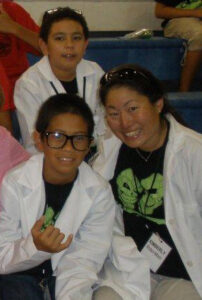 Svetin is a 13-year product of Molokai’s public schools and currently serves as school community council chair for Molokai Middle School. After leaving the island in 1987 to earn her bachelor’s degree from Pomona College, she returned in 2005 to manage her family’s business, Molokai Drugs, and raise her two young sons. She committed herself to sparking community-wide interest in developing the expertise of Molokai students in science, technology, engineering, and math (STEM) subjects, and she has a reputation for bringing people and projects together. Others active in the community, such as Barbara Haliniak, President of the Molokai Chamber of Commerce Foundation, pay tribute to Kimberly’s efforts. “I think we are witnessing a shift of momentum, and now there’s a mindset on the island that our students can go far, and compete not just against the best in the State and on a national level, but globally,” says Haliniak.
Our second-year robotics teams spent ten months preparing for their Maui competition and have distinguished themselves,” said Svetin. Three Molokai robotics teams–the Gleeks, the Kaunakakai Pharmers, and the Forget-Me-Nots–outperformed other Maui County teams to represent the district in the 6th Annual Hawaii First Lego League Championship on December 11th in Honolulu. Enthusiasm for robotics has spread to Molokai High School, which now has a VEX robotics team. Svetin’s latest endeavor is to bring graduate students and instructors from the University of Hawaii-Manoa to mentor 300 students for Molokai Math Day on February 26th.
Jan 13, 2011 | Community, Sustainability
 For many of Maui’s residents, it’s hard now to remember what life was like before the current public bus system got off the ground in 2004. That was shortly after the initial Focus Maui Nui civic engagement process had identified addressing infrastructure challenges as a top priority in our community. Latest ridership figures show that in 2010, an average of more than 6,000 trips are taken each day by bus. Clearly, the system is addressing the needs of a significant number of residents.
The bus system is operated by the County of Maui in part through Federal support. “The uncertainty regarding Federal “earmark” funding represents a major challenge in the coming months to maintaining our successful public bus system,” says Jo Anne Johnson, the incoming Director of the County’s Department of Transportation. Service is provided by Roberts Hawaii and is available in and between communities in Central, South, West and Upcountry Maui. 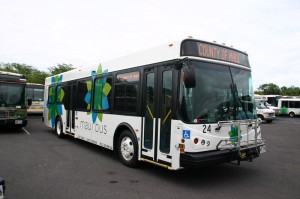 The bus system operates seven days a week, including holidays, and costs $1 per boarding, with daily and monthly passes also available. The system also features a commuter service (costing $2) designed for early morning and evening travelers to/from Wailea and Kapalua. All route and fare information as well as schedules are posted on the County website at www.mauicounty.gov/bus
One further windfall from the increase in public transit use is the reduction in greenhouse gas emissions and savings in imported fossil fuel as a result of passengers switching from using cars. “The higher gas prices have risen, the more passengers are choosing to ride the bus,” says Jo Anne Johnson. The system represents a promising step towards greater island sustainability.
Do you use the Public Bus system? How often?
Dec 29, 2010 | Community
 The Chinese astrological symbol of the coming new year is appropriate for Maui County, Hawaii and the nation: 2011 will be the Year of the Rabbit, to be celebrated on the new moon on February 3rd. Chinese tradition holds the rabbit as a symbol of hope, an amiable, sensitive, modest and merciful pet of the moon goddess Chang’e.
For hope in our community, we need look no further than our children, who inspire us by their achievements, their adaptability, and their willingness to learn. In school, on the sports field, and in the community, we see them leading by example and setting the bar higher than ever. On environmental issues in particular, our youth are leading the way for sustainable solutions.
All of us can learn from the optimism of our children, and their tireless quest to understand the world around them. In the moments of their discoveries, we can celebrate with them, and experience the time-honored adage that “hope springs eternal”.
Dec 22, 2010 | Community
Meeting human needs is a core Focus Maui Nui community value, and providing our less fortunate keiki with presents at Christmas time certainly meets this priority. We can take pride that our community has already proved more generous than ever this year.
One of the toy drives is coordinated by the Friends of the Children’s Justice Center of Maui, through an impressive partnership of businesses, organizations, and individuals. This year, more than 1,500 abused and neglected children or those currently in the
judicial system represented by 25 Maui agencies will benefit from the community’s generosity and receive a toy or gift this Christmas.
The toy drive programs are not just about gifts; they demonstrate the compassion of our community and express the underlying message to our keiki that they are not alone, and that there are many who care and want the best for them. “It’s a very positive
message that’s not lost on our children,” observes Randy Echito, Executive Director of the Friends of the Children’s Justice Center. “It’s especially appropriate at Christmas time, when the message is love for others.”
Among the agencies supported by the Friends’ gift giving program are Child Welfare Services (Department of Human Services), Child and Family Service, Maui Family Support Services, Maui’s homeless shelters, and Women Helping Women.
Other toy drives on Maui include the U.S. Marine Corps Toys for Tots program, which is administered on Maui by the Salvation Army, which distributed over 7,000 toys in Maui County during the Christmas season in 2009. The Boys and Girls Clubs of Maui, A Keiki’s Dream, the Valley Isle Community Federal Credit Union are among other organizations that also fill a very special need for thousands of our keiki at this special time of year.
Dec 8, 2010 | Community
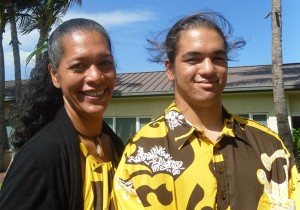
Pūlama Collier with her son Kia‘i Collier, a Kula Kaiapuni senior at King Kekaulike High School.
“Our public schools have been a mainstay for maintaining the consciousness of Hawaiian traditions without the community knowing it,” reflects Pūlama Collier, State Resource Teacher with the Department of Education for Hawaiian Language Immersion Program at King Kekaulike High School.
The immersion program on Maui, Kula Kaiapuni, has been an integral part of preserving Hawaiian culture on the island since 1989, when its first Kindergarten class began at Paia School. Today, there are about 220 students participating in Hawaiian language immersion classes at 4 public schools on Maui: Two at the elementary level (Paia School and Princess Nahienaena Elementary in Lahaina); Kalama Intermediate (Makawao); and King Kekaulike High School (Pukalani).
Statewide, there are 26 language immersion sites, with each island and community offering different models. In some cases, on Oahu and the Big Island, whole schools offer Hawaiian language immersion. On Maui, Kula Kaiapuni is “a school within a school”, as Pūlama observes, with certain classes offering instruction in all subjects in the medium of the Hawaiian language. Within the program, English language arts as a subject is introduced at the 5th grade level to ensure bilingual skills. Kula Kaiapuni, mandated by the State Constitution, is offered by the Department of Education to all families that choose it for their children.
Last week, Kula Kaiapuni students from all four Maui school sites participated in Na Mele O Maui, the annual Hawaiian Song and Art competition, held at the Maui Arts and Cultural Center. They distinguished themselves by winning either first or second place in the music categories.