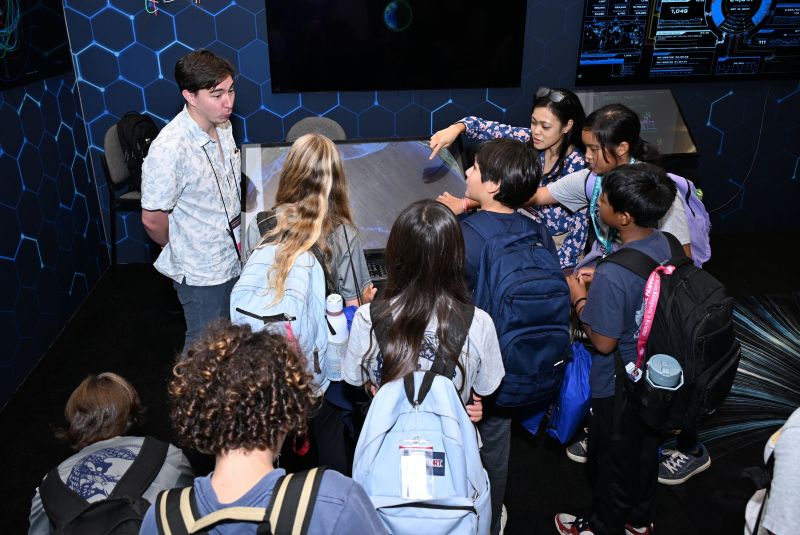
Student Space Exploration Day, one of many career awareness programs offered by STEMworks™ to Maui County students, welcomed middle and high schoolers to an exciting day of STEM-inspired (science, technology, engineering, mathematics) space events. Students enjoyed a special live presentation and talk story with astronaut Scott ‘Scooter’ Altman about living and working in space. They also experienced hands-on scientific demonstrations and presentations of advanced technologies by experts in the field.
Altman, a retired United States Navy Captain, talked about his four Space Shuttle missions as well as his time as a Naval aviator, test pilot, engineer, and astronaut. Recalling his initial rejection from the astronaut program, Altman inspired the keiki to never give up and to always keep trying, as he himself did.
“I like to engage with students because it’s important that we connect with the next generation and get them interested in space-related issues,” he said. “It will be students in this age group, whom I am talking to today, who might be the first ones on Mars!”
Lori Ann Koyama, Lāhainā Intermediate STEMworks Media Production and Graphics teacher, said, “My students were excited to meet the astronaut and to do the hands-on experiments. This day gets them thinking about future careers that are available to them and they always come away wanting more.”
Bernadette Detera, engineer, explained what she does. “We showed the students a 3-D visualization of over 34,000 objects in space which we track. We talked about what satellites contribute to our daily lives, for example, GPS navigation, weather prediction, and long-distance communication. These show the importance of humanity’s future in space.”
Anela Arakawa, 8th grade, Lāhainā Intermediate, noted, “I learned about all the different satellites and how they work and how many objects there are in space. It makes me want to know more, go to college, and get a law degree. Maybe I’ll work in Space Law!”
Jaysen Acoba, 8th grade, Maui Waena Intermediate School, added, “I’m interested in robotics and what it can do for our society in the future. It’s what I love about Student Space Exploration Day; it’s all so inspiring. I want to go to the Massachusetts Institute of Technology, a world-renowned research university, and help develop technologies that will create a safer space and a better world.”
Student Space Exploration Day really opens the students up to different opportunities they never even thought of. It is vital to get exposure like this for them. STEMworks makes it all happen!
– Lori Ann Koyama, Teacher, Lāhainā Intermediate School
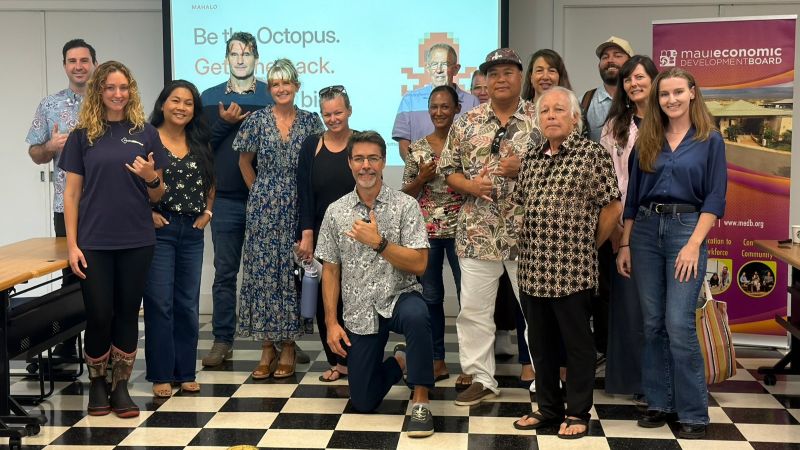
A group of small business owners and leaders of non-profits recently attended a workshop to grow their business with AI. The half-day workshop was hosted by Maui Economic Development Board (MEDB) and presented by Marc Rix, an international adviser, speaker, consultant, and trainer.
A Maui resident and serial small business founder, Marc has guided some of the world’s largest organizations through major technology shifts and helps business leaders put AI to work in practical, human-first ways.
“My goal was simple,” said Rix. “Help Maui’s business leaders separate AI myth from fact and apply AI in their organizations for fast, measurable results. Watching the room evolve from curious to confident to building real, working solutions before lunch proves that you can noticeably raise the tide on AI fluency on Maui in the right setting.”
Rix believes business leaders are being buried in AI noise, hype, and misinformation. The interactive workshop’s whole intent was to help them see through it and succeed with AI on their own terms.
Participants were asked to come prepared with a problem (or two) to solve. Rix helped them to build three “super skills” together, identify quick-win opportunities for AI in their own businesses, and had each leader build a working AI solution they took back to work that same day.
Wayne Wong, Director of Hawaii Small Business Development Center on Maui took part and said, “The workshop struck an unusually effective balance: enough AI understanding to build confidence, enough hands-on practice to make it tangible, and a strong connection to the everyday realities of running a small business.”
Dan Ellis, President of Pacific Millworks added, “We loved the delivery, engagement, and how we used our own business problems, not a textbook.”
MEDB runs workshops with support of County of Maui to assist small businesses owners and entrepreneurs. This workshop gave the confidence and practical skills to turn everyday challenges into working AI solutions—saving time and helping them focus on growing their businesses.
This workshop was not about AI hype, tooling, or engineering — It was about building business leaders’ AI intuition with practical, 80/20, people-first guidance.
– Marc Rix, Advisor, Speaker, Consultant
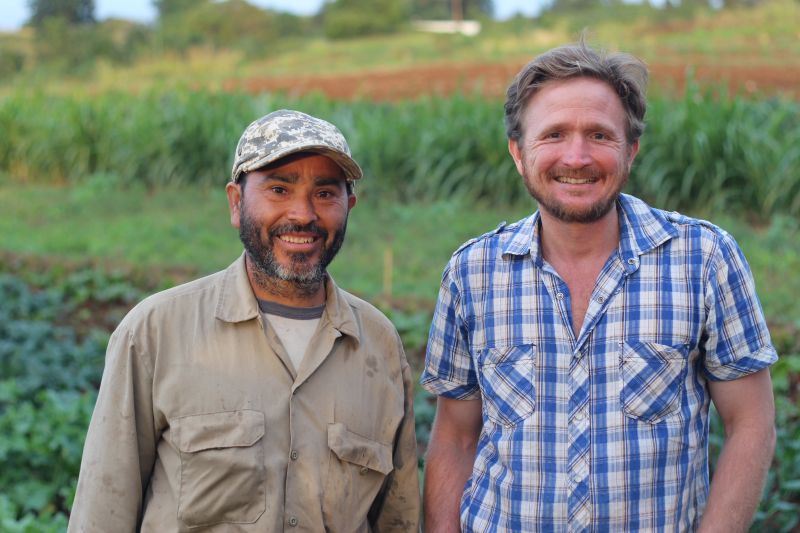
‘Oko’a Farms, a Maui certified-organic farm established by Ryan Earehart and business partner Sal Gil Coca, began in 2008 and has dramatically boosted Maui’s fresh food system. ‘Oko’a, meaning ‘unique’ in Hawaiian, reflects the team’s commitment to a holistic approach to agriculture. Between their two ‘Oko’a stores, Kulamalu Town Center and Wailea Village, they offer 160 varieties of fruits, vegetables and herbs. ‘Oko’a grows over 125 crops on their farm, with the rest supplied by trusted local growers.
“The magic behind our farm comes from Sal’s expertise in farm production and my passion for community networking through healthy food.” said Earehart. “Together, we have built a robust network of dozens of local vendors and producers. We began our operations on a lone parcel of land in Kula, then expanded to four weekly farmer markets where customers would wait 30 minutes to purchase our produce.”
Now, in their stores, they sell produce that looks and tastes incredible. People say they have the freshest, highest-quality, organically-grown produce on the island. “Our mission is to invest in Maui’s future by strengthening food security and supporting other local farmers,” Earehart noted. “We continue to find unique ways to move in the direction of local food resilience by educating our customers about regenerative, organic, and sustainable farming practices; all thriving in harmony with the land.”
Earehart and Gil Coca also represent a powerful collaboration on Maui that bridges sustainable agriculture with STEM (science, technology, engineering, and math) education. They provide immersive, hands-on learning experiences that prepare local youth for cutting-edge careers in food production and climate-smart technology. This year, ‘Oko’a will also become a host-site for Maui Economic Development Board’s STEMworks™ Agriculture Business & Technology Internship Program.
“Interns on the farm will learn how modern technology and scientific principles solve real-world agricultural challenges,” Earhart added. “We focus on vertically-integrated farming, starting from the soil, to seed, to finished nutrient dense food: Studying how ’Oko’a recycles nutrients by utilizing waste from our farm operations, tilapia ponds, and chickens and goats, to fertilize our organic crops; Soil Microbiology: Learning how to nurture underground mycelium networks to naturally transport nutrients between crops without relying on chemical fertilizers; and Agribusiness Technology: Developing modern skills in farm logistics, supply chains, and tech-driven resource management.”
To witness our farming practices firsthand, we offer farm tours to explore the fields where we cultivate over 125 unique crops, have over 1,000 pasture-raised free-range chickens for egg production, and goats rotationally grazing throughout the year.
– Ryan Earehart, co-owner ‘Oko’a Farms
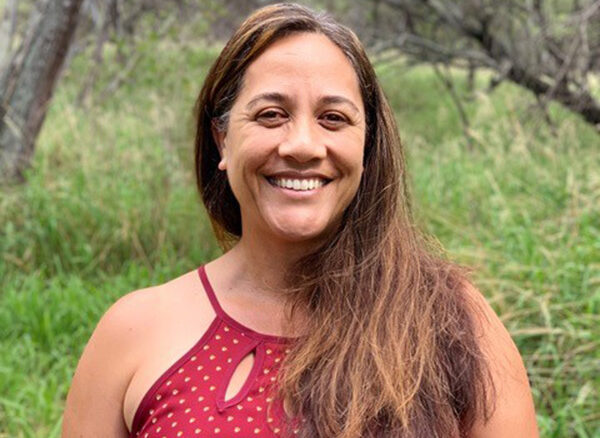
A cultural resource management nonprofit, ‘Āina Archaeology, has formed their practice to fulfill a kuleana (privilege and responsibility) to care for Hawai’i’s natural resources and cultural heritage. They serve individuals, communities, businesses, and government agencies to protect, preserve, and perpetuate Hawai’i’s ancestral assets by blending traditional Hawaiian land management techniques with contemporary methods of conservation. Tanya L. Lee-Greig, ‘Āina Archaeology Principal Investigator, said, “Our solutions leverage a project’s unique relationship with culture and sense of place. It’s an approach that provides more meaningful value for the client today, and a truer record of history for Hawai’i tomorrow. Our pioneering methodologies and firm commitment to our values enable us to implement creative solutions for all the community’s historic preservation needs.” Lee-Greig has nearly two decades of experience working in archaeology, anthropology, and cultural preservation. At ‘Āina Archaeology she assists with the selection, implementation and completion of projects they engage in. Traditional Hawaiian values are applied to achieve the collective goals of their clients and the communities they work with. Also partnering with community organizations, Lee-Greig offers hands-on archeological programs. Alongside regular job openings for field technicians and opportunities for students looking to break into indigenous archaeology, there are several structured internship programs, field schools, and organizational connections managed by ‘Āina Archaeology on Maui. Over the years, ‘Āina Archaeology has been a host company for Maui Economic Development Board’s (MEDB) STEMworks™ Internship program. During his six-week internship at ‘Āina, Tyler Taguchi did an in-depth analysis of the traditional Native Hawaiian diets of those in the rocky shoreline of Honua’ula. Taguchi shared, “This was my first long-term project. I learned so much about the history and culture of Honua’ula in Wailea and Makena. With my two mentors, I studied the trends between sea urchin and mollusk remains recovered from archeological sites in Honua’ula. We then presented the data of Native Hawaiians’ near-shore diets in a story-map format. Researching for this project taught me more about Maui’s history and culture. I’ve become more skilled in software like Excel and learned how to design and structure visual data. I would like to thank ‘Āina Archaeology and STEMworks™ for making my internship such an amazing experience.”
We share a deep expression, aloha ‘āina, love of the land, for our island, which feeds all aspects of our daily lives here.
– Tanya L. Lee-Greig, ‘Āina Archaeology, Principal Investigator
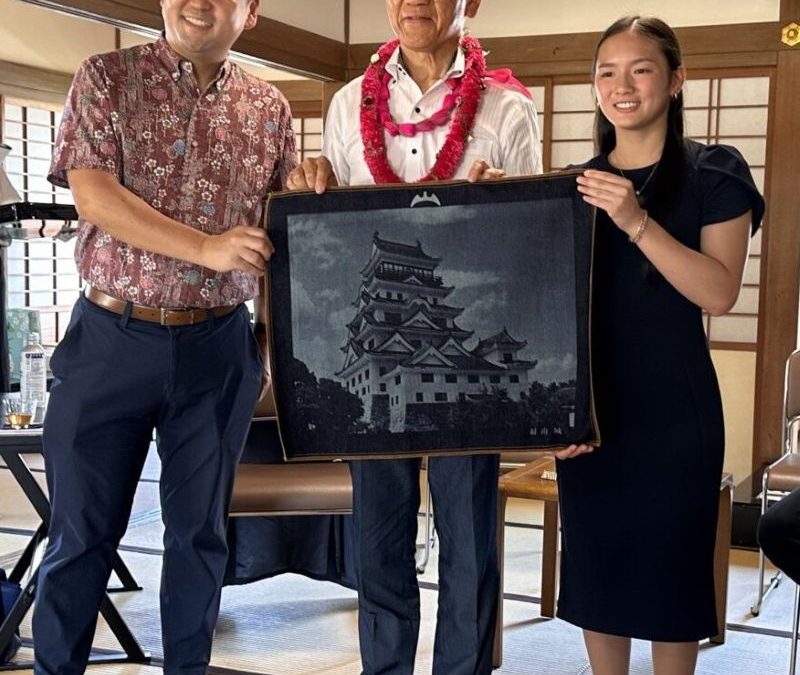
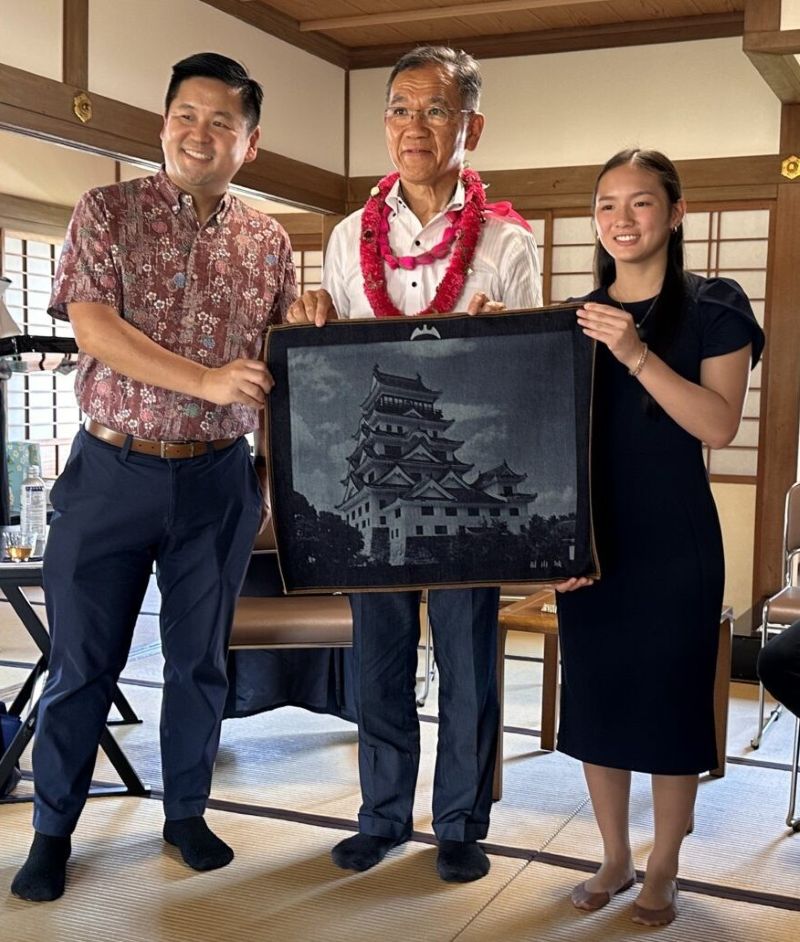
Abigail Tamayose, a student at King Kekaulike High School in Pukalani and the current Chrysanthemum Ambassador, recently represented Maui and the Nisei Veterans Memorial Center (NVMC) by leading a delegation to Japan for a time of reflection and good-will. The Chrysanthemum program started on Maui more than seven decades ago. It is currently administered by the NVMC to bring young leaders together to participate in community service and travel-related events.
“The goal of our Chrysanthemum program is for our young leaders to experience what the Nisei meant by their motto ‘for continuing service,’” said Deidre Tegarden, NVMC executive director. “Hearing Abigail speak about the resilience of Hiroshima and Fukuyama, reminded us that this program is not just about honoring history, it’s about preparing the next generation to carry that legacy forward with courage, humility, and purpose.”
Tamayose shared, “On this trip we went to many different parts of Japan, including Kyoto, Hiroshima, Fukuyama, and much more. We saw many lovely temples, shrines and castles, such as Kinkaku-ji in Kyoto and the amazing Itsukushima Shrine on Miyajima Island. We also got to experience many memorable events as well. I got to see the A-Bomb dome and learn about the immense devastation of war.”
She continued, “In Fukuyama, I had the chance to meet with Mayor Edahiro and attend a meeting where we strengthened our 30-year connection between Maui and Fukuyama. We have also been official sister cities since 2008. It was very inspiring to hear how a city completely devastated in 2011 by a massive 9.0-magnitude earthquake, with the resulting 15-meter tsunami destroying their coastal towns and causing immense flooding, can come back even stronger. As I sat on a tatami mat with an incredible view of the Fukuyama castle outside, I had the chance to think about the destruction seen on our own island of Maui during the 2023 wildfires. I saw just how resilient and strong people can be in times of crisis. This trip opened my eyes to new perspectives, teaching me about forgiveness, resilience, and the true strength of communities coming together in times of need. Having the opportunity to represent NVMC and the island of Maui as the Chrysanthemum Ambassador was truly a life-changing experience.”
Together, our Maui delegation, including liaisons Maui High graduate Rylee Ota and Seabury Hall graduate Keala Rodriguez, represented Maui, Hawaii, and the NVMC with shakas and big smiles.
– Abigail Tamayose, Maui Chrysanthemum Ambassador
Maui Behavioral Health Resources (MBHR) is a major umbrella organization providing a full continuum of care for mental health and substance use. MBHR consolidates administrative functions for three key local agencies: Aloha House, Mālama Family Recovery Center, and Maui Youth & Family Services. Through the combined operations, their comprehensive care includes addiction prevention, intervention, detox, and residential and outpatient treatment for Maui residents. Together, the agencies serve almost 8,000 individuals in the Maui community each year.
Krissylee Delapinia, MBHR Communications Specialist, said at a recent Rotary Club of Maui meeting, “I want to speak specifically about Aloha House because they are preparing for their 50th anniversary. Since 1977, Aloha House has been helping individuals on Maui overcome substance use challenges and create a path to lasting sobriety. The opportunity for change is heartwarming because it not only helps the individual, but it has lasting benefits for family members, friends, and the community-at-large.”
Delapinia continued, “Whatever stage someone is at, we are there for them. An example is Natalie’s story. Overwhelmed by poor health, financial hardship, and challenges that continued to pile up, Natalie found herself alone in a dark place with no hope. As a Lahaina resident, she was deeply affected by the Lahaina Wildfires, adding another layer of losses and uncertainty. A breaking point came when Natalie used drugs laced with fentanyl and was near death. With care, encouragement, and a willingness to accept help, Natalie began the difficult process of rebuilding her life at Aloha House.”
Natalie’s story demonstrates that setbacks do not determine a person’s future. With support from Aloha House, Natalie discovered recovery is possible, found self-worth again, and developed a desire to be in service to others.
Aloha House, Maui’s only nonprofit licensed residential substance-abuse treatment facility, opened a new dormitory March 1st, 2026. “The new five-bedroom dormitory houses 12 people and increases the facility’s total capacity by 25 percent,” Delapinia noted. “The expansion comes as officials report surging substance abuse and mental health challenges across Maui since the devastating fires. There is also a new home to create a sober living facility especially for women and their children. For more information about all of MBHRs services visit: mbhr.org.
If you believe in the power of recovery and want to help, we invite the community to get involved in one of the following ways: Sponsor a recovery room, join our team for the 48th Annual Visitor Charity Walk, sign up to donate a monthly gift through 2027, or connect through volunteer opportunities.
– Krissylee Delapinia, MBHR Communications Specialist
Continuing to observe the three-year anniversary of the 2023 Lāhainā wildfires, Lights for Lāhainā will return Friday and Saturday, September 11 and 12, from 4:30-9 pm at Maria Lanakila Catholic Church on 712 Waine‘e Street. The event brings the community together for two memorable evenings honoring Lāhainā’s history, resilience, and hope for the future. Presented by Aloha Amplified, Inc., a Hawai‘i-based nonprofit organization advancing initiatives that foster connection, economic vitality, and long-term resilience, the gathering builds on the inaugural Lights for Lāhainā event held in 2025.
“As a Lāhainā wildfire survivor, I know firsthand that healing does not happen alone,” said Kumu Wilmont Kamaunu Kahaiali‘i, cultural practitioner and board president of Aloha Amplified. “Many of our ‘ohana are still healing and finding their own path forward. Lights for Lāhainā gives us a place to gather, ho‘omana‘o those we love, share our mo‘olelo and draw strength from one another. As we ka‘i together, the lights remind us that although Lāhainā has changed forever, aloha still remains.”
The event will feature storytelling, quiet reflection and gentle mele honoring Lāhainā’s people, places, and mo‘olelo. Live entertainment will be provided by the Kahaiali‘i Brothers, Kevin Brown, Eric Gilliom & Friends, the Wilson Kanaka‘ole Trio, Marty Dread and Hammah House Band. Other highlights will include local food trucks and vendors, cultural practitioners, local community nonprofits, schools and groups, creative activities, ‘ohana bingo, and opportunities to contribute letters, artwork and reflections to the Lahaina Time Capsule.
Described as “a vessel to carry your messages into the future,” the time capsule invites people of all ages to contribute messages, drawings, photographs, memories and hopes for Lāhainā’s future. The submissions, in-person or online, will be preserved in an archival-grade time capsule scheduled to be opened on August 8, 2033, the 10th wildfire anniversary.
“The project honors what Lāhainā has endured while preserving the voices, memories and aspirations of the community for future generations,” said Kahaiali‘i. “September 12 will conclude with a Light March beginning at Pu‘unoa Beach at 6pm, continuing through historic Lāhainā Town to Maria Lanakila Catholic Church, with a kanikapila gathering featuring music by Lāhainā Style Band and ‘ono local food”.
Time capsule submissions, sponsorship, volunteers, food truck and vendor opportunities are available. For event information and participation details, visit online at LightsforLahaina.org.
– Kumu Wilmont Kamaunu Kahaiali‘i Board President, Aloha Amplified, Inc.
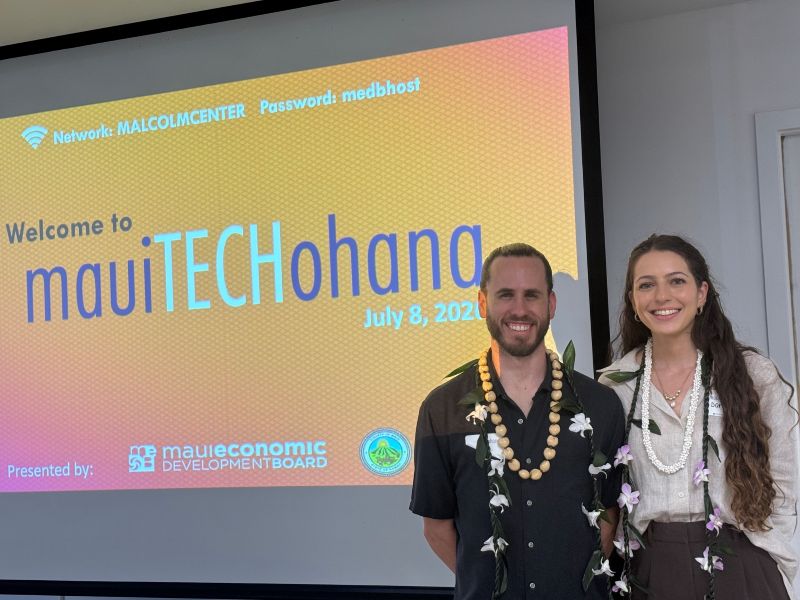
A mid-summer Maui TechOhana meeting, presented by Maui Economic Development Board (MEDB), explored how artificial intelligence (AI) is transforming the hotel guest experience and redefining hospitality. Husband-and-wife team Josh and Dana Ellis shared the story behind Abra Hospitality, their fast-growing AI guest intelligence platform. Josh, Abra’s CEO, brings years of management consulting and tech-industry experience. Dana, Abra’s Chief Hospitality Officer, is currently a manager at the Hotel Wailea with extensive personalized hospitality experience.
“Initially started to help Dana better organize her hotel job, Abra’s AI transforms scattered data into personalized, anticipatory service at scale, giving the hotel staff the superpower to deliver the moments that guests never forget,” Josh explained. “Abra unifies guest data, preferences, and staff observations into a single ‘living memory’ to help boutique hotels provide deeply personalized service.”Presented by MEBD and supported by the County of Maui, Maui Tech ‘Ohana offers a talk-story format and provides an informal networking opportunity open to anyone interested in Maui County’s technology sector.
Josh and Dana explored the power and potential of Hawai‘i’s growing tech ecosystem: how to tap into it, how AI is changing for entrepreneurs, and what fundamentals still matter most. “AI isn’t just the next wave of automation; it’s the operating logic of tomorrow’s enterprise,” Josh added. “Organizations that embrace it by 2028 will likely save costs, release products faster, and redeploy talent to higher-value work. Don’t be afraid of AI. In the long run, it’s here to actually give you more time for things that really matter to you.”
Melissa, a TechOhana attendee, shared, “I’m just beginning to incorporate AI into my business. Josh and Dana gave exceptional tips, from monitoring and feedback at early stages of AI development, to orchestration and strategic oversight as the capability advances. Maui TechOhana provides excellent assistance to businesses in the community.”
“It was a fascinating use of AI to improve the hospitality industry,” remarked Kevin Krewell, a retired technology analyst. “The goal was not to replace people but to enhance their capabilities to allow them to do a better job.”
“I think this should inspire other people looking to do startups in Hawai‘i,” Kevin added. “There’s a network of people within the whole Hawaiian chain – the idea that all of Hawai‘i should connect better as a technology island, a technology platform to share more back and forth between the various islands.”
Human roles will evolve significantly with AI. Enterprises that act early and approach autonomy as a phased transformation will secure lasting advantage and shape industry standards.
– Dana and Josh Ellis, Abra Hospitality
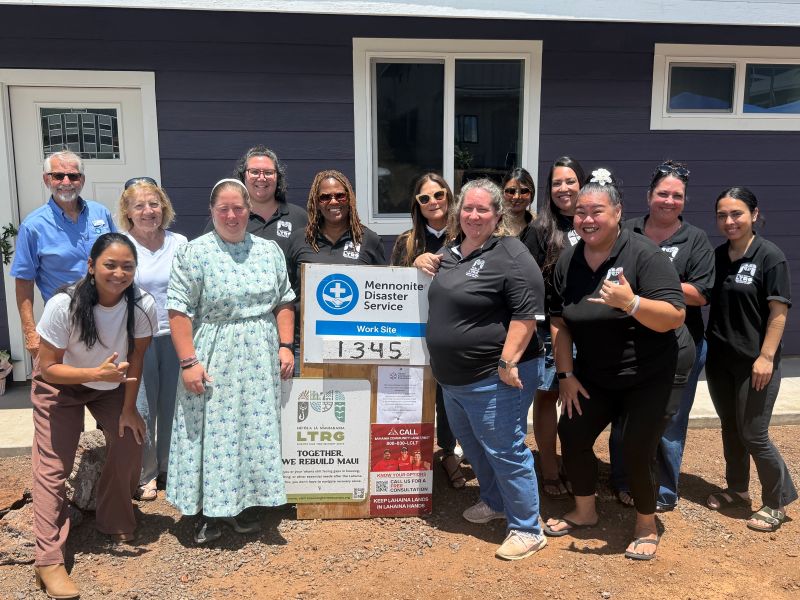
Attending the home dedication and blessing ceremony in Lahaina honoring wildfire survivor Auntie Valerie Ho‘opai was both extraordinary and heartwarming. Auntie Val is able to return home through the support of Ho‘ōla iā Mauiakama Long Term Recovery Group (Ho‘ōla iā LTRG), Mennonite Disaster Service (MDS), Cajudoy Construction, and many community partners. The dedication marked a milestone in Lahaina’s recovery.
“Ho‘ōla iā LTRG is a nonprofit organization supporting survivors of the August 2023 Maui wildfires through coordinated long-term recovery efforts,” said Rhonda Alexander-Monkres, Ho‘ōla iā LTRG Executive Director. “We focus on disaster case management, stabilization support, volunteer coordination, and rebuilding assistance to help families move toward stability and a place to call home. Auntie Val’s dedication is especially symbolic as it is the first home furnished through our House to Home Program. This program helps wildfire survivors furnish and set up their homes after rebuild completion so families can return home with dignity, stability, and the basic items needed to resume everyday routines. This blessing was made possible through the kindness, aloha, and unwavering support of many partners who have helped Auntie Val and her ‘ohana move forward in their journey toward healing and home.”
The event program included welcoming remarks and partner acknowledgements, a meet-and-greet circle with partners and the ‘ohana, words from Auntie Val, remarks from Mayor Richard Bissen, prayer, hymn, a gift presentation by MDS, a Mō ka Piko Ceremony with pule and opening of the lei, and a blessing by Bishop Tausinga Hafoka of The Church of Jesus Christ of Latter-day Saints. The dedication concluded with entry and a tour of the home.
Don Rheinheimer, MDS Project Coordinator, noted, “At MDS, our goal is to restore hope for survivors of disasters. We do this by recruiting, organizing and empowering volunteers to repair and rebuild the homes of those impacted by disasters. We are blessed to be able to help Lahaina survivors return home.”
Cajudoy Construction, LLC, a Maui-based, women-owned construction company serves as construction manager for Ho‘ōla iā LTRG’s rebuild projects. Along with their private projects, they help guide the construction process with care, coordination, and local expertise. Owner Brandy Cajudoy agreed, “It is a blessing to support wildfire survivors as they rebuild and return home in Lahaina.”
We are grateful for the many philanthropic, faith-based, nonprofit, and community partners who continue to support Maui’s long-term recovery. We welcome sponsors, funders, donors, and volunteers as more families move toward rebuilding and returning home.
– Rhonda Alexander-Monkres, Ho‘ōla iā LRTG Executive Director