Feb 2, 2011 | Community
 Leslie-Ann Yokouchi’s motto for her real estate business, Windermere Valley Isle Properties, runs: “If home is where the heart is, then community is where you’ll find our souls.” Leslie credits her father, Pundy, for instilling in her the importance of taking action, contributing to a strong community, and giving back. “The Maui Arts and Cultural Center was my Dad’s principal legacy to the community,” says Leslie, “but he was involved in so many non-profit agencies one way or another.” Leslie is continuing that tradition.
Leslie entered the real estate business in 1979, and in 1997, she opened her own agency, Aina Maui Properties. Last year, her company joined the national Windermere group. “At heart, we’re still a local company with core values that are based on our ’ohana,” says Yokouchi. With every transaction, her “citizen agents” make a donation to the company Foundation. In turn, the Foundation distributes funds to local non-profit agencies dedicated to helping homeless and low-income families. During the 2010 Holiday season, the Foundation provided meals to several Maui families through a program of Maui Economic Opportunity (MEO). Yokouchi plans an annual fundraising event to grow the Foundation’s work. Leslie’s agents are also asked to donate a Community Service Day; last year, agents took time out to beautify the surroundings of the Kaunoa Senior Center in Spreckelsville.
Leslie also devotes some of her time to behind-the-scenes work on boards of Maui non-profit organizations, including the Society for the Prevention of Cruelty to Animals (SPCA), which focuses on spay and neuter program education, and with the Maui Memorial Medical Center (MMMC) Foundation, which raises funds and awareness for healthcare services. The Foundation has been instrumental in securing a new cardiac unit at MMMC. Leslie is a long-time Board Member of Seabury Hall and is a committed advocate of the role education plays in preparing citizens who will play a productive role in our community. “Giving something back to the community often involves time, not just money,” observes Yokouchi.
Jan 26, 2011 | Community, Education
 If you have ever wondered what might happen if you mix together bright young minds, committed teachers and parents, and energetic community volunteers, then look no further than Molokai. Over the last few years, a transformation has been taking place on the island as teams of students have been winning awards and turning heads with their robotics, science and math accomplishments. One of the catalysts for forging partnerships, bringing funders and volunteers together, and facilitating success is robotics “team mom,” Kimberly Mikami Svetin.
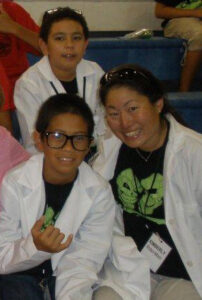 Svetin is a 13-year product of Molokai’s public schools and currently serves as school community council chair for Molokai Middle School. After leaving the island in 1987 to earn her bachelor’s degree from Pomona College, she returned in 2005 to manage her family’s business, Molokai Drugs, and raise her two young sons. She committed herself to sparking community-wide interest in developing the expertise of Molokai students in science, technology, engineering, and math (STEM) subjects, and she has a reputation for bringing people and projects together. Others active in the community, such as Barbara Haliniak, President of the Molokai Chamber of Commerce Foundation, pay tribute to Kimberly’s efforts. “I think we are witnessing a shift of momentum, and now there’s a mindset on the island that our students can go far, and compete not just against the best in the State and on a national level, but globally,” says Haliniak.
Our second-year robotics teams spent ten months preparing for their Maui competition and have distinguished themselves,” said Svetin. Three Molokai robotics teams–the Gleeks, the Kaunakakai Pharmers, and the Forget-Me-Nots–outperformed other Maui County teams to represent the district in the 6th Annual Hawaii First Lego League Championship on December 11th in Honolulu. Enthusiasm for robotics has spread to Molokai High School, which now has a VEX robotics team. Svetin’s latest endeavor is to bring graduate students and instructors from the University of Hawaii-Manoa to mentor 300 students for Molokai Math Day on February 26th.
Jan 19, 2011 | Innovation
 Maui’s technology sector, which employs about 2,000 people, provides the economy with healthy diversity and represents a sustainable strategy for further development, aligning with values voiced by the community through the Focus Maui Nui process. One of the leaders in this area of “clean” growth is the company founded in 1997 by Vaughn Vasconcellos—Akimeka, LLC. This award-winning global enterprise fills Information Technology (IT) needs for the Department of Defense and state agencies. Akimeka, based in Kihei, is now one of Hawaii’s largest information management and technology companies.
Vasconcellos was raised on Molokai and attended Kamehameha schools before graduating with an engineering degree from the United States Military Academy at West Point and an executive master of business administration in strategy from Northeastern University. In 2000, the Small Business Administration for the State of Hawai’i selected Mr. Vasconcellos as Entrepreneur of the Year, and since then, prestigious awards have continued thanks to a dedicated staff and through hard work.
Akimeka was named one Hawaii’s “Best Places to Work” in 2008. Vasconcellos was named Hawaii’s Small-Business-Person of-the-Year (SBPOY) for 2009. Akimeka has become a “family of organizations” with more than 220 employees in operations spanning Hawaii and Texas, Florida, Maryland, Virginia and Washington, D.C. In August 2010, Akimeka was acquired by VSE Corporation and continues to operate as a wholly-owned subsidiary.
Vasconcellos’ aim of creating jobs goes beyond building business to supporting STEM (science, technology, engineering, and mathematics) education. The Alaka’ina Foundation, a not-for-profit Native Hawaiian Organization (NHO) founded by Vasconcellos focuses on building leadership programs for native Hawaiian youth in rural areas and Hawaiian Homestead communities.
Jan 13, 2011 | Community, Sustainability
 For many of Maui’s residents, it’s hard now to remember what life was like before the current public bus system got off the ground in 2004. That was shortly after the initial Focus Maui Nui civic engagement process had identified addressing infrastructure challenges as a top priority in our community. Latest ridership figures show that in 2010, an average of more than 6,000 trips are taken each day by bus. Clearly, the system is addressing the needs of a significant number of residents.
The bus system is operated by the County of Maui in part through Federal support. “The uncertainty regarding Federal “earmark” funding represents a major challenge in the coming months to maintaining our successful public bus system,” says Jo Anne Johnson, the incoming Director of the County’s Department of Transportation. Service is provided by Roberts Hawaii and is available in and between communities in Central, South, West and Upcountry Maui. 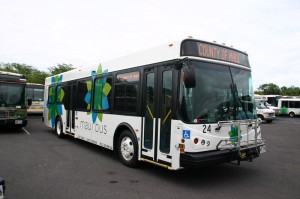 The bus system operates seven days a week, including holidays, and costs $1 per boarding, with daily and monthly passes also available. The system also features a commuter service (costing $2) designed for early morning and evening travelers to/from Wailea and Kapalua. All route and fare information as well as schedules are posted on the County website at www.mauicounty.gov/bus
One further windfall from the increase in public transit use is the reduction in greenhouse gas emissions and savings in imported fossil fuel as a result of passengers switching from using cars. “The higher gas prices have risen, the more passengers are choosing to ride the bus,” says Jo Anne Johnson. The system represents a promising step towards greater island sustainability.
Do you use the Public Bus system? How often?
Jan 6, 2011 | Small Business
 The New Year is a time of renewed optimism, and for all of us, including business, to look ahead. Small businesses are key players in economic sustainability, as the Focus Maui Nui process has verified. Bill and Maureen Marrs believe being in business means respecting and taking care of people—starting with the people closest to them, their children.
Those personal values are the key reasons their Marmac Ace Hardware Store will be celebrating its 40th anniversary in 2011 after being named the 2010 SBA Family-Owned Business of the Year for Maui County. The 4th generation of the Marrs-McCurdy family is working at the store, alongside several dozen other employees who might as well be family.
Running a successful small business takes a personal commitment to customers, but also to employees. It also takes flexibility to adapt to changing economic conditions while understanding what the customer needs – even if the customer doesn’t know. The key is having staff that knows.
“Among my employees, we have 150 diplomas in trades. Everybody is certified in my plumbing and electrical sections. All the employees in the departments not only have know how to sell it, they have to know how to replace it,” Marrs says. It means providing training for the staff, providing compensation and benefits that keep them onboard and respecting their opinions, he says.
“I think we have it right with the campaigns to buy locally and to support home-grown businesses. You want to keep the money here on Maui, where the dollars are spent again right here on the island,” says Marrs. “I believe in leadership. I believe if somebody else has a better idea, we’ll go with that idea. I believe you respect and reward your employees.”
Dec 29, 2010 | Community
 The Chinese astrological symbol of the coming new year is appropriate for Maui County, Hawaii and the nation: 2011 will be the Year of the Rabbit, to be celebrated on the new moon on February 3rd. Chinese tradition holds the rabbit as a symbol of hope, an amiable, sensitive, modest and merciful pet of the moon goddess Chang’e.
For hope in our community, we need look no further than our children, who inspire us by their achievements, their adaptability, and their willingness to learn. In school, on the sports field, and in the community, we see them leading by example and setting the bar higher than ever. On environmental issues in particular, our youth are leading the way for sustainable solutions.
All of us can learn from the optimism of our children, and their tireless quest to understand the world around them. In the moments of their discoveries, we can celebrate with them, and experience the time-honored adage that “hope springs eternal”.

Dec 22, 2010 | Community
Meeting human needs is a core Focus Maui Nui community value, and providing our less fortunate keiki with presents at Christmas time certainly meets this priority. We can take pride that our community has already proved more generous than ever this year.
One of the toy drives is coordinated by the Friends of the Children’s Justice Center of Maui, through an impressive partnership of businesses, organizations, and individuals. This year, more than 1,500 abused and neglected children or those currently in the
judicial system represented by 25 Maui agencies will benefit from the community’s generosity and receive a toy or gift this Christmas.
The toy drive programs are not just about gifts; they demonstrate the compassion of our community and express the underlying message to our keiki that they are not alone, and that there are many who care and want the best for them. “It’s a very positive
message that’s not lost on our children,” observes Randy Echito, Executive Director of the Friends of the Children’s Justice Center. “It’s especially appropriate at Christmas time, when the message is love for others.”
Among the agencies supported by the Friends’ gift giving program are Child Welfare Services (Department of Human Services), Child and Family Service, Maui Family Support Services, Maui’s homeless shelters, and Women Helping Women.
Other toy drives on Maui include the U.S. Marine Corps Toys for Tots program, which is administered on Maui by the Salvation Army, which distributed over 7,000 toys in Maui County during the Christmas season in 2009. The Boys and Girls Clubs of Maui, A Keiki’s Dream, the Valley Isle Community Federal Credit Union are among other organizations that also fill a very special need for thousands of our keiki at this special time of year.
Dec 17, 2010 | Education
 We need your help with securing a major grant from the Hawaii Community Foundation’s Island Innovation Fund. The process is now in the “Collaboration” phase and we need feedback to strengthen our proposal before the final submission.
Please review our proposal at the Island Innovation Fund website and give us your candid feedback by leaving a comment on their site—positive and negative—by noon, Monday December 20.
The Island Innovation Fund is a groundbreaking approach to advancing extraordinary innovations for our community. It is looking for projects that are innovative, ripe, scalable, leveraged, and achievable. It is expected that no more than 8 grants will be awarded.
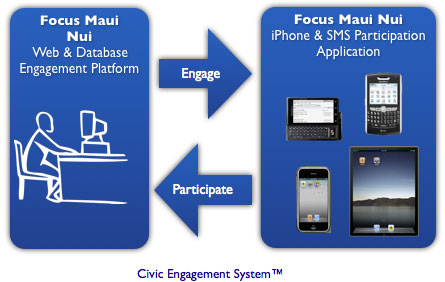
In our proposed concept, MEDB builds on the Focus Maui Nui community engagement program to create a Civic Engagement System™. This “high tech, high touch” system is centered on the internet and mobile devices, with a phone app that will expand and transform the penetration of Focus Maui Nui.
The Civic Engagement System™ will strengthen and enliven community engagement on issues identified as priorities by the community and will mobilize greater numbers of constituents in policy and decision-making processes. The system extends informed discourse by continuing the Focus Maui Nui practice of making it as convenient as possible for residents to participate.
We look forward to hearing from you by Monday December 20th. If you prefer to call with comments, please contact John Harrisson at 808 270-6806.
Dec 15, 2010 | Small Business
 Focus Maui Nui participants have consistently cited the value of small businesses in our community as an important economic asset. One small business that has survived successfully in a changing marketplace is Hamai Appliance, in large part because it has adapted to the change. But a business also survives by doing what it does best. Doing both is Hamai Appliance’s not-so-well-kept secret to success.
“We’re fortunate that we’re still around, but I think one of the reasons is we continue to provide servicing for what we sell,” says President Clyde Hamai. “That’s what makes us different from our larger competitors; we do our own servicing.”
The last independent appliance/electronics businesses on Maui, Hamai recalled when all the appliance stores were locally owned businesses. Maui’s growth brought more customers, and it also brought the warehouse retailers.
Since his parents, Lester and Clara Hamai, founded the appliance business in September 1969, the business has adjusted its product line. It relies on mainstays Panasonic and GE, but there are new lines such as top-end brands like Sub-Zero, Wolf, and Thermador – and new merchandise such as Simmons mattresses.
Hamai joined a national buying group to counter the purchasing strength of the “big box” warehouse stores and set up its own website, www.hamai.appliance.com. “The customers have changed too,” observes Hamai. But Hamai Appliance customers know what they are getting: quality products, service and a staff of 18 people who know their products. “When you’re small, everybody has to do everything,” he says.
“Sure, the larger stores may sometimes undercut us on pricing, but we have a track record for servicing. At most of our competitors, if something breaks, the customer has to find someone else to fix it, and there are some brands for which there is no local servicing available. We even keep records of our customer’s major purchases in our system so they won’t have to worry about warranty information. Our customers recognize that.”
Dec 8, 2010 | Community
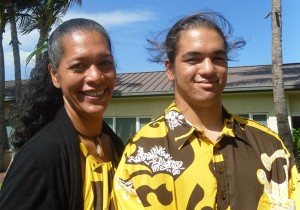
Pūlama Collier with her son Kia‘i Collier, a Kula Kaiapuni senior at King Kekaulike High School.
“Our public schools have been a mainstay for maintaining the consciousness of Hawaiian traditions without the community knowing it,” reflects Pūlama Collier, State Resource Teacher with the Department of Education for Hawaiian Language Immersion Program at King Kekaulike High School.
The immersion program on Maui, Kula Kaiapuni, has been an integral part of preserving Hawaiian culture on the island since 1989, when its first Kindergarten class began at Paia School. Today, there are about 220 students participating in Hawaiian language immersion classes at 4 public schools on Maui: Two at the elementary level (Paia School and Princess Nahienaena Elementary in Lahaina); Kalama Intermediate (Makawao); and King Kekaulike High School (Pukalani).
Statewide, there are 26 language immersion sites, with each island and community offering different models. In some cases, on Oahu and the Big Island, whole schools offer Hawaiian language immersion. On Maui, Kula Kaiapuni is “a school within a school”, as Pūlama observes, with certain classes offering instruction in all subjects in the medium of the Hawaiian language. Within the program, English language arts as a subject is introduced at the 5th grade level to ensure bilingual skills. Kula Kaiapuni, mandated by the State Constitution, is offered by the Department of Education to all families that choose it for their children.
Last week, Kula Kaiapuni students from all four Maui school sites participated in Na Mele O Maui, the annual Hawaiian Song and Art competition, held at the Maui Arts and Cultural Center. They distinguished themselves by winning either first or second place in the music categories.