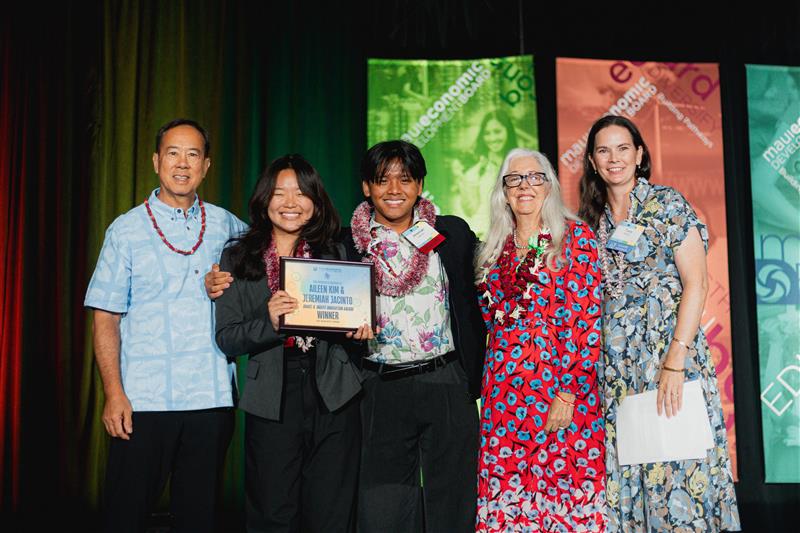
Maui Economic Development Board’s (MEDB) recent Ke Alahele Education Benefit event welcomed over 300 guests and successfully raised funds for local STEM education programs. During the event, the Daniel K. Inouye Innovation (DKII) Award student winners were recognized for community service-focused science, technology, engineering, and math (STEM) projects. Tiare Martin, executive director of the Vanguard Maui High Performance Computing Center and MEDB’s board chair, Curtis Tom, senior vice president and commercial banking officer of the Bank of Hawaiʻi and MEDB’s board vice chair and chair of the education committee, and Leslie Wilkins, MEDB’s president and CEO, presented the award.
Winners were Baldwin High School seniors Aileen Kim and Jeremiah Jacinto for their project, “Kūlia Scholarships Connect.” Recognizing the difficulties that local students and their families face in finding college scholarships, they created an AI chatbot that simplifies and personalizes the search process. “Our team is driven by a shared passion for equity in education and aims to remove barriers to financial aid through technology that empowers every student to reach their full potential,” they explained.
A Maui High School team of Toby Naumov, Sarah Fehnestock, Ciana Cooper, Sophie Kato, and Joshua Mori also received a prize for their “Stop the Bleed Tourniquet Simulator” project. The team used their computer science and mechanical engineering skills to create an artificial human arm that can help students learn the critical first-aid skills needed to control severe bleeding. They successfully created a prototype for only $200, showing that it is possible to create low-cost versions of essential medical teaching tools.
Dominick Philippe Guiwa of Maui High School was honored for his research project, “From Tragedy to Innovation: Lahaina Fire Recovery Through Native Hawaiian Fire Retardant Solutions.” Combining his interest in chemistry with a desire to serve the Lahaina community, he tested plant samples to demonstrate a correlation between pH levels and fire resistance, showing that native plants are often more fire resistant than invasives.
All the winners will receive monetary prizes to honor their hard work. Funds raised during the event will also support the Ke Alahele Education Fund grant program. More information can be found online at https://www.medbpathways.org/.
It is deeply meaningful to us that our work in some way reflects Senator Inouye’s vision of Maui as an innovation center where the latest scientific and technological advances can take root and flourish.
Aileen Kim and Jeremiah Jacinto, 2025 Daniel K. Inouye Innovation Award Winners
Can one person really make a difference for Maui’s marine environment? The local nonprofit, Maui Nui Marine Resource Council (MNMRC) says yes! They work locally through partnerships, community involvement, and education to address threats to Maui’s reefs and nearshore ocean environment. MNMRC helps protect shorelines from storm surge and erosion, ensuring that Maui’s surrounding ocean can continue to support wildlife, provide food, and support thousands of marine jobs.
“Regrettably, according to the State of Hawaiʻi Department of Health, Maui has one of Hawaiʻi’s most polluted coastal waters,” said Sara Sugidono, MNMRC Communications and Development Director. “Many of the threats begin on land. Protecting them from mauka to makai is MNMRC’s priority so that our reefs will be here for generations to come.”
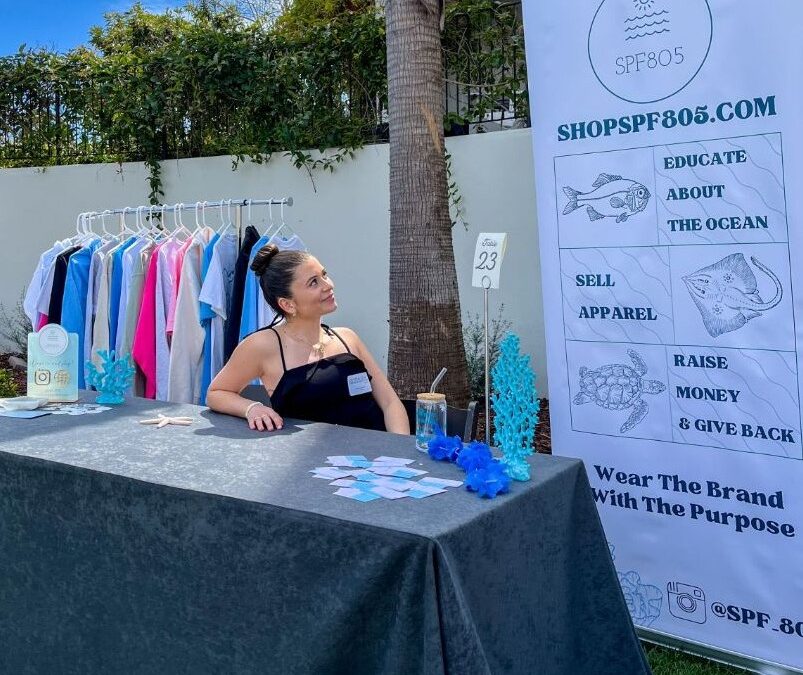
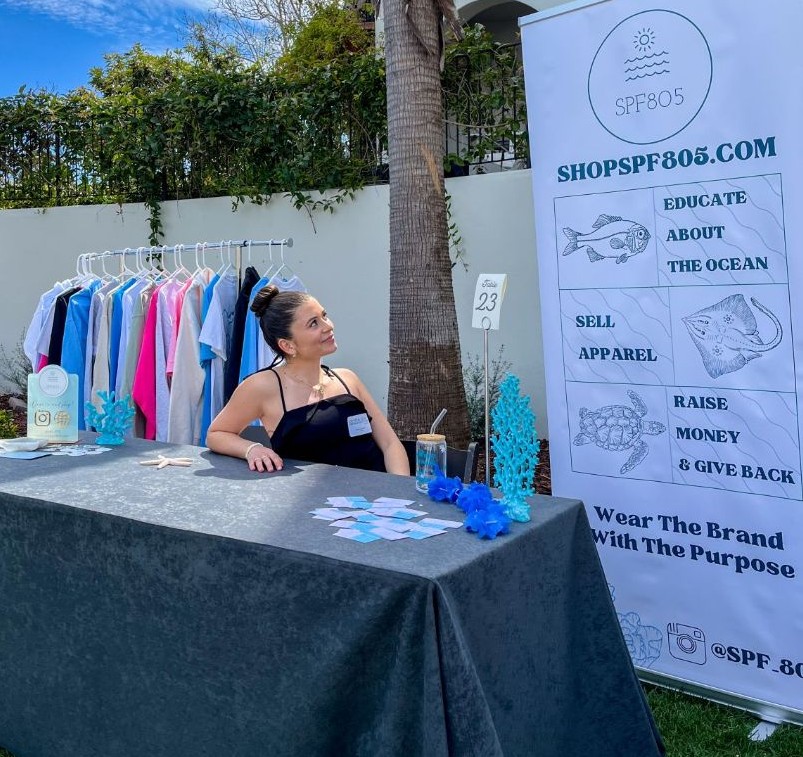
Sugidono emphasized the impact that single individuals can have on ocean protection, highlighting the story of Hope Gonzolez, who grew up visiting her Maui grandparents. “Gonzalez is an award-winning business owner, entrepreneur, college student, and volunteer. She began her passion for conservation as a 6th grader when she noticed changing water conditions and decreased turtle and fish populations at Honokeana Bay. Her story is an inspiring example of how one person can become a force for good by starting with an idea and small actions.” While still in high school, Gonzalez launched SPF805, a clothing brand dedicated to educating people on the importance of coral reefs. Gonzalez has committed to donating a percentage of the profit from each purchase to MNMRC.
Gonzalez noted, “Every day, I’d snorkel the same reef. I would see similar turtles and fish, and every time I came back, there were fewer fish and turtles, and the area’s once vibrantly-colored coral reefs were turning a dull, whitish color. I saw it firsthand and wanted to do something about it. Now is the time, because our oceans and reefs are at a critical turning point. We can help by pursuing marine science and other STEM-related fields, volunteer for beach cleanups, use reef-safe sunscreen, reusable bags and water bottles, donate to non-profits working in ocean conservation, etc. The value of working together to make a positive impact on the community is priceless.”
I am dedicated to teaching people the reality of what is happening to our oceans and how they can help. Each one of us can make a difference!
Hope Gonzalez, Owner and Founder, SPF805
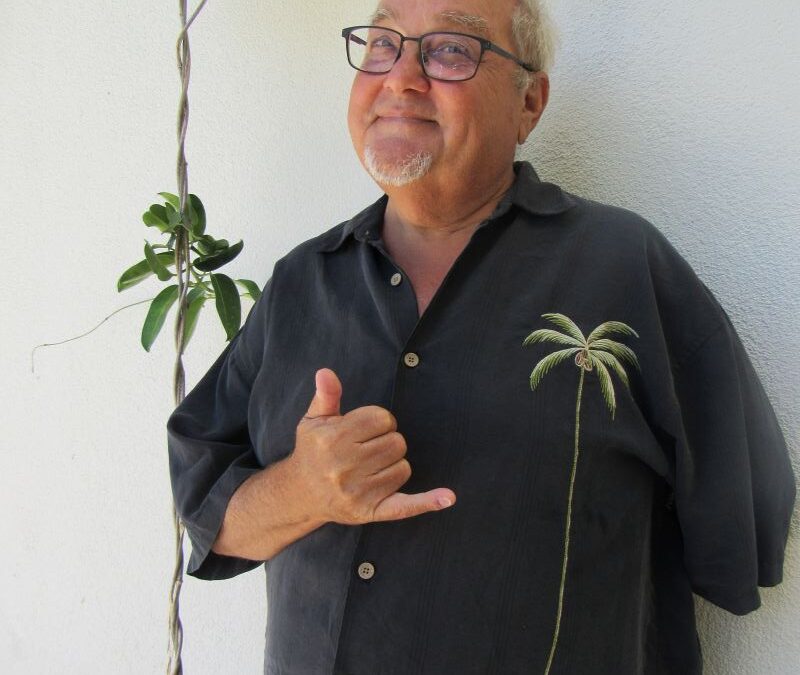
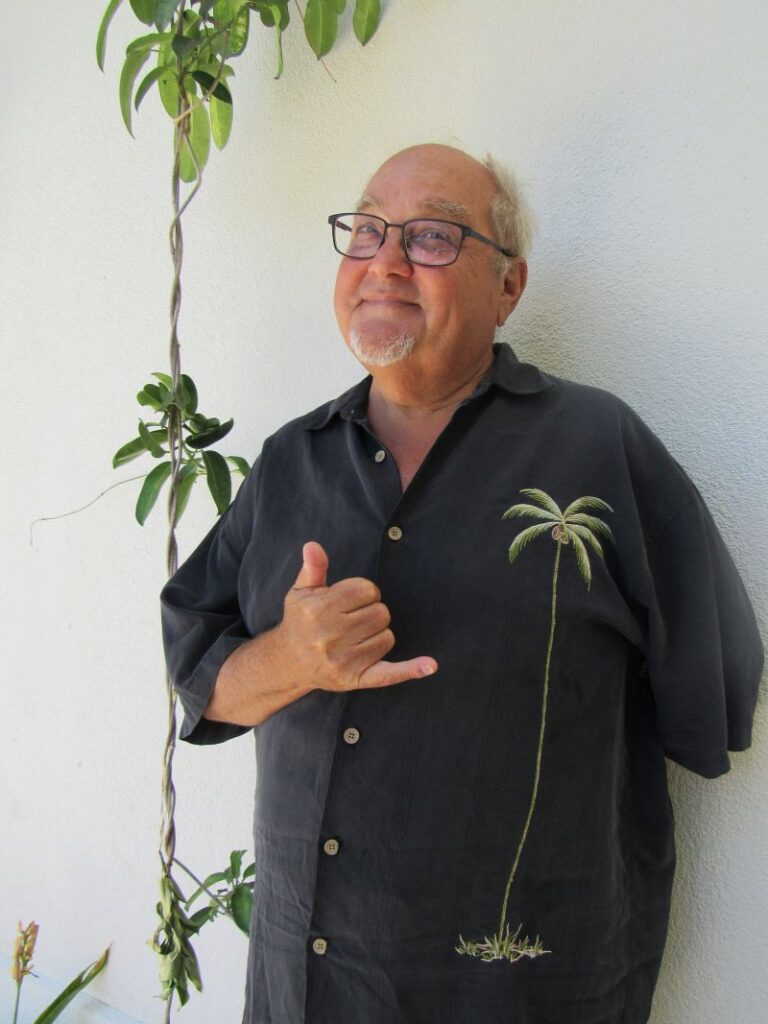
Maui resident Mark Beltzman, a world traveler thanks to his stage, movie, and television career, has been acting, writing, and directing since 1981. He brings a unique blend of talent and passion to every performance and has captivated audiences with compelling character portrayals and dynamic storytelling on both stage and screen. In 2014, he co-founded Maui Improv (short for “improvisation”), a non-profit dedicated to creating opportunities for improv education and performances on Maui.
Improv, a powerful tool that requires mastering skills like listening, communication, and storytelling, helps people build confidence and collaboration. At its core, improv allows for spontaneity and moments of genuine interaction. Beltzman shared, “My philosophy is to figure out what’s working and do more of it, instead of what’s wrong; and to know the difference.”
In his improv workshops, Beltzman incorporates lessons of transformation related to his years of involvement with the Kihei men’s group, ManKind Project Hawaiʻi (MKP). “The MKP group offers spaces where men are free to speak openly and honestly about their lives, accepting responsibility, purpose, and intention,” Beltzman explained. “We recognize connections to nature and humanity as we take accountability for our actions.”
Beltzman says MKP lessons and improv work together. “Life happens outside our comfort zone. I call improv the ‘art of allowing’ because it is for anyone who desires to cultivate the ability to flawlessly and spontaneously create magic on stage, and in life. Ultimately, we can strip away the layers we put up to protect ourselves and can simply be our most authentic self!”
Beltzman is also a musician and is currently the solo tubist for the Maui Pops Orchestra (MPO) and also plays with the Maui Community Band (MCB). MCB has offered four free concerts on Maui so far in 2025, and MPO recently wrapped up its summer season with a classical chamber music concert.
For more information about Maui Improv, visit www.mauiimprov.org. Readers can also follow @mauicommunityband and @mauipopsorchestra on social media for updates regarding the local fall 2025 concert season.
Improv encourages individuals to think on their feet and come up with creative solutions to unexpected problems.
Mark Beltzman, Actor, Director, and Musician Maui Improv
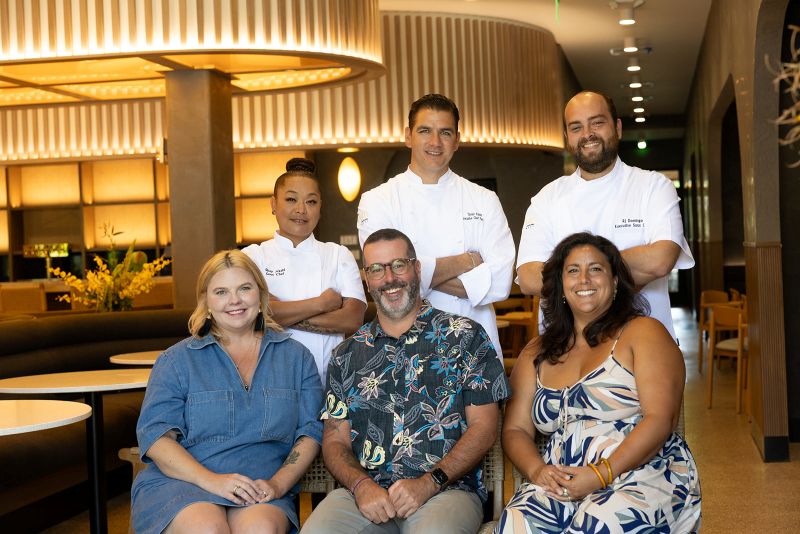
Recently, Aurum, the culinary brand known for its seasonal, chef-driven cuisine, debuted its first Hawaiʻi location at The Shops at Wailea. Helmed by its local partners, Chef Taylor Ponte and General Manager Natasha Ponte, the restaurant showcases fresh, locally-sourced ingredients from Maui’s leading farms and fisheries.
Born and raised on Maui, the Pontes’ community impact is felt well beyond the kitchen. With deep connections in the local culinary scene, they can be found teaching high-school cooking demos, mentoring students, and volunteering with local nonprofits like Chef Hui and Fresh Help Maui.
At Aurum Maui, Taylor draws on his Maui Culinary Academy training to create dishes that are both refined and island-style. Natasha’s background in both culinary arts and event design informs every detail of the dining experience, blending sustainable sourcing with genuine hospitality. “It’s incredibly meaningful to Natasha and me to bring a local lens to the Aurum experience,” said Taylor. “Every dish reflects our roots, our growth, and the richness of Maui.”
Taylor shared, “Natasha and I met while working at the Mill House at the Maui Tropical Plantation. I was the executive chef and she was the sales and events manager. In 2020, during the Covid-19 pandemic, we were both laid off.” Natasha added, “That was the year that Taylor was named Chef of the Year in the ‘Aipono Restaurant Awards.”
About a month after their layoffs, the couple launched Kamado, a private chef and catering business that quickly took off. However, they always envisioned getting back into the restaurant industry. Together, they hope to create something rare: a restaurant that’s not only destination-worthy, but deeply local.
Taylor noted, “Our menus, celebrating local farms, fisheries, and sustainable products, reflect the community that makes hospitality in Hawaiʻi unique. We pursue excellence in every aspect, from food and service to creating a warm, welcoming experience that embodies the essence of aloha.” Natasha concluded, “Our largest goal is to make a delicious meal for every customer, in a beautiful space, with great service.”
We are both very community-based. For us, it’s exciting to bring jobs to people who were born and raised here and to share our blessings with our customers.
Taylor and Natasha Ponte, Chef and General Manager, Aurum Maui
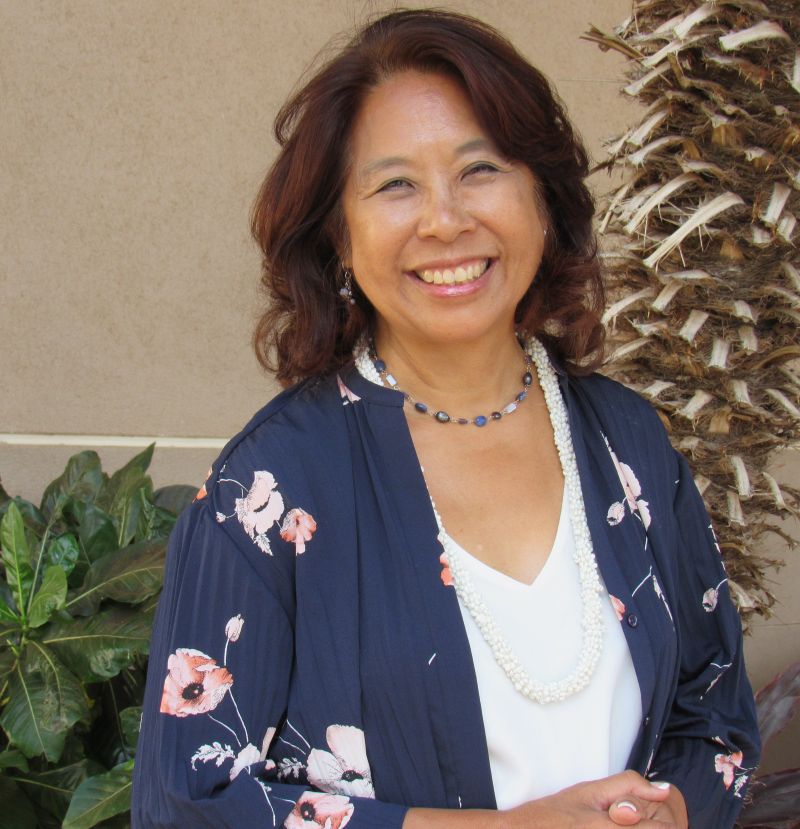
Maui Economic Development Board’s (MEDB) recent Maui TechOhana meeting featured marketing expert and Baldwin High School alumna Jennifer Apy, who shared powerful lessons on digital marketing strategies using artificial intelligence (AI). Apy gave an instructive presentation, “Stories from the Marketing Battlefield: Wins and How We Earned Our Stripes,” to over 50 Maui entrepreneurs and small business owners.
As a seasoned marketer for Fortune 500 brands, an Area Managing Partner for Chief Outsiders, and a certified speaker for Vistage, the world’s largest CEO coaching organization, Apy travels the country to support companies who are ready to accelerate growth. Taking advantage of her academic training in computer science, she also has experience co-founding a software company and is currently invested in a broad portfolio of startups.
Apy explained, “My passion is for helping companies succeed and grow with go-to-market approaches,” she explained. “Strategy, creativity, and resourcefulness lead to big wins. To attain top-line business results, it is key to know your customer and to reflect on your company’s ability to achieve competitive progress through blended insight, approach, and execution.”
Ululani Shave Ice CEO David Yamashiro noted, “It’s important that all small business owners understand what AI is about and how to use it efficiently. No matter how successful a business is, owners need to stay updated on real-world tools to accelerate growth. Apy explained this well.”
Kelli Myers from Real Broker added, “My passion lies in helping sellers navigate the market with confidence and ease. Learning new tools to use to communicate with my clientele is priceless. MEDB offers great workshops to help Maui’s small business and entrepreneur community.”
Ron Viloria from iamakam.ai also shared, “As a small business owner, I wanted to explore how AI is revolutionizing business functions like marketing, sales, customer service, and operations to drive growth. MEDB continues to bring this kind of valuable technical assistance into our community.”
MEDB’s Maui TechOhana provides informal networking opportunities open to anyone interested in tech-driven business strategies. Learn more at www.mauitechohana.com.
Choosing the right digital channels, such as innovative applications of generative AI, can help deliver long-term profits.
Jennifer Apy, Area Managing Partner, and CMO Chief Outsiders
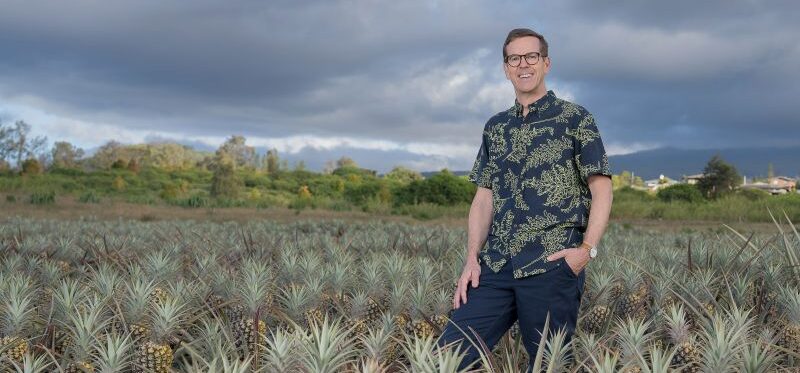
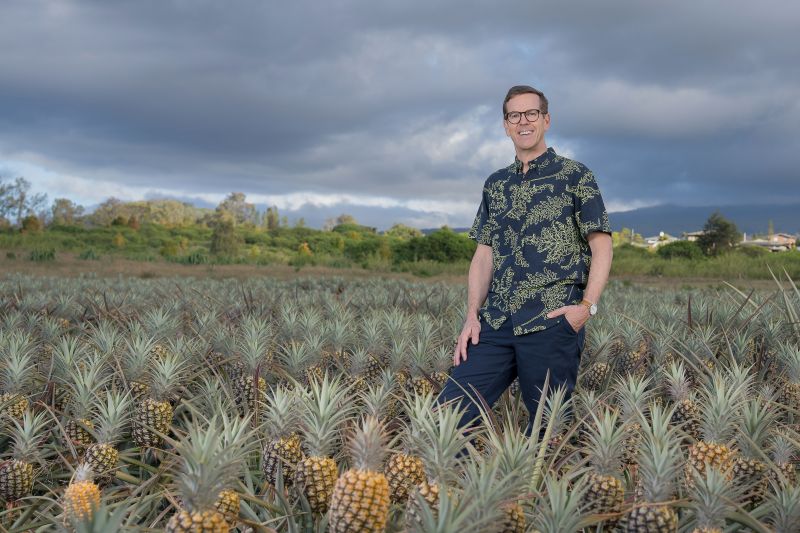
With over two decades of leadership experience in sales and marketing, John White, the newly appointed Hawaiʻi Farm Project CEO, brings a wealth of expertise to guide the organization into its next chapter of growth. White will oversee Hawaiʻi Farm Project’s renowned brands, which include Maui Gold Pineapple, Maui Pineapple Tour, Maui Pineapple Store, Maui Chocolate Tour, Lahaina Honey Company, and Maui Farm Events. His appointment comes at a pivotal time as the company focuses on long term growth post-wildfires and continues its commitment to Maui’s rich agricultural heritage.
Todd Domeck, owner of Hawaiʻi Farm Project, shared, “John’s leadership, passion for our mission, and deep connections to Maui will ensure that Hawaiʻi Farm Project continues to thrive and share its unique offerings with the world.”
As a leader in agritourism, Hawaiʻi Farm Project offers immersive farm experiences that highlight the flavors and stories behind local crops like pineapple, honey, and cacao while supporting education and sustainability. Beyond tours and tastings, they foster programs for local students through school field trips, hands-on internships, and community workshops, cultivating a deeper appreciation for agriculture. They are also exploring ways to make their farming practices more environmentally friendly. One of their sustainability initiatives, a landscape test program with Maui Nui Marine Resource Council, implements a new biodegradable soil covering that is a tapioca-based fabric instead of plastic.
White takes on the role of CEO with years of experience centered around branding and commercial strategy for Hawaiʻi businesses. “My approach is shaped by Hawaiian values, a philosophy I adopted during my training through the Poʻokela program at Kāʻanapali Beach Hotel,” White recalled. “Rooted in inclusivity, respect, and accountability, this training emphasizes a responsibility to uplift both individuals and communities, while honoring Hawaiʻi’s agricultural traditions.”
White added, “ I am honored and take great pride in contributing to our island’s future. Together, we will continue to innovate while remaining true to our kuleana—our responsibility—to preserve Maui’s agriculture heritage, support our employees, and share the aloha spirit with all who visit.”
Hawaiʻi Farm Project connects people to the land, the food it produces, and the hands that grow it.
John White, CEO, Hawaiʻi Farm Project
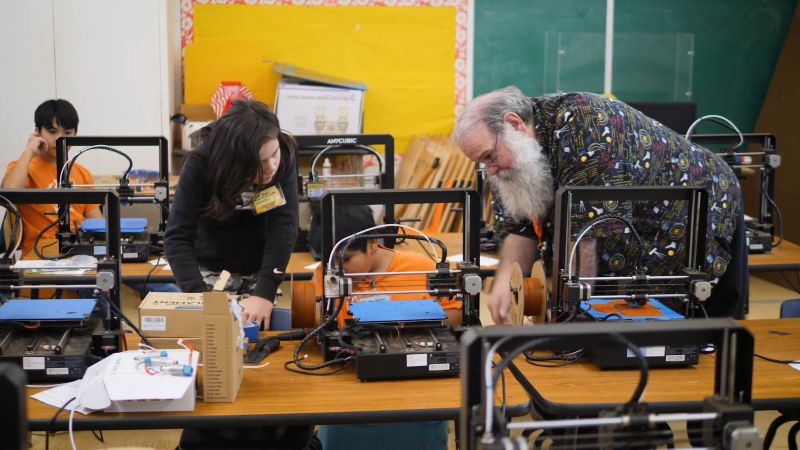
Under the guidance and mentorship of teacher John Hughes, students at Wailuku Elementary School are developing a sharp sense of inquiry and staying excited and engaged thanks to what they are learning during astronomy and engineering activities. Mr. Hughes and Wailuku Elementary Principal Dr. Nikan Arapoff are providing opportunities for students to explore STEM (science, technology, engineering, and math) topics, challenges, and career pathways through hands-on learning.
Dr. Arapoff said, “We’re so proud of the keiki and everything that they are doing in our STEM program, which includes 3D-printing, Hawaiian history, and astronomy. Their participation is advancing their knowledge in a way that helps community.”
Dr. J.D. Armstrong, Educational Outreach Specialist for the University of Hawaiʻi’s Institute for Astronomy, shared, “Hughes is one of these people that seem to really have a knack for getting things to work. He is also an avid amateur astronomer. When he started teaching at Wailuku Elementary, I set up an account for him with the Las Cumbres Observatory (LCO) educational program, Global Sky Partners. Hughes and his students are using this online resource to image objects like the Moon and anything they wish to study in their designated time. For example, one student wanted to image Halley’s Comet because it was visible when King Kamehameha was born.”
Mr. Hughes said, “This class is making a vast difference in the lives of the students. Many of the keiki have gone from special education classes to advanced classes in a single year. I feel that it’s really changing lives, and that means everything to me!” One student shared, “This class has made me think of going into engineering and science.” Another explained, “I love making 3D objects and exploring the sky on the computer through LCO’s robotic telescope network!”
The 3D projects begin with three main steps: designing and modeling, slicing (preparing the design for printing), and 3D printing. The students can explore this technique as a medium for creating sculptures while learning about spatial relationships. Additionally, teachers can use 3D printing to create lessons for various subjects like math and science.
“Our keiki are smart, and they have incredible imaginations,” Mr. Hughes concluded. “Once I give them the tools and create a sense of wonder, I have done my job!”
The students are eager to learn. With guidance and mentoring they are soaring!
John Hughes, STEM and Hawaiian History Teacher, Wailuku Elementary School
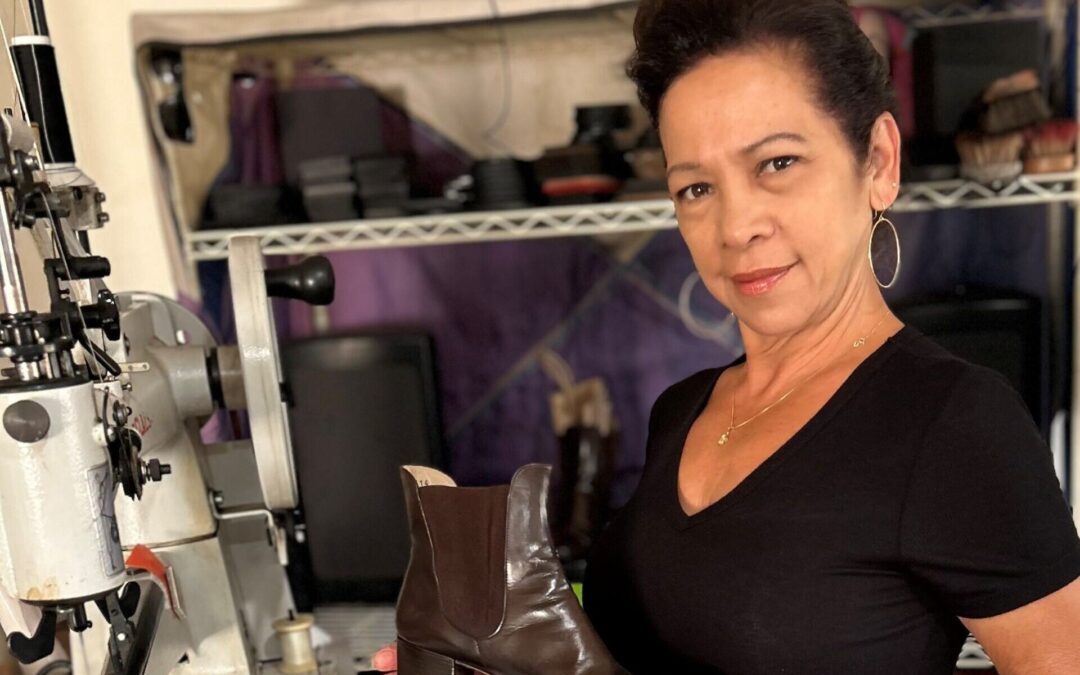
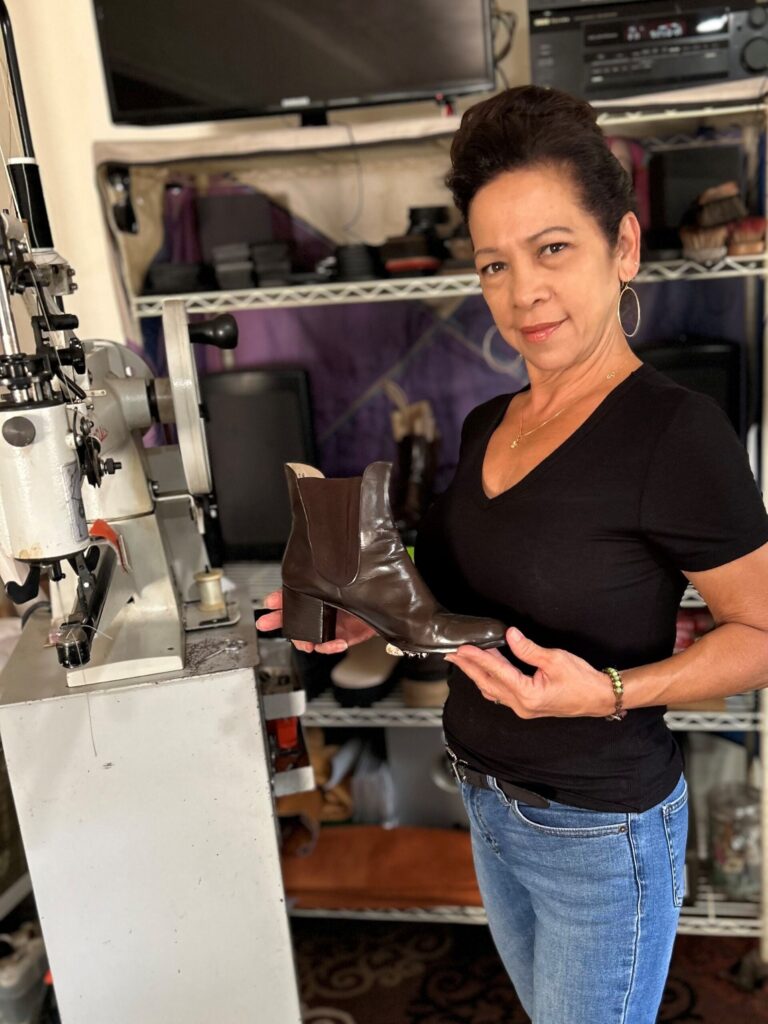
Maui without a cobbler has been a sad story for so many people who love their broken-in shoes and boots but have no one to repair them. Repairing favorite footwear can be less expensive than buying a new pair, and extending a shoe’s lifespan also contributes to an eco-friendly lifestyle. Fortunately, the Tester family is back in business for anyone needing shoe repairs on Maui. Restoring shoes to their original beauty and functionality has been their passion for over 40 years.
“We are delighted to return to our roots,” said Lu Tester, owner of Tester’s Shoe Repair in Kihei. “Our family-owned, woman-led business specializes in high-quality repair and restoration. Expert shoe care combines skill, experience, and dedication…we focus on delivering exceptional results using our specialized approach. With meticulous attention to aesthetics, we handle everything from heel and sole replacement to comprehensive boot and heel repair. These skills have been passed down through generations.”
It all began with the late Ken Tester, who got his start in the trade in 1961. He learned the basics of shoe repair while serving in the Marine Corps, and after the Marines, Ken taught the trade to his sons and their wives. He recalled that the most experience he got in shoe repair was while working for one of the most respected cobblers in Hawaiʻi, Joe Pacific. This story recently came full circle when, after 90 years, Joe Pacific Shoe Repair closed its business and shipped all their equipment to the Tester family.
For those aspiring to get a start in this much-needed profession, the skills required to master the trade can be challenging to learn. Cobblers need to be proficient in using various tools and techniques, including sewing, cutting, stitching, patching, sanding, polishing, sealing, and more. They need to think of innovative ways to repair or customize footwear and understand the needs and preferences of their customers.
“Proper maintenance and repairs can significantly extend the life of shoes, making them more cost effective and feeling new again,” Lu added. “We also offer precision care for accessories, such as belt and bag repair. We’re so happy to be back in business!”
Every repair we do is executed with care. Damaged soles, frayed stitching, and scuffs are taken care of using methods honed through decades of craftsmanship.
Lu Tester, Business Owner and Cobbler, Tester’s Shoe Repair
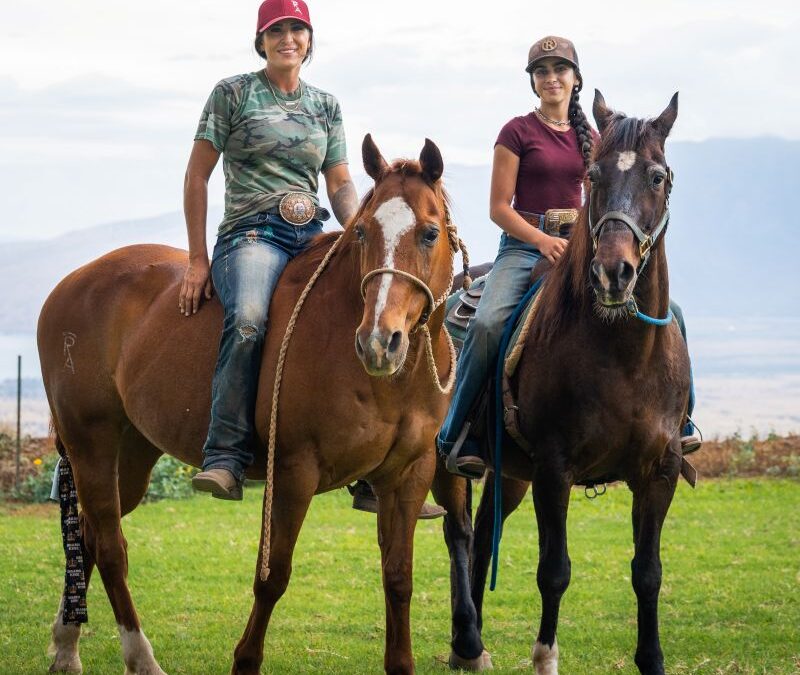
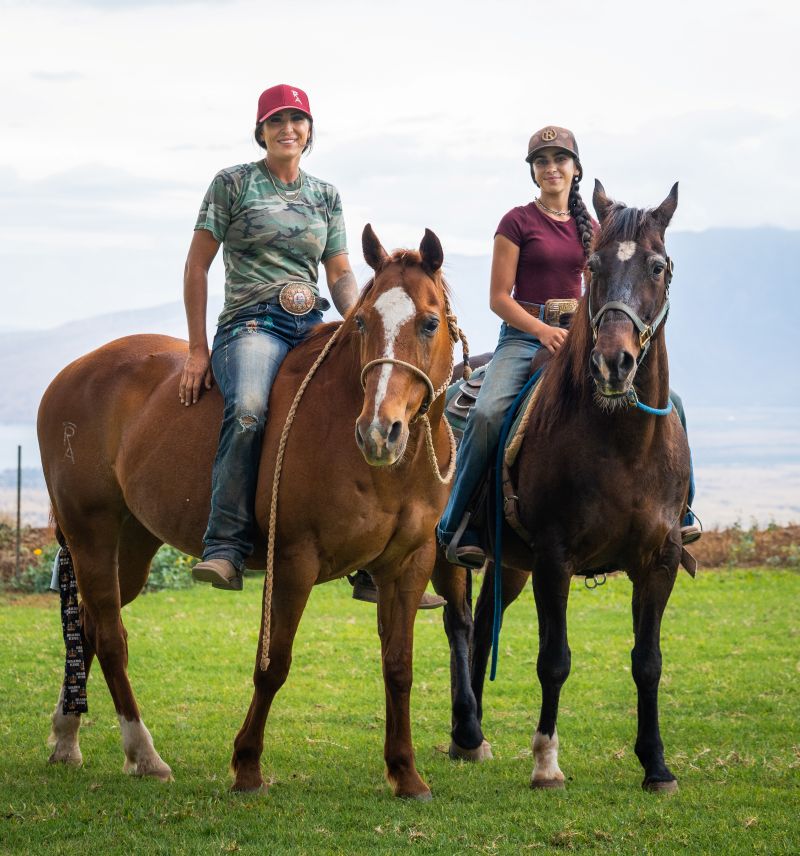
The Makawao Stampede is taking place once again this year, with three days of rodeo and live music events at the Oskie Rice Event Center from July 4-6. With its history dating back to the 1950’s, the small-town rodeo has preserved the cultural significance of horsemanship and the paniolo (cowboy) lifestyle in Hawaiʻi.
A main rodeo attraction, barrel racing isa competition that shows true teamwork between rider and horse. The rider must be able to guide the horse effectively, while the horse must be responsive, athletic, and mentally prepared to navigate the cloverleaf pattern at speed.
Rachel Cockett, the 2024 Makawao Stampede Women’s Barrel Racing Champion, said, “Women often gravitate towards barrel racing due to the sport’s unique blend of speed, precision, and the strong partnership between horse and rider. Barrel racing is a fast-paced, high-intensity sport that demands quick thinking and precise execution, providing a thrilling, challenging, rewarding, and competitive outlet for riders.”
Cockett grew up on Maui and started riding horses when she was three years old. In 2021, she opened Barra Ranch in Kula, where she trains horses and riders in the skills she has learned. Cockett noted, “My vision is to create a place that I wish I had in my childhood, to give every ounce of knowledge to the kids to help them succeed, and also to become a better athlete myself.”
Moorea Feliciano, the 2024 Makawao Stampede Rodeo Junior Barrel Racing Champion, added, “The Stampede offers a chance to see the skills of the local paniolo. I also love that we get a chance to show people how amazing and fun rodeo can be!”
Feliciano, now 13 years old, started riding at the age of seven and began barrel racing at the age of nine. She says her greatest rodeo memory is winning the 2024 Junior Barrel Racing Championship and doing the victory lap on her horse, Buddy. “Every barrel racer dreams of that experience. My motto is to always have fun and keep my horses’ safety first.”
It’s important to have patience with this sport, put in your time and effort, and take advice from everybody who wants to help you. See you at the rodeo!
Moorea Feliciano, Junior Barrel Racing Champion, 2024 Makawao Stampede