Jan 21, 2016 | Education, Environment, Sustainability
Since 2009, the Maui Economic Development Board (MEDB) Women In Technology program (WIT) has trained 459 educators through the energy science curriculum of its Island Energy Inquiry (IEI) initiative. In that time it has expanded from Maui across the state, reaching at least 49,000 students. IEI is the first energy education program designed for Hawaii teachers that combines scientific inquiry and engineering design processes with cutting-edge materials and technologies in the classroom. Teachers are using this new knowledge and hands-on activities to help middle and high school students learn about and perhaps someday solve the state’s energy concerns. “Through the IEI workshops, our MEDB team helps teachers educate for energy prosperity,” said Graham R. DeVey, WIT Project Manager. “Our hands-on, student-driven labs and activities use the natural curiosity of students to develop their skills for tomorrow’s high-tech jobs in renewable energy here in Hawaii.”
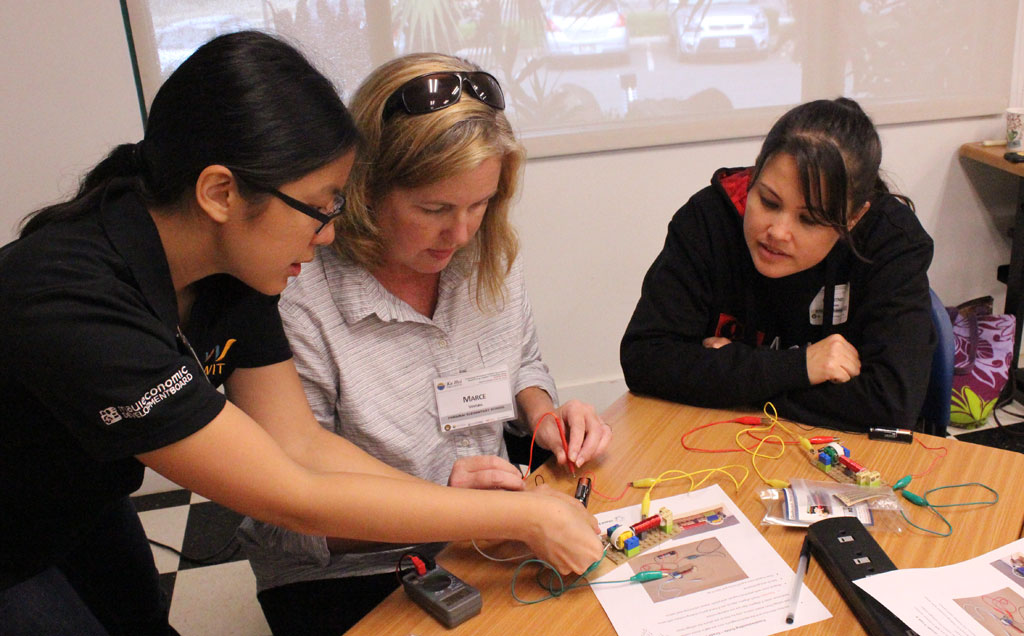
In recent Maui workshops for teachers of grades K through 5, WIT Project Assistant, Manda Tong supported the educators in an IEI electromagnetic motor lab, building the foundational concepts used in engineering wind and hydro generators. “In IEI courses, teachers learn as students do, by applying scientific skills through a hands-on approach,” Tong explained. The workshop series, focusing on photovoltaic electricity, wind energy, solar thermal energy and energy efficiency, incorporated presentations from local engineers and other industry representatives on various energy topics. Participating teachers also received hands-on kits to take back to the classroom, including miniature PV modules, a four-foot wind turbine and energy auditing equipment. WIT’s IEI Program, in partnership with Ka Hei, a Department of Education Program, also includes comprehensive energy efficiency and water conservation initiatives, sustainability measures, microgrids, science, technology, engineering and math (STEM) curriculum and community involvement.
To augment the IEI curriculum and make it more tech-relevant to teens, a companion Clean-Energy Hawaii STEM iPad app has been created by NSC Partners LLC, a Maui-based software developer. The app is available at the iTunes store and features Hawaii-specific clean energy content that can be adapted to support innovative energy science education in any community throughout the world.
Maui Economic Development Board’s Women In Technology Island Energy Inquiry Program (IEI) launched its elementary school curriculum this past fall, training 35 teachers of grades K through 5 to teach clean energy modules. The IEI program helps build student competency towards energy prosperity for Hawaii’s future.
Manda Tong, MEDB Project Assistant
Nov 12, 2015 | Environment, Sustainability
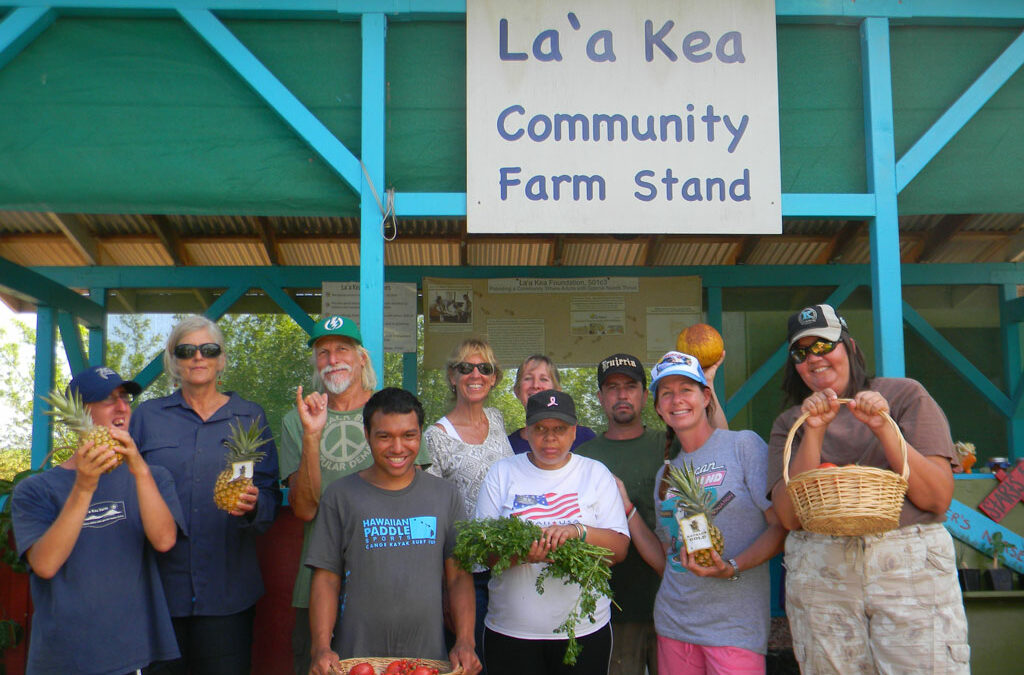
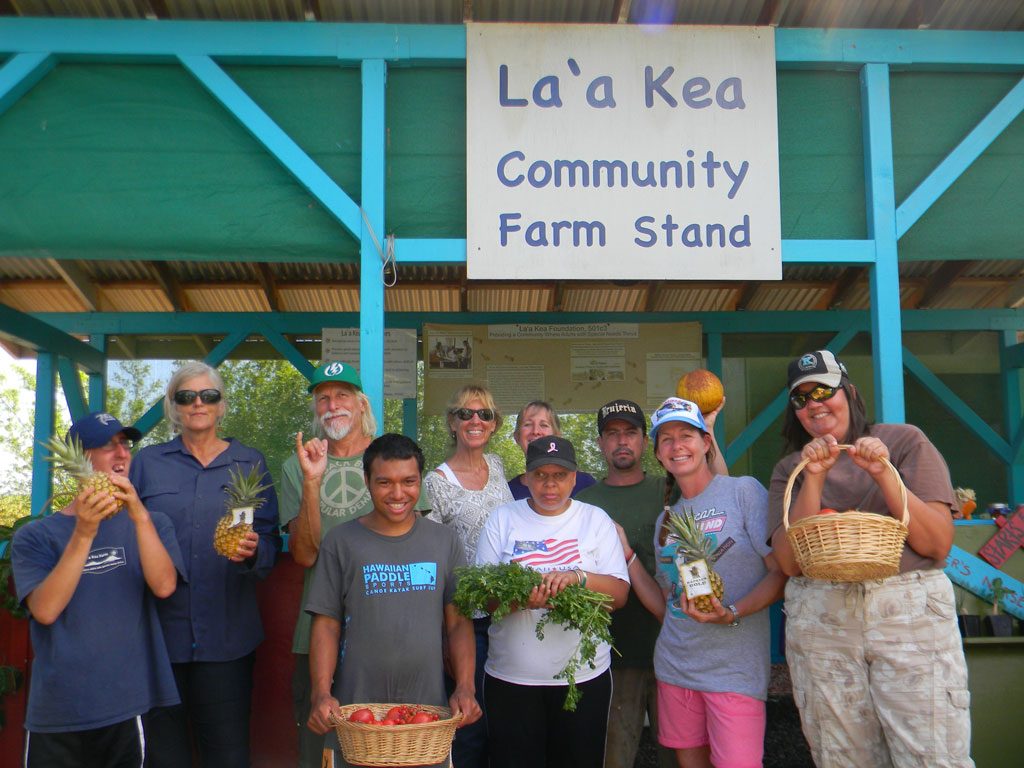 Imagine a place where the community reflects what is important and precious in each member. Imagine a place where the meaningful work that each individual contributes to the community is healing and inspirational. La‘a Kea Farm on Baldwin Avenue in Pa‘ia is that place. Sitting on 12 acres overlooking the ocean, with double rainbows and majestic white clouds, the farm inspires residents and visitors alike. Founded in June 2000, La‘a Kea, a 501(c)(3) nonprofit organization, provides day and residential programs for youth and adults with intellectual and developmental disabilities. It is the first of its kind in the State of Hawai‘i.
“Our mission is to create wholeness through education and therapy in extended family living,” said La‘a Kea Executive Director Andrea Hall Rodgers. “Being part of a thriving ‘ohana enables the members to fully unfold their potential and inspire each other. La‘a Kea’s programs include farming, economic ventures and the activities of daily living that come alive in a community with homes, farm buildings, a farmers’ market, cafe, craft studio and more,” said Rodgers. Inspired by the internationally known Camphill Village model, La‘a Kea offers a unique alternative to conventional care. Co-workers, residents and day program participants, regardless of their ability or disability, work in a supportive environment. They are all dedicated to discovering and enhancing the contribution of each individual through productive work.
In 2005, Rodgers presented the La‘a Kea project to Maui County Mayor Alan Arakawa. “It is an exceptional model of organic farming and equitable community living designed specifically for the special-needs community,” she told the mayor. Recognizing the critical need for a community serving one of our most overlooked populations, Mayor Arakawa arranged the first long-term lease ever given to a nonprofit in the history of Maui County.
“During my first administration we realized there was a gap of service when it came to assisting adults, over 18 years old, with physical and mental challenges,” said the mayor. “I am very happy we have programs like La‘a Kea and others that care for our most vulnerable island residents.”
La‘a Kea Farm is an exceptional model of organic farming and equitable community living designed specifically for the special-needs community.
Everyone is invited to the 5th annual La‘a Kea Farm Fall Family Festival and Pie Contest on Sunday, November 15th, 2015 from noon to 4 pm. The event includes food and fun for the entire family with live music, tractor rides, silent auction and more.
Andrea Hall Rodgers, La‘a Kea Executive Director
Sep 30, 2015 | Community, Environment, Sustainability
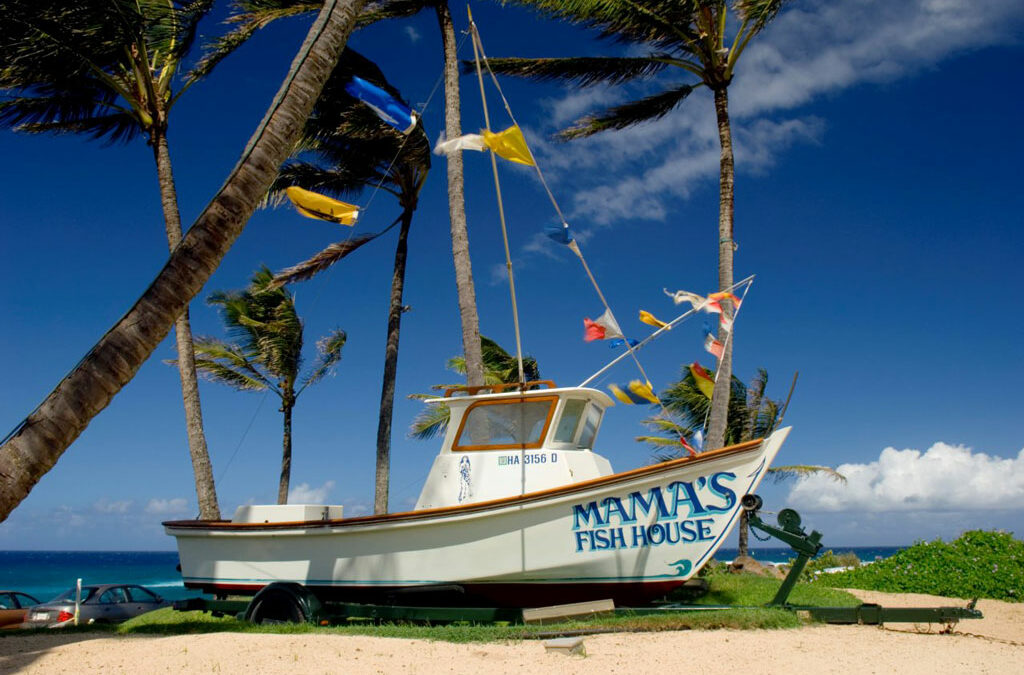
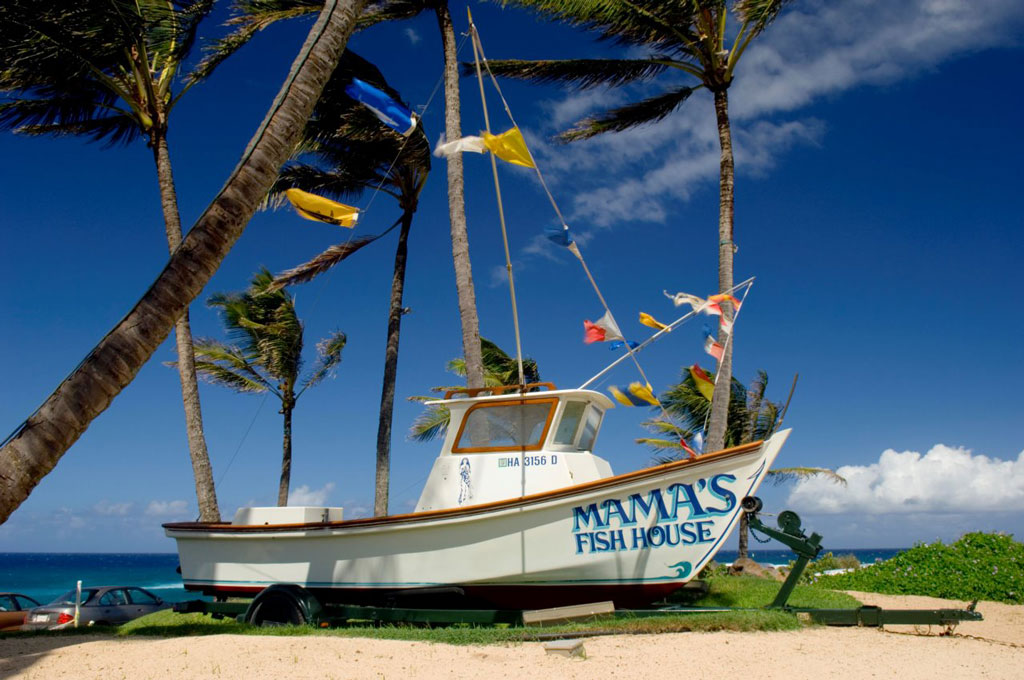 Mama’s Fish House, family-owned by Floyd and “Mama” Doris Christenson, has been buying fish directly from Maui fisherman for over 40 years. These local fishermen, representing a way of life, culture and tradition in Hawai’i, consistently deliver the freshest and finest local Maui seafood. In May 2013, Mama’s Fish House, in cooperation with Maui fishermen and the Western Pacific Regional Fishery Management Council (Wespac), funded and deployed the first of two fishing buoys approximately 30 miles off the northeast shore of Maui. The buoys are technically called a Fish Aggregation Device (FAD) and are anchored to the seafloor at a depth of over 1500 ft. “They are located in deep, off-shore waters that are habitat for pelagic species such as tuna, mahi-mahi, ono, and billfish,” said Mama’s Fish House Marketing Director Karen Christenson. “The concept of a FAD is a small platform or skiff that is anchored to the ocean floor, with a GPS beacon for tracking,” Christenson explained. “The floating buoy attracts the fish, offering some protection for smaller fish that, in turn, attract larger predator fish.”
“FADs have proven to be a successful sustainable food source while reducing transit times and fuel costs for fishermen,” said Mama’s Fish House Executive Chef Perry Bateman. While the State of Hawaii maintains a network of FADs across the islands with the objective of providing recreational fishing opportunities, Mama’s FAD is different. “It is the first buoy funded by a private business to support the fishermen and Wespac’s research,” Chef Perry said.
Recognizing that data collection is critical to ensuring sustainability for local Hawai’i fish stocks, Mama’s Fish House encourages fishermen to submit their catch reports to the State of Hawai’i and Wespac. “Having accurate reports is being pono, doing the right thing, and perpetuating our culture of fishing,” said Chef Perry. He added that all Hawai’i-licensed fishermen can fish at Mama’s Fish House funded buoys and sell their catch to anyone. “The goals of community FAD projects are to increase fishing opportunities and cooperative research, and to provide community benefits.”
Apr 8, 2015 | Community, Environment, Sustainability
 More than 30 percent of Maui’s energy needs, on average, are being met by renewable energy sources such as wind and rooftop photovoltaic (PV) systems, and the trend continues to rise, making Maui a national and global leader in the adoption of renewable energy. This was just one of the positive observations to emerge from the 2015 Maui Energy Conference + Exhibition that spanned two days at the Maui Arts & Cultural Center last month. More than 300 energy industry leaders from Hawaii, the Mainland and Japan attended and shared ideas on how to better serve customers in today’s rapidly changing power generation and delivery environment.
At the conference, Program Committee member Holly Benz of Schneider Corporation said: “All eyes are on Hawaii.” Benz said outsiders are continuing to closely watch the state and its work on energy issues. “There is a tremendous opportunity for Hawaii to lead, to test and to learn.” Keynote speakers Alan Oshiro, President of Hawaiian Electric Company and Eric Gleason, President of NextEra Energy Hawaii shared perspectives on the acquisition of Maui Electric’s parent company, HEI by NextEra and outlined the benefits that it can bring to customers and Hawaii. NextEra, the largest generator of wind and solar energy in North America, has announced its commitment to lower Hawaii’s high electricity costs.
One of the nine thought-provoking panels, “Focus on the Customer—Maui Style,” discussed proposed changes in Maui’s energy landscape, concluding that these must be transparent to residents and engaging for young people. “In my business,” Cathy Nobriga Kim, vice president of Maui Soda and Ice Works said, “energy is crucial.” When asked how businesses could be involved in renewable energy solutions for Maui, Kim observed that business involvement in pilot projects to develop renewable energy solutions are beneficial. Other panelists said that government and community leaders must step up to explain the changing energy landscape. Information provided to residents must be true and trustworthy; “There needs to be transparency,” one panelist said. The conference was hosted by the Maui Economic Development Board and the Mayor’s Office of Economic Development.
Mar 18, 2015 | Environment, Small Business, Sustainability
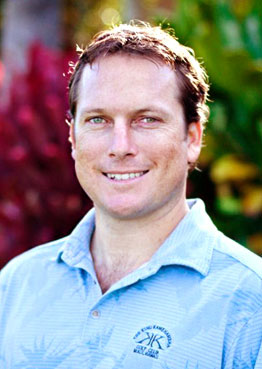
A passion for the o utdoors inspired John Bendon to create a company that helps others achieve milestones in energy efficiency and environmental design. Bendon, a 1996 Seabury Hall graduate, serves as the founding principal of Green Building Hawaii. “Ultimately, the core focus of what we do is drive value by maximizing performance,” Bendon said.
Founded in 2007, Green Building Hawaii assists commercial and residential clients and conducts training in a number of areas including energy audits, photovoltaic analyses and high performance certifications such as LEED – Leadership in Energy and Environmental Design. With Green Building Hawaii’s guidance, the Hyatt Regency Maui Resort and Spa became the first resort in the state and only the fourth in the world, according to Bendon, to earn a silver level certification under the U.S. Green Building Council’s LEED for Existing Buildings Operations and Maintenance (EBOM). It is also the first building to Maui County to receive this designation. “What’s exciting is that a lot of resorts want to follow Hyatt’s lead,” said Bendon, who’s added more resorts to his clientele list.
Maui Economic Development Board, another Green Building Hawaii client, became the first LEED EBOM certified office building on Maui. “The LEED rating system is the most recognized third party certification for environmentally conscious buildings,” Bendon explained. “I hope more organizations will follow MEDB’s commitment toward promoting renewable clean energy.” Bendon said his team worked with staff at MEDB and at the Hyatt Regency Maui for about a year and a half, reviewing policies and procedures relating to issues such as energy efficiency, waste diversion, green cleaning, and other sustainable operating policies and procedures. “The energy projects are return on investment projects. We help companies both improve the bottom line and the environment,” Bendon said.
Green Building Hawaii has seen an upswing in business. “We’re really busy these days. The awareness is growing in this field and we are starting to work with organizations that did not have these types of issues on their radar even a few years ago.” Bendon said. On his company Web site, Bendon predicts that the next big advances in green building will involve material life cycle assessments and further integration of smart home/building technologies to reduce energy use.
Mar 11, 2015 | Environment, Events, Sustainability
 Experts from across the nation will present the latest trends in the electric utility industry, as well as the public policy influencing customer choices. Sessions will address issues about advancing toward grid modernization, consumer protection, and engaging customers in a fresh, new way.
Conference sessions include
- Understanding the evolving role of the customer in a broader context
- The customer of the 21st century
- Are we seeing what they’re seeing: customer perceptions on energy
- Advancing toward grid modernization – meeting customer needs
- The growth of distribution generation – good or bad for the customer?
- Community perspectives (video panel discussion)
- How can the customer become an active participant in the energy landscape
- The changing regulatory compact – the customer, the utility, the regulator
- Consumer protection – who’s looking out for the customer?
Keynote speakers include
- Eric Gleason, President, NextEra Energy Transmission, LLC
- Deborah Kimberly, Vice President, Customer Energy Solutions, Austin Energy
- Constance Lau, Chairman and Chief Executive Officer, Hawaiian Electric Industries, Inc.
- Alan Oshima, President and Chief Executive Officer, Hawaiian Electric Company
- Luis Salaveria, Director, Department of Business, Economic Development and Tourism, State of Hawaii
- Mark Toney, Executive Director, The Utility Reform Network (TURN)
For details on how to register and more information about the conference, visit MauiEnergyConference.com
Presented by the Mayor’s Office of Economic Development and the Maui Economic Development Board.
Feb 18, 2015 | Environment, Sustainability
Only 11 days remaining!
Share your priorities and values about energy on Maui – today and in the future – as part of a project called “MPowerMaui: An Energy Conversation”.
Sign up and participate in small group sessions during the month of February. These 90-minute sessions are designed to be engaging, interesting, and informative.
You will learn more about energy, think about your own actions related to energy, prioritize issues, consider what actions you would or would not support, and develop messages for decision makers. The results of these MPowerMaui conversations will be presented at the “Maui Energy Conference” to be held on March 25-26, 2015 and shared with decision makers.
We invite you to either host a session at your home, company or organization by bringing together 12-16 individuals and a MEDB representative will run the session … or sign up for a session that MEDB organizes.
For more information and to sign up to participate, please call 875-2336.
The MPowerMaui project is presented by the Maui Economic Development Board with sponsorship from the County of Maui Mayor’s Office of Economic Development; State Department of Business, Economic Development & Tourism (DBEDT) Energy Office; and the UH Hawaii Natural Energy Institute (HNEI).
Feb 4, 2015 | Community, Environment, Sustainability
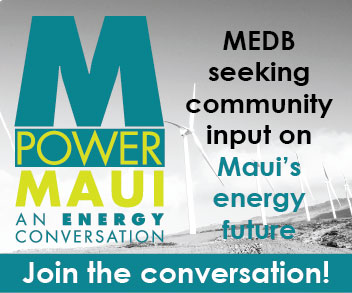
Join the conversation!
 Share your priorities and values about energy on Maui – today and in the future – as part of a project called “MPowerMaui: An Energy Conversation”.
Sign up and participate in small group sessions during the month of February. These 90-minute sessions are designed to be engaging, interesting, and informative.
You will learn more about energy, think about your own actions related to energy, prioritize issues, consider what actions you would or would not support, and develop messages for decision makers. The results of these MPowerMaui conversations will be presented at the “Maui Energy Conference” to be held on March 25-26, 2015 and reported to the community.
We invite you to either host a session at your home, company or organization by bringing together 12-16 individuals and a MEDB representative will run the session … or sign up for a session that MEDB organizes.
For more information and to sign up to participate, please call 875-2336.
The MPowerMaui project is presented by the Maui Economic Development Board with sponsorship from the County of Maui Mayor’s Office of Economic Development; State Department of Business, Economic Development & Tourism (DBEDT) Energy Office; and the UH Hawaii Natural Energy Institute (HNEI).
Jan 28, 2015 | Education, Environment, Sustainability
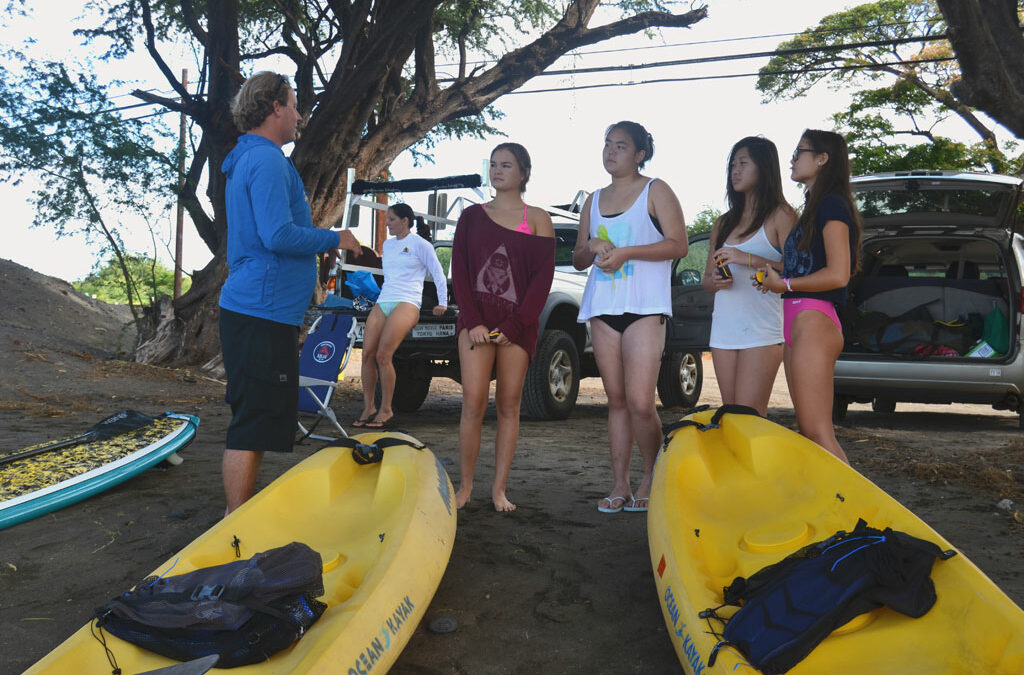
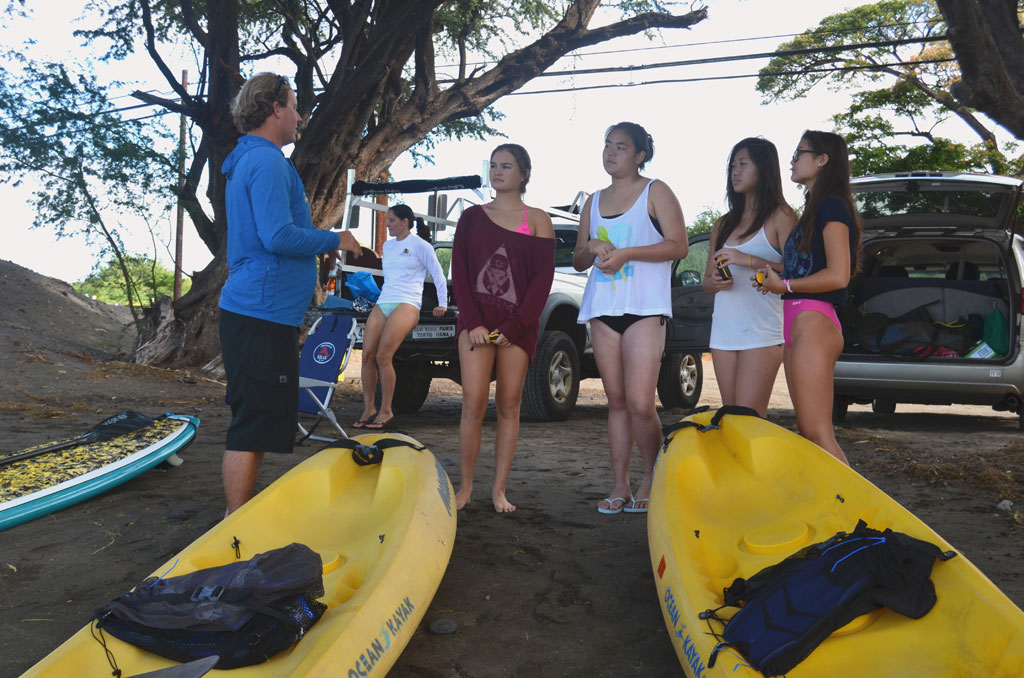 A coral reef monitoring project sounded like it could be fun for the Wailuku Roselani Na Hokulani 4-H Club. Member Kaitlyn Yamada says it was fun, but more importantly she and her fellow 4-Hers were able to master their skills in Google Earth applications as well the Global Positioning and Geographic Information Systems. They also learned the importance of a healthy coral reef. “This project allowed us to become aware of the balance between development and possible jobs and sustainable and green living in Maui County,” Yamada said. “When we began this project, we thought it was a fun idea, but later learned of the significance of gathering and understanding this data.”
A Ke Alahele Education Fund Grant administered by Maui Economic Development Board provided the 4-H Club camera and computer equipment they needed to create coral reef maps at Olowalu and Maalaea. Their task was to establish the baseline reef conditions by teaming up on paddle boards and video taping conditions with GoPro cameras. On shore, the eight club members in grades 8 to 10 tracked their findings on a computer funded by Ke Alahele. Coral reefs worldwide are declining due to various stressors including ocean acidification, sedimentation, over-fishing and near-shore development, according to the club’s grant application. “We were inspired to think of all of the factors that could affect the health of our coral reef. We learned the importance of coral reefs to the health of our island concerns,” Yamada said.
The club’s 4-H leader, Joyce Yamada, said she saw the girls apply skills in science, technology, engineering and math. “STEM skills are integrated in every job and industry. Our members need to be prepared for, and aware of, these opportunities as they become productive members of our community,” Joyce Yamada said. “The confidence that they build as they master these skills will allow our girls to believe in their abilities and become our next generation of inventors, scientists, engineers and members of a community that cares for their environment.”