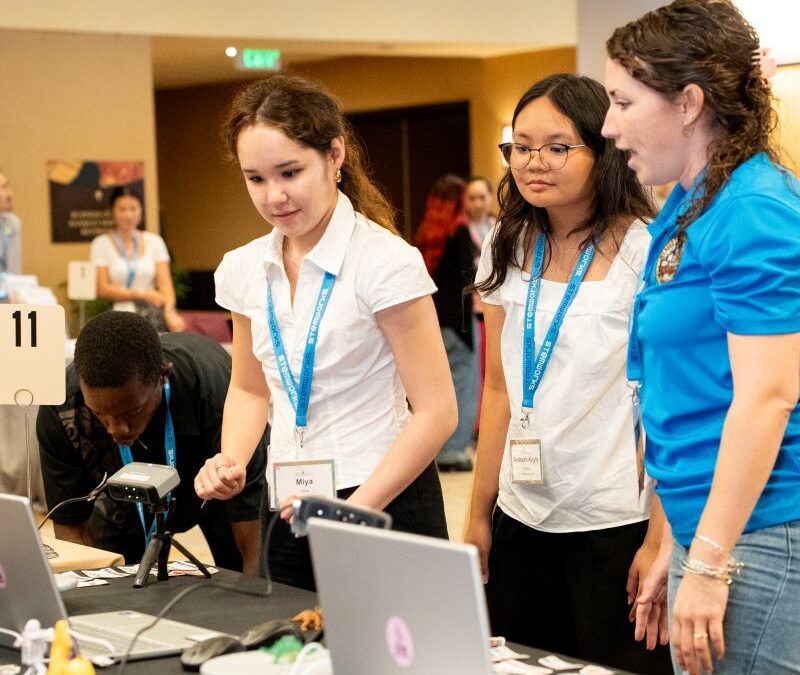
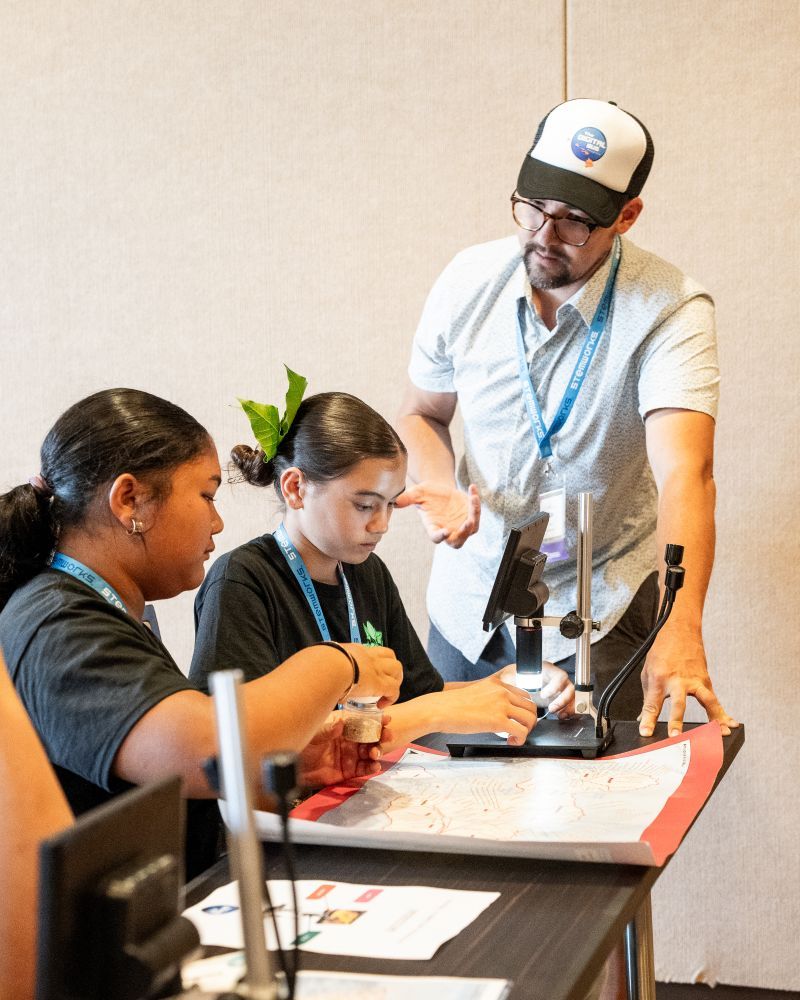
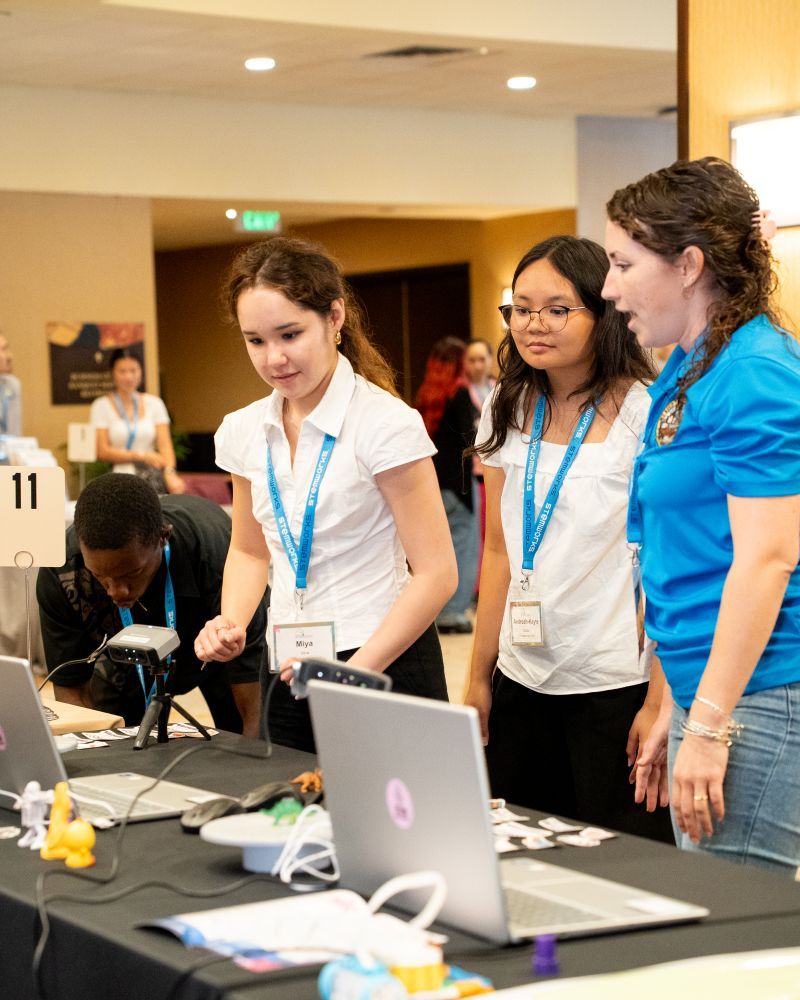
The Sheraton Waikīkī’s conference venue was packed with middle and high school students, including many from Maui Nui, for the 17th annual Hawaiʻi STEM Conference on April 15th and 16th. Organized by STEMworks™, a program of Maui Economic Development Board (MEDB), the 2-day event is the program’s largest student career awareness and teacher professional development event of the year. The 2026 conference welcomed a total of 612 attendees from all across the state despite moving to a smaller venue due to the closure of the Hawaiʻi Convention Center. Many of the workshops were standing room only, showing the high demand for engaging, industry-led STEM education opportunities among both students and teachers.
One of the highlights of the conference this year was the interactive exhibit hall, referred to as the “playground.” Over 30 companies and organizations tabled in the playground, representing a wide range of STEM (science, technology, engineering, and math) career pathways and educational opportunities, including healthcare, engineering, computer science, aviation, ocean science, and natural resource management.
Students and teachers benefitted from the expertise of over 60 STEM industry guest speakers who led 38 student sessions and 9 teacher workshops. Keynote addresses were also presented by Caitlin Sarian, a global cybersecurity expert known as @cybersecuritygirl online, and Maile Miyake, a graphic designer and entrepreneur from Kauaʻi.
In light of this year’s conference theme, “Navigating Change,” many guest speakers focused on helping students learn about artificial intelligence (AI) tools and how to use them effectively and responsibly. One student attendee commented, “I learned about how AI can be used for chatbots and to improve our time efficiency when it comes to repetitive actions.” Another student shared, “My favorite session was creating a custom AI. It was cool to be able to create an AI that I could make do anything.”
Over 40 industry professionals also joined the students for an hour of speed networking. Students were encouraged to ask the professionals about their careers, educational backgrounds, and paths to their current roles. One teacher observed, “The best part of the event is being able to take my students to experience avenues of career choices connected to STEM. It was great to see how much they took in from this conference.”
Students traveled from all islands to participate in the event, with 196 of the 366 student participants coming from Maui County, including Molokai and Lānaʻi. Among the 82 teachers at the conference, 50 were from Maui County. STEMworks is proud to offer financial support to neighbor island students and teachers for travel costs thanks to the program’s many donors, grant funders, and event sponsors.
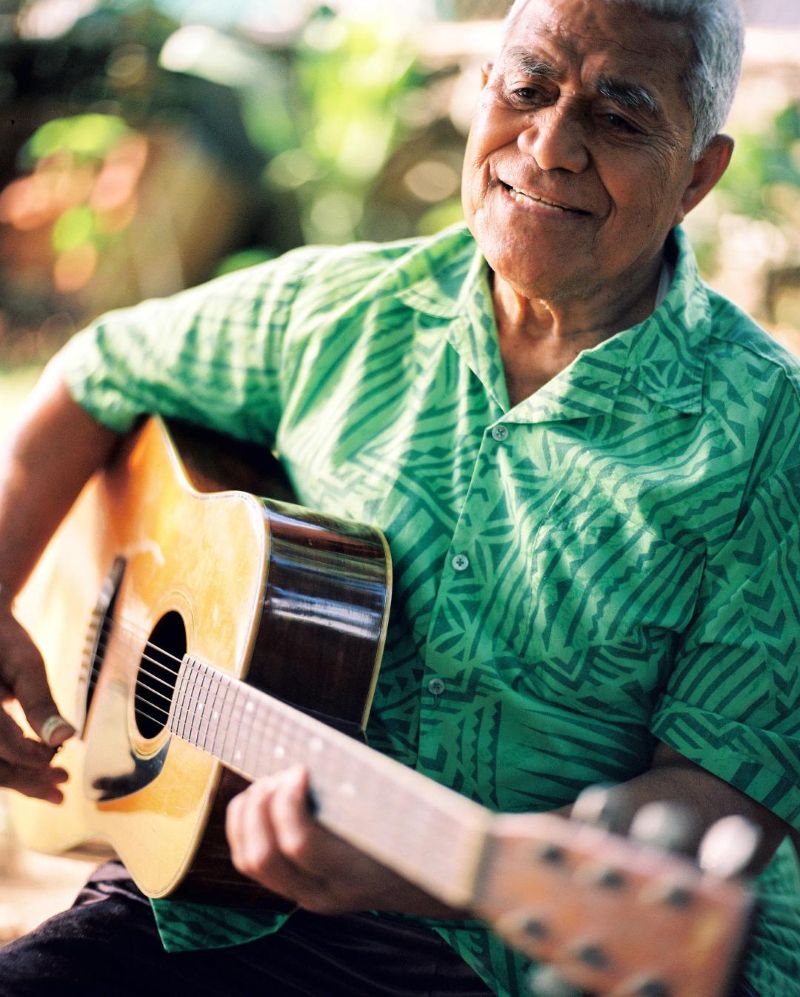
Gabe Amey, founder and director of Our Kūpuna, is always concerned about Hawaiʻi’s elderly. During the Covid-19 pandemic, he asked himself, “How can I help?” The answer is this service. Our Kūpuna was developed to serve a need in the community during a very uncertain time. It was launched statewide on March 23, 2020 as a community project and became an official 501(c)3 nonprofit organization under the Hawaiʻi VA Foundation. Currently, their mission is to continue to connect Hawaiʻi’s kūpuna with volunteer sponsors to help them with their daily needs.
“Unfortunately, not all seniors in Hawaiʻi have ‘ohana on-island to look out for them,” said Amey. “Many kūpuna are isolated, and everyday tasks, such as getting groceries, prescriptions, and other chores have become impossible for them to do alone. We are currently serving kūpuna, 65 years and older, and we want to get the word out more about our organization. Plus, at the moment, we desperately need more volunteers!”
The staff members at Our Kūpuna screen and manage all of their volunteers. If everything works out, they connect them with kūpuna in their area. Their motto, “one-to-one,” creates a special relationship with their network of volunteers in the field and the kūpuna they are helping.
Kūpuna Janice said, “I was struggling alone before my volunteer came. She is sweet and kind, and I’m so happy for her assistance.” Kūpuna Ted shared, “I not only get help with my shopping, my volunteer also brings it up the stairs for me, which helps a lot!” Kūpuna Christina added, “I’m very thankful and grateful for the Our Kūpuna program and my volunteer. What a joy!”
Director Amey emphasized, “The service is free. Sponsors call their kūpuna weekly to see if they need any necessary supplies and to ensure kūpuna do not have to battle crowds at the grocery stores or struggle to get to other public places. It is about making sure the kūpuna have what they need and the assurance that they are cared for.”
Interested kūpuna and volunteers can find more information online at OurKupuna.com, or call 808-400-4506.
All volunteers and sponsors are doing this to help in the community because so many kūpuna need support and friendship.
Gabe Amey, Our Kūpuna, Founder and Director
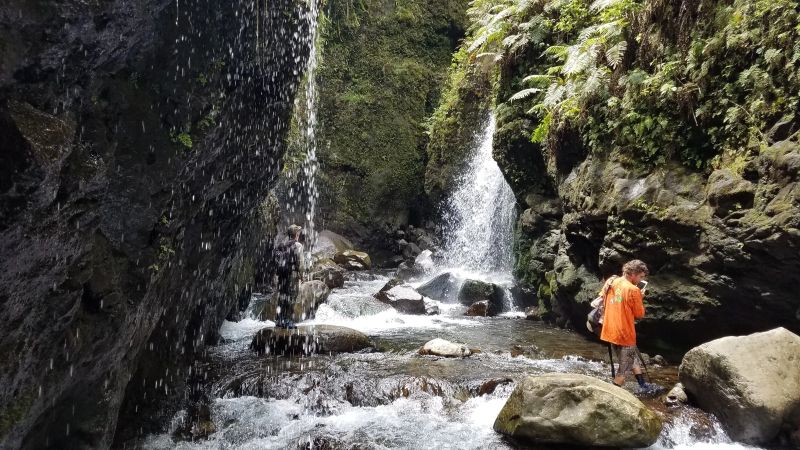
Mauna Kahālāwai, commonly referred to as the West Maui Mountains, is an ancient, heavily eroded shield volcano rising to 5,788 feet at the summit of Puʻu Kukui. Receiving over 380 inches of rain a year, Puʻu Kukui is one of the wettest spots on Earth, and that rainfall is filtered down through bogs, shrublands, and critical watershed forests. The Mauna Kahālāwai Watershed Partnership’s (MKWP) mission is to protect these resources to ensure that West Maui has a continuous supply of water for generations to come.
The MKWP is a voluntary alliance protecting 50,000 acres of West Maui mountains, which provide 75% of West Maui’s freshwater. Established in 1998 through a voluntary alliance of state, county, and private landowners, its purpose is to reverse the negative trend of forest degradation caused by numerous threats. MKWP protects and restores native ecosystems, the forested watershed, and the freshwater supply through cooperative management of fencing, watershed health, removal of invasive species, storm management, and public education. The watershed acts like a sponge and is vital for Maui’s water supply; without protection, the forest covering the watershed will continue to degrade due to the impacts of invasive species.
“Healthy watersheds are blanketed by healthy native forests,” said Chris Brosius, MKWP Program Manager. “In a pristine native forest, trees, shrubs, ferns, and mosses are intimately intertwined. The many layers of vegetation capture moisture from fog and passing clouds and soak up falling rain. While some of this water gently flows over the surface of the land to be filtered into streams, the underground network of roots helps water percolate down through the soil and recharge our aquifers.”
The work that MKWP does also protects and preserves approximately 150 rare and endangered flora and fauna, some of which are found nowhere else in the world. Brosius added, “We invite the public to help with stewardship activities to protect the area’s natural ecosystem and cultural heritage. We offer opportunities for groups, clubs, classes, or teams who want to volunteer with us and monthly volunteer service trips at both our Waiheʻe Ridge and Olowalu Valley restoration sites.”
We highly encourage public involvement through our outreach and educational programs so that the people on Maui have opportunities to experience and understand why watersheds, our native ecosystems, and cultural stewardship are all important.
Chris Brosius, Program Manager, Mauna Kahālāwai Watershed Partnership
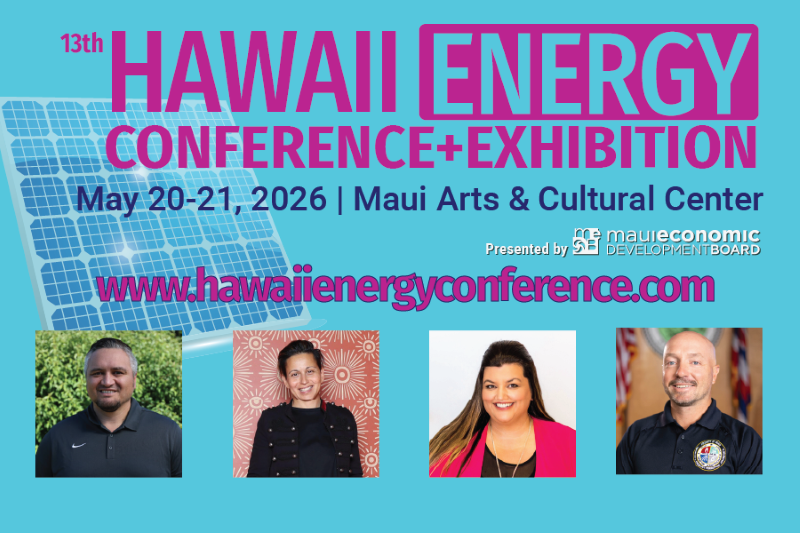
Bringing together leaders, policymakers, cooperatives, and energy innovators, the 2026 Hawaii Energy Conference will discuss pathways to resilience and sustainability using firm (dispatchable source) power, while incorporating the lessons learned from successful indigenous projects.
From geothermal in Hawaii to energy projects on tribal lands and cooperative models across the U.S. and New Zealand, participants will share experiences and strategies for advancing energy solutions while maintaining harmony with local landscapes and traditions.
A deep dive session will explore the topic of Water & Energy in a more intimate setting for up to 40 people. A panel will discuss current and emerging options for seawater desalination, the status of desalination plans on Oahu and Maui, and the energy challenges that influence the feasibility and cost of these technologies.
Attendees at HEC2026 will engage in meaningful dialogue on how policy, technology, and cultural wisdom can shape a resilient and more affordable energy future across all generations.
For young people who choose not to pursue a college degree, Job Corps offers alternative options as the largest free, residential education and job training program in the US. Providing comprehensive pathways to stable careers, they offer not only educational services but also housing, food, medical care, and career counseling to participants. Maui’s own Job Corps center is in Makawao.
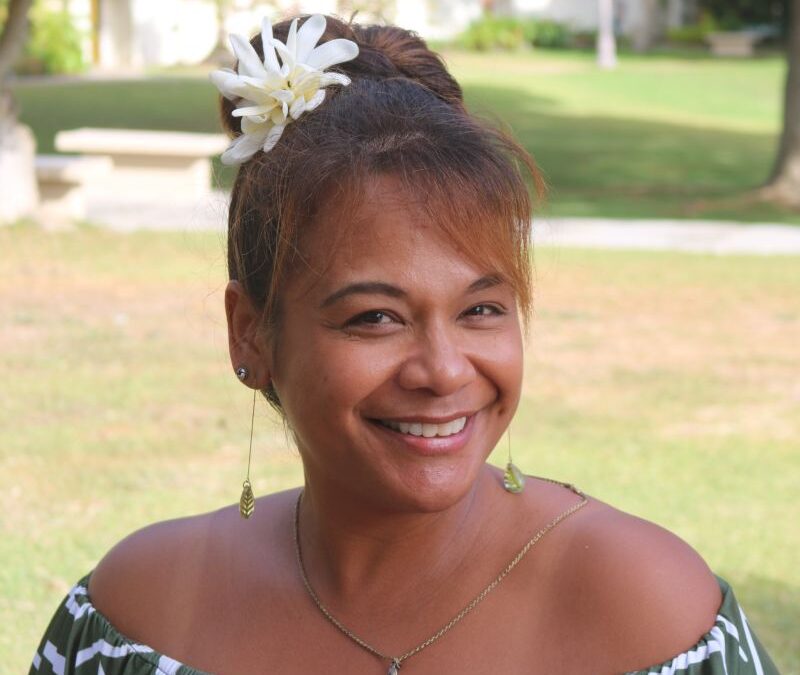
Maui Job Corps specialist Hiʻilani Bush works to ensure that Maui community members understand and take advantage of Job Corps programs. “The Maui Job Corps campus offers programs that provide vocational, academic, and employability skills to students, ages 16 to 24, at no cost to them,” Bush said. “The program also provides free housing, meals, transportation services, and stipends. We provide support and guidance in a variety of pathways, including college, military service, direct employment, and pre-apprenticeships with advanced training at other centers in the community. Our amazing facility and programs are filled with resources to help start careers. Studies show Job Corps increases participants’ earnings with programs that focus on in-demand industries, which all lead to recognized certification. Most participants find a second home, structure, and confidence to build a better future.”
With a focus on vocational training and job placement, Maui Job Corps supports young adults with certification programs in office administration, hospitality, culinary arts, and construction. Bush recalled, “After completing the Office Administration program, one student earned her high school diploma and became employed full-time at the company she interned at. A 2025 Maui High School graduate who gained hands-on experience as a power plant operator now works full time at Hawaiian Electric.”
A Maui Job Corps graduate shared, “My experience put me on the path to become a better person and gave me the skills I needed to succeed in life. I joined the pre-apprenticeship for carpenters. I was not only making money, but was, in fact, thriving as a young adult. It taught me patience, perseverance and instilled in my core what it meant to have pride in my work. I will forever be grateful to the men and women who were responsible for helping me better myself.”
Those interested can find more information about the Job Corps programs available on Maui online at https://maui.jobcorps.gov/.
We’re here to help Maui students thrive. Our 2-year program offers education and certification, providing full support for each student.
Hiʻilani Bush, Marketing Specialist, Maui Job Corps